Ayahuasca: From Ancient Ritual to Instagram Aesthetic?









The internet has made ayahuasca more accessible than ever; bringing the promise of spiritual awakening and deep healing to people worldwide. But in doing so, has it commodified a sacred practice, leading to a rise in unqualified facilitators and a disregard for cultural traditions?
Joining us is Bia Labate, a Brazilian anthropologist, founder and Executive Director of The Chacruna Institute of Psychedelic Plant Medicines, and one of the world’s leading ayahuasca experts.
https://www.youtube.com/channel/UC22F9iOhoGVWPiVlO9ueN0Q/featured
https://www.instagram.com/labatebia/
https://chacruna.net/the-commodification-of-ayahuasca-how-can-we-do-better/
Welcome to Ruined By The Internet? - the show where we examine how technology is shaping modern life - whether we want it to or not.
Follow the show, let us know what else to look into at https://www.ruinedbytheinternet.com/, or support us at https://buymeacoffee.com/rbtishow
In this episode, Bia joins us to explore the profound impact of the internet and social media on the world of ayahuasca. We discuss the accessibility of ayahuasca, the rise of unqualified facilitators, and the ethical challenges of marketing spiritual experiences.
We also look at the risks involved in seeking ayahuasca ceremonies and the positive outcomes of increased global interest in this traditional practice, as well as the need for education, harm reduction, and ethical collaboration with indigenous communities to ensure the integrity of ayahuasca experiences.
00:00 Introduction to Ayahuasca and the Internet's Impact
02:51 Personal Experiences with Ayahuasca and Digital Evolution
06:02 The Role of Social Media in Ayahuasca Ceremonies
08:49 Marketing Challenges and Ethical Considerations
11:52 Authenticity and Misrepresentation in Ayahuasca Practices
14:45 The Rise of Unqualified Facilitators
18:00 Navigating Risks in Ayahuasca Ceremonies
21:05 Positive Outcomes of Ayahuasca's Global Exposure
24:10 Future Directions for Ayahuasca Practices
26:48 Advice for Prospective Ayahuasca Participants
Gareth King (00:46)
Bia, thank you so much for joining us and welcome to the show.
Bia Labate (00:49)
Thank you for having me. It's a pleasure to be here.
Gareth King (00:51)
Today we're going to be talking about the impact of the internet, and social media in particular, on the world of ayahuasca. Can you just give us a bit of an explanation of your experiences with that world so far?
Bia Labate (01:03)
Yeah cool, I am not a native digital as they say. So, I was born before the internet existed. I remember clearly when I was 26 - i'm 54 now - I went to this like corner computer that was that big screen all in green that you could see like a little bit like a Pac-Man kind of the letters coming one after the other.
I had already been drinking ayahuasca, or I started to drink ayahuasca around that time. But I remember going to ayahuasca rituals on my own and doing like research to find them. I went to the Brazilian Amazon, after that I went to the Peruvian Amazon. I remember going in a little internet cafe in Pucallpa, and I was traveling with this companion and asking him, what's Google? Can you teach me?
And then he said, yes, it's very easy. We put there, where can I find ayahuasca or something. I was in a little Pucallpa cafe in the middle of the town in the Amazon, using Google for the first time. When I went to Peru, I wasn't using Google. We were looking for recommendations, talking to people. There were other times, all the backpacking I did in my early years, there was no internet. We just asked people. We talked and we looked at things like Lonely Planet or, people that had travelled to those places.
Also when I was doing my field work in Brazil, I started my masters, I wanted to study ayahuasca and I wanted to find some new angle, and something that was also realistic in Brazil that didn't involve too much traveling. So, I decided to focus on studying what I called new ayahuasca urban users, now ayahuasqueros urbanos in Portuguese.
And then I took a subway and I changed stations and I went to this other place, and I met somebody who just wanted to meet me there and not give any information, and gave me a telephone number and took the train and left - because at the time that was something kind of considered a bit clandestine or wrong, or not really kosher to drink ayahuasca outside of the context of Santo Daime or União do Vegetal.
Obviously, you know, fast forward now, it's completely different. There are hundreds of thousands of entries of ayahuasca. But this is also just my lifetime. I remember mentioning my friend Kathleen Harrison, who was married to Terrence McKenna and then later divorced before he died. But anyway, she went to the Amazon, I think, in 1976. And she was telling me, imagine back then, so it's within our lifetime we're witness of all those changes.
Gareth King (03:46)
Yeah, you mentioned there, just being on that computer, Googling where you can find ayahuasca, and obviously since even that time, the exposure and I guess the mass interest in ayahuasca that's being brought about through that access via the internet, has completely changed the way that people can seek it out, learn about it, and even just find it if they're trying to.
What changes has that brought about in the way that people learn about it, seek it out, but then even experience it?
Bia Labate (04:16)
Excellent question and rather complex. You know if you think about it like the scholarly field of ayahuasca, I have pretty much tracked everything that's been published. There's still very little about this. There was one inaugural paper that had a very sexy title that I remember was something like Surfing The Internet For A Shaman or something. We still have a very small amount of scholarly research about those things. I don't think we have a lot of research saying this kind of phenomena.
I can again go back to my own experiences. I have been attending ayahuasca ceremonies for 29 years. I just actually did my little ayahuasca anniversary this November 2nd, Day of the Dead, which was my first glass of ayahuasca taken in 1996. I had different phases and different belongings to different traditions through the years, and I personally feel always a little bit conservative and out of the loop and running behind in the whole social media and internet trend.
That's the kind of personality I have. I am not, you know, was one of those persons that was the last ones to get an iPhone or to join Facebook or, I kind of force myself to publish on social media, to have a presence, because you have to, but I'm not very into it. And then when it comes to my spiritual work, my personal work, my inner work, I am completely kind of averse to like this over publicisation of other experiences.
People love here to say, to make you know a carousel of their ayahuasca experience and put photos. Some people even do it during their, when they are in retreats, they're doing the retreats and they're posting online. I think a lot of people even are doing their ceremonies, kind of thinking about what they're going to post or how they're going to explain that.
And so it's a very intricate relationship that we do not exist outside of media anymore, and even our own identity is based on how we present ourselves on social media. But again, I find it hard to, have a really hard time with saying this is bad or wrong or we lost or this is a problem, because I find it more helpful to try to learn what's going on and think of measures to create harm reduction. Because I'm coming from the perspective of a non-profit, and so a non-profit it's not the job of Chacruna to go and say well this is wrong and this is bad and this is such a loss.
We're trying to support populations and this growth that is happening which is inevitable, and it's happening all the time, to be in a less harmful way. Does that make sense?
Gareth King (07:15)
Yeah, absolutely. And I think you touched on something there, which was people overly thinking about what they're going to post online while they're potentially in and around the ceremony. So that was one thing I wanted to speak to you about. From what I can see, so many of the testimonials, and posts and content online is just focusing on the magic of the experience, and maybe not the difficult or challenging parts that people could be in for should they undertake one.
Do you think that this is changing the way that people understand what they could experience in one of these ceremonies? And is it attracting, I guess, sometimes the wrong sort of person to be seeking them out?
Bia Labate (07:55)
Yeah, again, great point. I think that definitely there is the level of people doing their own storytelling. That's one level. And the other level that we have to consider in that question is the level of the retreat centres or the places that host the ceremonies, because they are all challenged by the same sort of problem which is they need to have a certain number of participants to continue running. They have a staff, they have a land, they have maybe a mortgage, they have you know all kinds of costs, they have an overhead, and so a centre is like a business that needs a certain number of clients to operate and for that they have to announce and they have to promote.
But promoting ayahuasca is really complicated because you can't really, you know, promise a delivery. You can't say, come drink ayahuasca and that will really help you, and come drink ayahuasca and this and this and that, because you don't know what's going to happen. Ayahuasca can be very unpredictable and very different for different people.
So how can you promote something, and push it and brag about it and rave about it when it's not in the nature of that thing? And also there's just an ethical larger question which is that even ethical, because it should be a personal choice and it's something that can be potentially very impactful and life-changing, so what is even your right to try to convince others to do that?
I come from a school that our etiquette is not to try to invite anybody to drink ayahuasca. You can report your own benefits, but not pushing on other people, and that can also become quite messianic. And obviously on the extreme of that there are the guru types or the people that want to make a living out of ayahuasca, and need to market it and like make it kind of almost sensationalistic or a panacea, a cure for all miracles and the ultimate solution, the quick fix.
So, there's all this kind of problem with marketing and finding that right tone is very hard. In terms of the personal storytelling we like to make a joke is a little bit about like I don't know people can get the reference, but a lot of times people have visions that they were something else in another life, and you know they were princes or they were you know some kind of incredibly oppressed person or they were some other outstanding character, but nobody says like, you know, I saw that I was a potato peeler. Like I don't know, nothing against potato peelers, I’m just saying like people have a hard time in being something very plain and regular and ordinary.
So, it's also a little bit like that, like are you gonna see any posts of somebody saying, well my ayahuasca experience was not so interesting, and you know for a long part I didn't feel anything, and then I was a little bit anxious and like it's not worth telling, and here's not a lot of weight.
So that creates a whole approach that is also it's always hyper tends to be hyperbolic, like exaggerated, because it's not as appealing to say something very plain. And this can happen also with the harm. Not to say that people aren't harmed, but there's also the people that are attention seekers through the harm and then they create this whole victimhood, again, a minority. I do think a lot of people are sincere, but there are people that are also opportunistic and want a kind of shortcut for attention and fame by claiming a lot of harms.
So again, we have to understand that one thing is like the experience and the other is the representation of the experience. And there's language, and culture and contexts, and the internet is one of those mediators. There's other mediators, for example, art or literature or academic scholar work. They're all narratives about the experience and they deserve to be seen as narratives and not as like concrete, you know, neutral depictions.
Gareth King (11:32)
You mentioned something there as well that I thought was quite interesting around, those people specifically want to make a living out of it. Whether they were those, self-styled gurus, they know that their audience is potentially global and very, very varied in terms of interests and what they're looking for.
Has that exposure to such a wide, varied audience changed how these particular operators would approach conducting the ceremony in any way? Do they need to promote it or present it as something that could be a little bit more palatable to different cultures around the world, rather than authentic?
Bia Labate (12:28)
Yeah, I mean the very idea of authentic needs to be put into inverted commas because what is authentic and not in a highly globalised world, capitalistic, individualised, consumeristic, with a lot of global exchanges, with a lot of back and forth. But certainly, yes, both minorities and just like regular practitioners have learned what is the international audience taste, and what looks good, and so a lot of people misrepresent their credentials.
It's really important when you're going to sit with a facilitator, retreat leader, indigenous practitioners to learn about their background. What is their lineage? Where do they come from? What is their training? This is both for the healers and for the facilitators as well, because being indigenous doesn't mean that you're trained as an indigenous person, or being a member of Santo Daime doesn't mean that you were trained as an indigenous shaman.
There's all different kinds of modalities, and so you have really to learn about who they are, where they come from, talk to people that have had experiences with those, and if we are in this more global settings, it is desirable that you have some foot in tradition and lineage, and some kind of professor and clear track record of your lineage.
Something that people really tend to overlook that is really important, is for example if the facilitator is doing a ceremony and he's abroad, he's outside his context, does he has local support? What is the background of those facilitators? Most importantly, what is the ratio between the healers and facilitators and the group? Because if you're just like a single traveling person, you go to a foreign country and you have a huge group and no local facilitators, people that have no training as facilitators, that's a problem as well.
And also just really checking the credentials. There's people that clearly lie about their training, lie about their credentials and misrepresent themselves. There is a spectrum from the total charlatan and opportunistic, to just like the little tweak, the little perversion, the little twist. Let's say if it's yoga, you know, there's different modalities, different trainings, different lineages, different professors, but you kind of change a little bit just to make it look better.
This happens in the world of ayahuasca very much as well. So, if you are like a Santo Daime practitioner and you're like claiming to be like a sacred medicine person for a Jewish audience, hide the fact that you're gonna be singing all Christian hymns about Jesus, about Virgin Mary, about all the Christian Catholic saints, or kind of overblow your experience and training as a facilitator, when actually you are coming from a group context. You see that a lot you know, a person that is just like helping in the kitchen, the next time he is like claiming to be a shaman in another centre, and he pretends to have had all this training because you can learn the kinds of basics.
It's a little formula, you can try to design the ayahuasca experience. Start a little bit quiet, you are like 40 minutes sort of to one hour quiet, and then you make some songs to bring up the effect and then you keep the effect high for a while, and then you try to decrease it. So, there is a kind of, widely known formula that people can learn and imitate. And it can work because ayahuasca can be wonderful and can be very powerful. Except when it’s not, right? And except when there are problems. That's when it gets messy.
Gareth King (16:01)
Yeah, that's really interesting about people very quickly becoming a shaman or maybe gaining that knowledge. Do you think one of the side effects of having so much more information out there online now, is people taking what they can find online and then claiming that they are a shaman, or they could hold these ceremonies and then attracting people? Like how does that affect, I guess, the practice overall beyond potentially corrupting it?
Bia Labate (16:42)
I mean all of these discussions are highly philosophical, and you know it reminds me of when I studied social sciences, we studied the industrial revolution or we study for example the emergence of photograph or the emergence of movies. All of these discussions have been happening for over a century when photographs emerged. It's like, what is a picture? Is the picture the situation? Is that reality or is that a construction of reality? And then when you start to reproduce the work of art, you have that famous reflection of Benjamin, like what is the aura of the object? Once you get an illustration and you reproduce it thousands and thousands of times, do you lose a certain aura?
And now we are in this process that everything is a pastiche. Everything has been published a million times. Everything is reproduced a million times. There's videos for everything. Everything is online. We are, you know, digitalised to a level.
So, it's very hard to talk about whether these things are corrupted or not, or what is it before and then, because it's a total different era. So yes, people are going online and creating shaman kits and the things that for us who work on this professionally, so from the perspective of a non-profit that is trying to create harm reduction and education around the globalisation of plant medicines, there have been discussions like that.
I'm going to give you an example. We published this guidelines for religious freedom, restoration act and best practices. Should they incorporate as a non-profit or not? How do they store the sacrament? How do they keep track of the doctrine? How do they keep track of the participants? What are the intake processes? What is the medical screening? What is the emergency protocols? Do you have mechanisms of accountability? Do leadership take critical feedback openly? Are there ways to do conflict moderation? Is there any financial transparency? Are the locals being paid fair amounts? Are they in positions of power? Do they have decision-making power or are they just tokenised?
There's all these kinds of things that we can try to do to create harm reduction, to create healthy psychedelic churches or retreat centres or plant medicine circles. And there are some people on this spectrum of the educational work, that they do not want to give all the information away, because they are scared that the fake and opportunistic charlatans and people that are just there after a book, are going to use those systems to kind of better disguise themselves and to be better charlatans.
So, we have had this dilemma when we created these guidelines. One of the conversations we had with the lawyers was, should we put like attached to the guidelines, forms like a waiver consent form, other medical screening forms. Should we actually have a model where people would copy and paste and use that? Like that's the Chacruna model. And then some lawyers and some practitioners, they were against that. They were in favour, for example, of just posting a description of what that should be.
So, the facilitator or the group, the leader has to have the homework to do themselves. If you're creating enough trouble to go give the medicine to other people, like how much effort are you willing to put to make yourself a good centre, a good reference. And so, some people were against, for example. You can make fun and say that also, you know, lawyers are always a little, territorial about being hired because it's their job to provide advice. But I think there's always a sweet spot on how you do these things, and you have to put intention to all of that.
Gareth King (20:37)
I think what you were talking about there as well with the intention of harm reduction and knowledge, is something that I can imagine needs to be a much larger consideration with so many potential charlatans out there. And I found it quite interesting the way that you said, ironically they can take that well-intentioned, really beneficial information and use it to better disguise themselves.
But if someone is simply looking around online and, they potentially are just finding the first opportunity that they see to undertake one of these ceremonies without looking into all of that information. What are the biggest risks that they might come across as a person seeking it out without fully knowing what they should be looking for?
Bia Labate (21:21)
Yeah, I mean, this is also part of this whole field. I think we have to remember that prohibition really damages the well-being of people, because under prohibition you are constantly in fear and there's stigma, there's social taboos, there's moral dogma, there's legal liabilities, there are risks, and so for you to do something in the underground, you have extra risks. So, you have to hire an Airbnb or go to a motel or, you know, pretend that you aren't doing something else. You know I've been to ceremonies where you can't go outside to vomit because they don't want the neighbours to listen.
So going in settings that are not totally legal poses an extra challenge, and it is extra hard to control those things. What we have been saying is that we advocate always for what we call as anthropologists informal, cultural, social means of control. What does that mean? That means that the communities, the groups, the people on the ground dedicated to these practices, they have etiquettes, protocols, standards, sensitivity, a certain kind of ethos, a certain kind of etiquette of understanding of how things should be done and what are the right ways to do it.
Those things said like that, they sound quite obvious, don't they? Because yes, of course, practitioners know what's best, but in terms of legal regulation, that's normally not taken into account. The knowledge that already exists, the culture that are already theirs, the strong pillars and traditions that are already in place. So, we are trying, from our perspective as a non-profit, as the Chacruna Institute, to help strengthen, empower communities, to create those controls, to have a group experience, to avoid itinerant shamans that go from town to town, to have some to kind of continuity, to have clarity on who's in charge, what are the methods to screen, is there an integration afterwards if somebody has a problem? Is there a group that will be there constantly supporting that person?
Because if you go to a ceremony and you pay $250 or $300 or $400 or $500 for an itinerant shaman that comes from Latin America, and after that you have a real challenging emotional experience, is that included in the package that you will get some support afterwards? So, what we try to emphasise is the track record of this group.
And it's also hard to know what is the track record of that person back home? Because there's a lot of people that became like experts for shamans or for gringos. So, they become like they are the indigenous or the shaman or the healer only abroad, but in their communities they are not. And sometimes some of these characters come from communities that have like either the community kicked him out, or the community is going through severe scandals, or the community is having a lot of challenges with that healer, and he's looking for that external audience to make a living, but he's not really serving his community at home. So, all of these things, they are extremely, hard to identify and extremely complex.
Yet people are doing, yet the world is moving, yet a lot of people are getting healing, yet the genie is out of the bottle, at this very moment there's probably thousands of thousands of ayahuasca gallons being cooked.
Gareth King (25:00)
Yeah, right. That was a good point there that you the genie is out of the bottle now. But then I think that potentially leads us on to some positive outcomes of that. What would you say the most positive, or even a few positive outcomes of ayahuasca gaining such wide exposure and interest amongst so many different audiences has been?
Bia Labate (25:20)
I mean it's also a hard question. Personally, I'm a little biased because I have dedicated my whole career to studying ayahuasca and plant medicines. Not only professionally but personally I have also, as I said, been drinking ayahuasca for almost 30 years now, and I am a firm believer it has helped me a lot. I have through my ayahuasca experiences got so much spiritual awareness and healing and blessings and a sense of belonging to the world and to nature and to this invisible worlds.
Just feeling much better as a human has helped me a lot with existential angst, and the uncertainties of being here now, and what's after life, and we all don't know what's gonna happen to us, if we're gonna get a disease, when are we going, when are we leaving, how are we leaving, how long are we lasting, how it's challenging to be a human in a world full of all these problems, colonisation, heteronormativity, patriarchy, systemic racism, systemic oppression, social inequality, climate disaster, multiple wars, global hunger. I mean, these are challenging times.
I have found that ayahuasca has been a good support for me to navigate being alive in the world. It's been touching for a lot of people. It grew a lot. It's certainly an expansion unprecedented within my own life. As I said, I started, there was no internet, there were hardly any groups outside Daime or UDV in Sao Paulo, my city, which is a big city now, I think like 23 million. Now there's in Sao Paulo multiple ceremonies per weekend, or any big city in the US. San Francisco or Los Angeles, New York, all over the country, there's multiple ceremonies at once.
So, it's happening and it's real, it touches a lot of people. There's a great amount of healing. I think a lot of people open also their minds and hearts the Amazon, to indigenous people, to other cultures, to other traditions. It has helped allow a lot of people become a little bit more aware of different cultures and different ways of being and different values and different understandings, paradigms, categories to understand the world.
It has also caused damage for some people. There's also backlashes. So, you know, there's a variety of things, different ways to tell the story, and we're trying to tell it with nuance and complexity. I hope that all makes sense and it doesn't look like I'm evading your questions.
Gareth King (28:08)
No, that was actually a good answer. And what it kind of got me thinking about was, we mentioned a few minutes ago around charlatans and maybe pretenders, but then maybe while that is bad thing, the outcomes for the people that are engaging with them are potentially very positive for those reasons that you've just highlighted there - whether that's healing for themselves or greater awareness and understanding and interest in various parts of the world. So, it does feel like a good and bad bit of balance. Where would you like to see things go from here or keep going from here?
Bia Labate (28:41)
As I say again over and over again, for us it's a pragmatic matter, and also a lot of indigenous people in Latin America are completely abandoned by the government. When not proactively persecuted, like putting some military person or some missionary person in charge of indigenous affairs and stuff like that. It's happened often in Latin America. There's a genocide of indigenous people proactively happening by governments everywhere. And through ayahuasca, a lot of indigenous people have found allies in the West. So, there's paradoxes in that.
Maybe they would prefer not to be ayahuasca shamans in the weekends for wealthy gringos and they'd rather do other things, but ayahuasca is a source of income from many indigenous groups.
One way forward for me to think is, are we having projects that are more horizontal, more collaborative between Indigenous people and non-Indigenous people? And by that I don't mean just rhetoric, just calling it decolonial, just calling it collaborative, but are in fact indigenous people in charge of decisions? Are locals being fairly compensated because what happens is in majority of cases the non-indigenous, the non-local creates a business around that where the indigenous end up being, or the community, or the locals end up being sort of the helpers, and they are not really in charge.
So, I think the future is more horizontal collaborations, and centres that learn to somehow give back, that are engaged in some kind of environmental protection plan. So, I think creating ethics in terms of like giving back, are you involved in any local projects? Do you contribute to a local hospital, to a local school, to a local project of reforestation? And again, in terms of the finances, do financial priorities take over well-being of participants? Because you can also see that very clearly when the focus is just money.
So where I would like this to see, going forward is centres that are considering the whole spectrum, from the training of the facilitators, to the training of the shamans, to the environmental concerns, to the harm reduction concerns, to the screening, to the safety, to the cultural concerns, to sincerity in how you represent your practice.
So, we have to be realistic. Ayahuasca businesses, either indigenous, mestizo, daimi or other ones, they also have an element that is a business side to it. You have to be an ethical business and you have to have best practices. And above all I think on the cultural level I'm gonna go back to your thing about the Internet. I think we should be, you know, raising these questions. Is this vulgar? Is this necessary? Why am I doing this? Why am I doing this post? What is the objective? What is the message? Be intentional, have purpose.
You can also take pictures and keep them for yourself. You have to ask permission of other people if you want to post from that, you have to have rules around posting. You know a lot of centres won't allow a phone in the maloca, so a lot of people are doing this, they're going to a ritual, they're filming it and posting it online. And yet also, as I say, not to demonise any of this because it's also a way to create community. It's also a way to create some kind of brotherhood, some kind of sisterhood, some kind of global views. People express themselves through the internet as well.
I want to bring the example of the pandemic. It was interesting that when the pandemic hit, a lot of the rituals of Santo Daime, they went online and that was kind of totally unique because people were doing rituals collectively online. And you could say that there is an element that is problematic, obviously, because you're online. So people would drink ayahuasca at their own homes, in their own communities, separately, and get online and do it together.
And obviously you can be distracted, you can have notifications come up, you can get up and go eat something, or you can just start chatting, or somebody calls you, or you're moving around. There's an element that you lose focus, and you lose concentration, and you lose that kind of more deep, solemn feeling of the ritual, those boundaries. But it also created a really interesting phenomenon, which was a global unity and an exchange that didn't exist before. That is just now continues to exist, together with the in-person element, but it did help create a kind of global connection between different parts.
So, there's elements, I think, in everything, the positives and the negatives, and you have to look for the balance. Personally, I am still trying to go to ayahuasca retreats and be entirely offline. I have done this ritualistically multiple times, like I'm going to the jungle and I leave my computer and even my iPhone at home. I personally feel that like total horrified to get back online where I'm gonna find hundreds of emails on hundreds of accounts and hundreds of things, and then when you go through all those emails all at once, like let's say 500, it's a good exercise for me, it has been a good exercise because then you also see how useless a lot of your life is, and there's not so many things that are really so relevant after all.
I also think it has helped give me a sense of perspective of what really matters or not. So, these are the times we're in. You know, today you've got to pay if you want to be offline. You have to go pay somebody and lock yourself up somewhere. Tell me what you think about all of this to conclude.
Gareth King (34:37)
Yeah, look, I mean, I'm not a massive social media person myself. I'm very, very minimal in what I use, even look at. I haven’t had a lot of accounts for years and years now. For me, the same kind of thought, putting so much of my life online, whether what it is, it feels very awkward to me. It's not something that I'd want to be doing. And I think for me, I can quite easily say put the phone down or ignore having to pay someone and go somewhere special to be doing that.
But I think a lot of people can't, and you made an interesting point there around in the pandemic where not just with ayahuasca, but lots of different things, it did generate and create whole new ways of connecting and community building through the internet. And you mentioned that those kind of ceremonies are still taking place. But beyond that, with such strong interest around the world now, do the ceremonies have any differences in format or what happens depending on where in the world they take place?
Bia Labate (35:38)
Yes, they definitely have different formats, and different communities are doing different things. There's a huge variety of experiences. You know, again, digitalisation, online life has also created processes such as making intake forms and the selection much more handy and easy, but it doesn't substitute the personal experience.
So a lot of centres, for example, they'll have an intake process that combines some traditional elements with some Western elements. So, things about, do you take antidepressants? Do you take any medicine? Medicines that don't exist in local towns. So it's a combination of elements from the Western world with different indigenous ayahuasca lineages.
So, you can have a screening like that online before, but when you go to the centres, frequently some healers are also going to be trying to sort of screen you. So it doesn't entirely substitute it, but it lives kind of aside to it. It's a new time.
It's the same thing with like indigenous festivals. There's this festivals in Brazil for example. They're global festivals that people from all over the world go. All of this is organised through the internet.
You know, a lot of indigenous groups have through ayahuasca sort of regained some sense of pride and identity and cultural roots and revitalisation. So, the foreign interest, the foreign, let's say, flashiness, the trend has also helped some groups kind of get back to their origins.
And other people say exactly the opposite, that nowadays, you know, it's hard to get young people interested in learning and being an apprentice, because they just want to do things in a quick way and they just want to heal gringos and fix gringos and are not interested in seeing their communities.
I think there's, evidence of benefit and harm with this globalisation, both in terms of allowing people more resources, more allyship, more money, more self-interest, more ways to value their own traditional culture, and the opposite can also happen as well, which is creating more hierarchies in towns, certain families becoming more wealthy than others, young people not being interested in treating older people, people wanting to take shortcuts in their training to make money because of the foreign interest, and the lack of healers in traditional settings.
So, it's very complicated, there's very many traditions and it's very hard to make like one single statement.
Gareth King (38:08)
No, of course. And I think you touched on it there as well. Everything is so nuanced.
Just to finish up then, looking ahead, what would be your advice to someone considering undertaking an ayahuasca ceremony and trying to find out what they can about it? What should they be considerate of, not only for themselves or where they're going, but also the communities they might be going into?
Bia Labate (38:36)
Yeah, I think I tried to mention a little bit that before by where I want to see this movement heading forward. We have put a resource called The Commodification Of Ayahuasca - How Can We Do Better? So, I want to recommend people and if you can share that link as well.
I also want to recommend the guidelines for religious freedom administration act which we published. We also have a workshop in Chacruna which we call Decolonizing Ceremony and Best Practices, where we're trying to teach people how to create psychedelic churches that are more solid and have more integrity, and we have our courses and our conference.
I want to invite everybody to come to our conference Psychedelic Culture which will be happening in the Bay Area from 17 to 19 of April 2026. We have a membership program in Chacruna, we have circles for members, and we have a bunch of other resources which are almost bi-weekly community forums. We have a certificate program that we're doing on ceremony ethics and reciprocity, where we're trying to create more mindful leaders and facilitators and people to have more awareness.
We're creating a new training called Training for Religious Professionals where we got to the support of a Christian psychedelic society, a mainstream funder with a grant and two universities which I'm pretty proud of.
So, we believe in research, we believe in education, we believe in community, we're trying to incubate new leaders, new organisations, new ideas, we're trying to create interdisciplinary cross-cultural dialogues, intercultural dialogues. There's not a specific formula. Life is complex. And you have to do your research, your homework, like you do with everything else.
Gareth King (40:17)
No, for sure. You've given us a lot to think about today, Bia. We'll make sure that we point everyone towards the Chacruna site. Thank you again so much for your time.
Bia Labate (40:32)
Thank you, I really appreciate this space. Much love. Thank you everybody for listening.
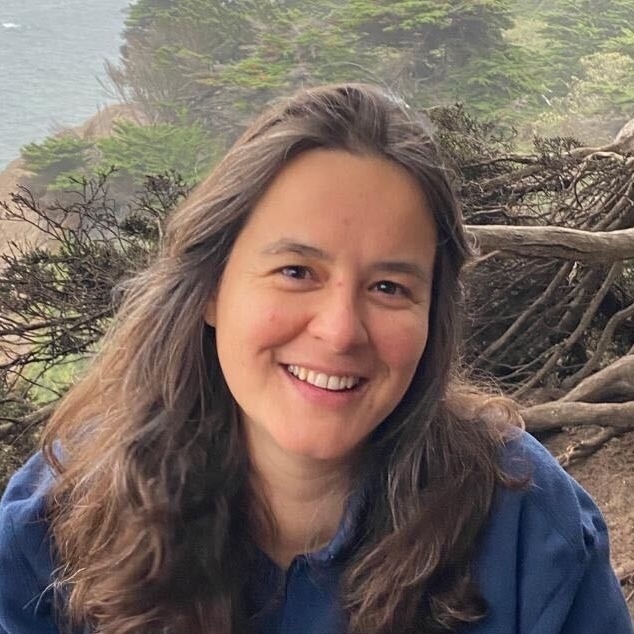
Anthropologist, educator, author, speaker, and activist
Dr. Bia Labate (Beatriz Caiuby Labate) is an anthropologist, educator, author, speaker, and activist, committed to the protection of sacred plants while amplifying the voices of marginalized communities in the psychedelic science field. As a queer Brazilian anthropologist based in San Francisco, she has been profoundly influenced by her experiences with ayahuasca since 1996.
Dr. Labate has a Ph.D. in social anthropology from the University of Campinas (UNICAMP) in Brazil. Her work focuses on plant medicines, drug policy, shamanism, ritual, religion, and social justice. She is the Executive Director of the Chacruna Institute for Psychedelic Plant Medicines and serves as a Public Education and Culture Specialist at the Multidisciplinary Association for Psychedelic Studies (MAPS).
Additionally, she is a Visiting Scholar at the Graduate Theological Union in Berkeley and acts as advisor for around 15 organizations, among them the Veteran Mental Health Leadership Coalition and the Alaska Entheogenic Awareness Council.
Dr. Labate is also a co-founder of the Interdisciplinary Group for Psychoactive Studies (NEIP) in Brazil and the editor of its site. She has authored, co-authored, and co-edited 28 books, three special-edition journals, and numerous peer-reviewed and online publications