Brand Trust: has the internet replaced true soul with data-driven shape-shifting? – Nick Richtsmeier





The internet was supposed to empower brands to build relationships based on authenticity and shared values. But for so many of us, does it now just feel like surveillance capitalism, exploiting and manipulating our attention, leading to mass brand distrust and marketing cynicism?
Joining us today is Nick Richtsmeier, a growth consultant and Founder of CultureCraft, who works directly with business and non-profits to solve the issue of trust decay in the marketplace.
https://www.damnsgiven.com/
https://culturecraft.com/
https://www.buzzsprout.com/2365925
https://www.linkedin.com/in/nickrichtsmeier/
In this episode, Nick joins us to explore the decline of brand trust in the digital age, focusing on the impact of surveillance capitalism, the concept of enshittification, and the role of algorithms in shaping consumer perceptions. We discuss the shift towards community-based growth strategies and the importance of authenticity in marketing, while also addressing the challenges posed by large tech platforms.
We also look at the dynamics of social movements, the role of brands in societal change, the challenges of building trust in the digital age, and the importance of human connection amidst the overwhelming influence of technology and the internet.
00:00 The Internet's Impact on Brand Trust
05:03 Understanding Enshittification and Its Effects
10:05 The Role of Algorithms in Brand Perception
15:03 The Shift Towards Community and Authenticity
19:58 Navigating the Future of Business Relationships
24:43 The Ticking Clock of Social Movements
29:00 The Role of Brands in Social Change
35:09 Navigating Trust in the Digital Age
39:55 The Illusion of Internet Trust
46:58 The Human Spirit and Digital Reality
If you like what you hear, please follow the show, leave a review, or let us know what else you’d like us to look into at https://www.ruinedbytheinternet.com/
Gareth King (00:37)
Nick, thanks so much for joining us and welcome to the show.
Nick Richtsmeier (00:39)
Yeah, absolutely.
Gareth King (00:40)
Before we get into it though, can you tell us a little bit about your background and the work that you do?
Nick Richtsmeier (00:45)
Yeah, so I think for lack of a better category, I live in the world of consulting, which is kind of all encompassing, but I work with firms and nonprofits of sort of unlock their dependency on a system that's no longer working. So some of that's internet related. Some of that's basically the assumptions under which people think growth happens for organisations, sort of hit a certain kind of a peak in the mid to late 2010s and has been slowly devolving since then. COVID played a role in that. A bunch of things play a role in that.
And so, you know, we help organisations kind of get back to fundamentals whether they're trying to find a new market or they're launching a new product or they've just gone through an M&A, these sort of major change inflections where they have to think through, okay, who are we really and how do we show up in the world to reconstitute the work we try to do.
I do it through a firm called Culturecraft that really came out of I spent 10 almost 15 years in wealth management, professional services and then I did kind of a agency marketing stint for a bit and now I'm here. So that's the deal.
Gareth King (01:47)
Awesome. All of that said, we are here to discuss what's happened with this internet driven loss of trust in brands as individuals and as a whole and everything that goes with that. From your perspective, how did we get here and what surprised you the most about how and why we did?
Nick Richtsmeier (01:54)
Oh there's been a ton of surprises along the way. I had like a whole year probably literally clinical grief of trying to process through the reality of what had happened to this thing that I used to love called the internet.
I think a lot of the signposts of how we got here, probably, I know has shown up at other times in your podcast. People are probably familiar with. Corey Doctorow's book 'Enshittification' came out this year. We've sort of adapted to this language that essentially the internet as we knew it was an open web, right? It was a place where you could go and find things and click from one thing to the next. The miracle invention of the hyperlink that could send you anywhere at any time, any place.
And we all sort of mainlined from that fountain, particularly those of us who were old enough to do it in the early 2000s and even the late 90s. It was this incredible, like, hey, I can find anything anywhere. I can find out about anything.
And then you have the advent of what has historically become to be known as Web2. And Web2 is the social web and the commercial web. And this is really the rise of Google and Facebook and PayPal and other vendors that essentially monetise the Internet, which we all knew was going to happen. I think it's not a question of whether the Internet should be monetised. It's a question of how it was done, right?
And my thesis is it took those platforms about 10 years of watching consumer behaviour, basically to figure out how to rule the roost and how to go, if we play both sides of the table against each other and hoard all the information in the middle, we can control the flow of commerce fundamentally. Google, of course, is an expert at that, but Meta is certainly in the mix. You could argue that Netflix is in the mix on that as well. Amazon, these big players basically learned how to pit consumers and sellers against each other and use them as the intermediary to control all of the data and all of the transaction.
And that, platformisation is the big fancy word for that, basically took the open web and said, Hey, for you to get to anything, you got to go through us. Now, if we were doing that in the human world, we would call that gangster behaviour, we would call that a payola, we would call it a lot of things. But because it's masked in the bubbly, white, glowy shape of the internet, we all just sort of got sucked into it.
And the reality is didn't have to be this way. There were a lot of other ways the internet could have evolved. There's a lot of other ways that it could have been monetised, but this is the one that happened.
I think surprises were how fast it happened. There was, there's been signs of this all along. And then all of a sudden, you know, circa 2023, 2024, it just fundamental relational aspects of the internet were basically toast. Your networks didn't work anymore. All the algorithms were now engagement bait instead of actually being network-based, all this stuff just happened and all of a sudden this thing that was kind of annoying and sort of ad-heavy and some things that were sort of less than its original form but fine, now felt at least coercive, if not outright harmful.
Gareth King (05:03)
Yeah, look it’s think it's undeniable as we've all seen, there’s definitely been as you said, in the last two, three years, maybe more, that everything feels like it's breaking a little bit. And a lot of us, probably myself included, can't quite put our finger on what it is. It's just a general vibe and a feeling that things aren't working anymore. And you raised in that passage there, enshittification. Let's just get on this feeling of downward quality that we're all experiencing, not only online but within the comms that come through brands and even their marketing within the space.
Everything just feels like as you said molding to an algorithm, that gangster, that intermediary, rather than having any of that kind of authenticity behind it. So, let's start with enshittification and then we can see where that takes us with this authenticity.
Nick Richtsmeier (05:58)
Yeah, I mean, I can't, I can't recommend enough that if people haven't either watched him on a podcast or listened or read Corey Doctorow's book on enshittification is arguably one of the seminal texts on this whole thing. And his whole thesis is essentially the way you enshittify something is you give the thing functionally for free and get people addicted to it when it's good and then slowly make it worse by basically breaking your promises.
And his big example of that is like Meta. When Facebook first rolled out, they swore up and down and sideways, we will never, ever, ever sell your data. Well, of course that was a lie. And then they sell the data to advertisers and then advertisers then are like, okay, well great, this is an advertising platform. And so advertisers make their heyday and businesses, you were doing digital marketing in the teens, like 14 to 18, it sort of felt like magic. It was like, just throw some money at this thing and it basically throws money back at you.
And it was digital arbitrage, attention arbitrage at a fundamental level. And as much as you could kind of feel a little dirty about it because you didn't necessarily like what Facebook was becoming from a consumer standpoint, it's hard to argue from a selling standpoint. Well, then the process of enshittification goes, Meta wakes up and goes, my gosh, we got both ends of the line on the call here and neither one of them can function without us. So now we're actually going to make it worse for sellers.
And there's all kinds of examples about this, the black box of ad selling, the black box Google SEO, all of these things where it slowly became worse to send information, to send messaging, to send marketing through these channels. This isn't just like conspiracy theory stuff. This is legitimate, you know, uh, research out there. And so then it feels shittier, right?
But the problem is you now have addiction on both sides. You have consumers who are literally addicted to the system because of the dopamine rush and all of that kind of stuff. Then you have sellers who are addicted to a fundamental belief that they simply cannot sell without participating with these vendors.
Now, I fundamentally believe that that's not true. There's a lot of ways to sell and you do not have to be beholden to the Silicon Valley tax. But most businesses don't believe that. And so they get more and more ramped up to do whatever they can do to make the algorithm work for them. And the intermediaries, my friends in marketing, start to feed into that. Then they build businesses of how can we help you amp it up to make the algorithm work for you.
And you'll hear people say, it's just the algorithm. You know, just, it's not that big a deal. Just learn what it wants and give it to it as if there's no ethical overlay to how these algorithms work.
Gareth King (08:28)
Yeah, it's such a complex yet simple issue that I think we can talk about. My background is in, marketing as and so I've seen this happen and it is still something that I scratch head about seeing brands chase this algorithm, rather than chase their own voice and their own authenticity. Everything is just so insincere.
And it's just bullshit from all sides. Everyone's selling these magic beans to try these algorithms and keep your brand or your company or your product or whatever it is you're trying to market, top of mind to consumers, that everybody's getting so burnt out by this non-stop deluge of shit that is coming via advertising on the internet.
Now, I next step along from that thought is that everyone is potentially is reading the same playbooks of how to beat the algorithm at any given moment, which is steering everybody into the same kind of small pen, and losing their unique voices and developing this kind of voice and comms style that they think that the platforms are going to reward them for having.
How damaging is A, this to the brands that are falling for this, but B, also to consumer perception of these brands that they're seeing do this sort of thing?
Nick Richtsmeier (09:47)
Yeah, I mean for the brands, it's existential. Because of the way that these systems are designed, it's the largest go the spoils. So you're seeing across, of almost every major knowledge-based industry you can think of, almost all of them in some form of consolidation. Media is consolidation, wealth is in consolidation, banking is in consolidation, entertainment, marketing, any of these classic sort of white collar knowledge based businesses are in some form of consolidation, where the majority of the growth is inorganic growth.
It's either bought clients, M&A, other forms of inorganic growth, and they're all sort of slowly marginalising organic growth. And they have to or they feel that they have to because they see the big players and the big players are getting a larger and larger and larger share of the business. And that consolidation isn't accidental. It isn't like, well, gosh, isn't that weird that all of a sudden everything is consolidating? Well, of course it's consolidating because all of these industries are built on systems, digital systems that are designed to extract value to the largest players.
So if you're a smaller medium sized business, $100 million or below, you are being daily incentivised into selling out your future that system. And we talk to businesses all the time. They are in long-term holding patterns. They're trying to get more out of existing clients. They’re trying to, where's inflation coming from? A lot of these businesses are trying to solve it by raising prices. All of these things are interconnected in terms of what's happening inside the economy. And that interconnectedness is causing the middle and small market to contract in on itself.
Now there's been enough free cash flow post COVID to just sort of buy everybody time. But the time is running out and the cash flow is running out. Everybody's racking up credit cards both literally and figuratively. It's a huge problem. And from a consumer standpoint, we don't even see the brands anymore. We just see the algorithm.
And another great book that came out this year, Algo Speak, if people haven't read Algo Speak, Algo Speak is really, really good, which basically speaks to just sort of the shrinking of even just the words that we use or the cadence. There’s research now that because of the uniformity of the LLM lexicography, literally sentence structures are consolidating. It's really, it's substantial.
Gareth King (12:06)
Yeah, there's two things in there I'd love for us to get into. The first one goes back to what you said a couple of minutes ago about giant platforms like Google or Meta making it super difficult to get any kind of visibility or traction without spending those sums of cash. I mean, I'm sure it's a deliberate choice for them to do that, but do you think that this was always the case or it's just become this kind of feeding loop that they're stuck in now and they've just, they're just chasing the dollar signs and everyone's throwing them at them?
And then also you said you mentioned something there about speaking cadence sentence structure, which is another great example of this loss of authentic voice and personality that we're seeing online. I'd love for us to kind of go bit deeper on that too. But let's start with hoovering up of the dollars and spend trying to buy an authentic voice and consumer connection via what consumers generally are seeing as the least sincere form of connection.
Nick Richtsmeier (13:07)
Yeah, mean, you your question of like, how did this happen? Or has it always been this way? It hasn't always been this way online. And there's a lot of evidence to that, again, in some of the congressional and DOJ hearings. If you look into the documentation of that, there's internal Google meetings where you can pinpoint the meeting where somebody has the aha moment of, we looked at the data. And if we make search worse, people buy more ads.
So we should make search worse. You see clear visibility of these moments where the incentive system starts to shift. And Google changes its perspective as sort of a caretaker of this sort of global good, the internet, and more as a vendor that should extract as much value out of it as possible. And that decision or series of decisions are just sort of slippage. It's hard to say. Someone with a deeper psychological understanding will have to decide that other than me. But it happens over a period of years. And to the point where now it just, we are where we are. And very difficult to unwind all that.
Gareth King (14:13)
Is there even a will to unwind it though? Or are they, you know, these, these giant, corporations really, in this era of consolidation, is it simply going to be full steam ahead until we've got less and less and less of those small, medium business up to whatever kind of budget metric we talk about, are just going to get eaten up by bigger players? And that's what we'll be left with?
Nick Richtsmeier (14:35)
Yeah, I think there's a reason why AI has caused some of the sturm und drang that it's done is because it really is a watershed moment for all of this. It's not rise of the LLMs and chat GPT and all that created these problems. It's just exacerbated it and made it so much more in the forefront, because what we're really seeing is a massive bifurcation of the economy. And that bifurcation is happening at the consumer level, the sort of decades long eradication of the middle class has accelerated to the point where you have really two classes of people, particularly in the West.
And same with businesses. You're seeing more and more businesses scale way up, way fast or scale way down and go, we're going to be one or two or three or four people. We're going to build our business based on who we know and who knows who we know. We're going to get back to community. We're going to get back to networking. We're going to get back to these human touch sort of things.
The irony of that is all that stuff still works if you have 50 or 100 employees, it's just 50 or 100 employee firms have a harder time mentally going, OK, we're going to make the pivot. But I think the bridge has been crossed, right? The dam is broke. Whatever metaphor you want. I don't think we're ever going back.
We now have the data to say that over 50 % and growing every day of the content that goes onto the internet is bot created or bot driven. So, what's going to happen and it's hard to say at this point what the scale of that's going to be, is businesses are going to decide to either spend 20 % of their revenue for Silicon Valley tax and try to last as long as they can until somebody buys them, which is what a lot of businesses are doing.
Or they're gonna pivot and go, this is not what I got out of bed for. This is not why I have a business. This is, you know, I've built a business to serve people, to build relationships, to provide value, to obviously make money, but I wanted to do it in a way that is true to who I am as a person. And they're gonna pivot to back to more of these community-based, relationship-based systems that may have presence on the internet. It's not like they're going full analog. They may have presence on the internet, but they aren't internet-driven growth. They're what we talk about in my world is trust-made growth, which is growth that is primarily driven by the viscosity of relationship and network versus the machinations of funnels and clicks and all of that.
Gareth King (16:43)
It's an interesting point about returning to community building and strengthening networks kind of a, at a local level. And there's part of me that hears that. And I see so many people talking about that, and a lot of it comes up in the context of this pushback against AI for various endeavours. It's like the suggested solution is we don't need to do that. We can build this grassroots level. But I think where that makes thought process go to is, are we so reliant and have had so much tunnel vision on internet being the magic bullet to solve all of this stuff through scale, that for a lot of us, we've really forgotten how to do that grassroots stuff, and even potentially just lost sight of it altogether?
Nick Richtsmeier (17:30)
Oh, I guess 100 % true. What I see in client relationships and in other people doing this kind of work is just a massive relearning of just how do you do this? COVID really just did brain twist, you know, kind of a really did a number on all of us. And it's not just that, but it certainly was an accelerator.
And this sense of like intentionally one-on-one having a conversation. You know, a very practical example. I think about myself as a really relational person. I didn't realise the extent that I had lost sight of it. And then somebody I really value said to me, said, you know, just you need to have more conversations. And so I just, all I did was made the decision that whenever possible, I was just going to put, let people know what my scheduling link was and I'd love to have a 20 minute chat with them.
And so I just started taking 20 minute chats and sometimes they were really boring and sometimes they were pointless and sometimes it was somebody trying to hard sell me. But I will tell you it transformed every aspect of my business, because I just intentionally made the path of least resistance. If you want to deal with Nick, don't send me an email. Don't read my blog. Don't do it. Don't sign up for my marketing. If you want to deal with Nick, just let's find 20 minutes and talk. And it sounds pedantic and silly and simple, but it has completely transformed my output, my enjoyment, the type of work I'm doing, because it's all driven by real conversations with real people.
Gareth King (18:42)
Yeah. Look, that is a great point around real conversations with real people, I also like having conversations with people. And they could be the smallest small talk with a complete stranger in a shop, you know, just putting a smile on someone's face and then making me smile, whatever, like it's fantastic.
But you raised the point there that something happened during COVID and I think anyone that denies it is potentially lying to themselves, that there hasn't been a very sizable shift in not just the willingness of people to have these conversations with each other, but the skill to be able to.
And I think that, there's two things that, immediate examples come to mind of that. One is remote working. Now whatever you someone's feelings on remote working are, it does provide a way to avoid having any kind of difficult conversation and running everything through text and writing in a digital sense. So that ability to negotiate in person is potentially lost.
But B the other thing that seen and is, it's a bit confusing to me, but I can potentially understand why, is I'm reading about more and more people who are generally not incapable, but really avoidant of even having a phone call. And I find that that's incredibly strange. And when about that and the loss of conversation skills, it doesn't actually surprise me why so many people are leaning so heavily into LLMs to produce all their comms for them as a solution. And then when I play that out to its next step, I just think of this kind of intellectual atrophy that's happening as more and more people are outsourcing their skills, helping them wither away and becoming more dependent on Gen AI and LLMs as the solve for literally everything.
And if we do that at scale, which you know, we see currently happening, everyone adopts that same cadence that you mentioned earlier, that same structure, and beyond just kind of the loss of this authenticity in brands and communication and marketing and manipulation in the digital space, it seems to be flowing out into people too.
And whether, whether we're kind of ready to acknowledge it beyond fringe discussions it does feel like a real problem. So I guess my question then is if it's people now that are being manipulated into this kind of grey mass, where does that leave these relationships and community building that these people are potentially going on to do? Or is that really not going to happen, and it's just the people that were conscious enough to actively look into it that will be able to, to leverage it properly?
Nick Richtsmeier (21:48)
I think what happens to the mass middle remains to be seen. There's always a risk in any time we're in sort of these seasons of upheaval and you're seeing consolidation of power and there's historical precedent for almost all this stuff. And so you look at those kinds of seasons and I don't mean to be like draconian, but there are plenty of examples where once thriving societies go into long stretches of decay because they stop creating systems for the majority of their populace to thrive.
The goal isn't to get too political on this call, but at end of the we're trying to build societies here. And the internet is the primary driver of society and what constitutes the society right now. That is a terrifying prospect, but it is absolutely true.
So yeah, we are absolutely at risk of losing some cohesive sense that we as a broad sense people are progressing, we're actually regressing. Now, that doesn't mean that individual people can't have a really good life and a really good business. And that's at some point the best we can do. The whole big red light thing that I've been trying to talk about everywhere I talk about it is you have the agency to do this. This is not prescribed. There is another way. There are a million other ways. And can you unwind Google? No. Can you stop Facebook? No. But you can carve out an existence in your business, in your professional life, in your social life, in whatever, where you get to function out of the core energy of your own agency.
And all of us still have that choice. We have that choice every day and we can build that habit. And the great news is you have millennia of genetics supporting You. Your body, your brain, your heart wants to do this. You just have to start leaning in that direction.
Gareth King (23:30)
Hmm. Yeah. It's an interesting point around that you, you have to want to do this. You hear that and it's like, it's quite motivating. But then the other part of me thinks that maybe people are just too comfortable. It's so much easier to be a dataset or just the product of a platform online, and then, what that makes me think about is, is A, are we just simply too comfortable and these giant platforms like Google, et cetera, know that, and what would it actually take to actively move away from this kind of surveillance capitalism to this, I guess, more organic human side?
Nick Richtsmeier (24:14)
Yeah, I try to talk about it in two ways. One is that hyper controlling systems, whether they're governments or businesses or economies or whatever, things that consolidate power and then build controlling infrastructure around it. Those systems always calcify. They always get too rigid. They always get too set in their ways and then time and history crumble underneath them.
These inorganic systems, these things that stop behaving in human, natural, organic ways, eventually collapse in on themselves because they can't move when the world moves, and eventually the world's going to move. So, there is a ticking clock on all this. The problem is if it gets too big and too calcified, then there's collateral damage, and that's another sort of terrifying prospect.
The other thing kind of more optimistically is every successful social movement, whether it was the right to vote for women or civil rights in the United States or ending slavery in the UK, like every major social movement, there's been lots of interesting work on this, that there's a collective mass of aligned people at three and a half percent. You get three and a half percent of the population aligned around a clarifying vision that this is wrong. It doesn't have to be this way. We can build a better world, and all of a sudden things start to move.
And so we don't, we don't have to convince half the world. The amazing thing is that culture is never made by democracy. Nobody goes and tries to get a 51 % vote to change culture. A really small concerted group of people change culture. And so you get to three and a half percent of people having conversations like this, and I'm having I don't know, I'm having like one of these conversations a day now. There’s real momentum here to say we're not trying to abandon the internet, but we're not gonna let it run our lives anymore.
Gareth King (25:59)
That's, that's a really interesting statistic. But knowing that 3.5 % is the catalyst number, one thing I'd love to talk about from here, I guess this can segue us into that, is brands jumping on those social movements. You know, the larger a brand, potentially they can tip the scales by getting behind something, which I'm sure they do.
Whether people are actually less aware of what's going on, than when they see these kind of smaller brands jumping on something and people present this inherent cynicism of them, whether it's greenwashing or anything like that. It feels the ones with the most power to actively affect society and life, they‘re not receiving the scrutiny for doing that that the smaller brands that lose this trust do, by making one mistake that consumers can easily find and focus on. Is that simply because it's easier for people to process a small mistake than contemplate the actual real power that's going on with these gigantic corporations in the internet space?
Nick Richtsmeier (27:01)
Well, yeah, I mean, I think there's a reason why monopolies work and there's a reason why major players in today's economy are saying that monopoly is best way to run a business, is because once something hits a certain level of scale duopoly, monopoly, oligopoly, there's a lot of different structures that can make that work, but once something gets to a certain level of scale, the human brain is not built, most of us are not wired to start thinking about that thing as an agent. It's just the scale of it's too big.
So it becomes like the furniture, right? I was having a conversation last night with another perfectly smart, brilliant adult, but doesn't function in these spaces. And I was explaining sort of the extraction system underneath the LLMs and how they use labour from the global South to train the LLMs, all these kinds of things. And very compassionate person, but she was like, huh, that sucks.
Like I'm a little neurotic and crazy and I like thinking about these things. Most people it's like, what am going to do? It's because these things are so big, they become the furniture and they don't feel that they need to trust Google. People hate Google, right? Like at the time of this recording, this is the week of Warner Brothers supposedly being sold to Netflix.
And one of the big pieces of news that came out in that cycle is, hey, secretly everybody in Hollywood hates Netflix, but they didn't feel like they could say it out loud. Well, yeah, because spent the last decade being lulled into the belief that there's no way around Netflix. You just have to live with Netflix. And so they just start treating Netflix like the furniture. Well, then Netflix makes a big move, perhaps potentially a move that's the right move or the wrong move, again, we'll know in some day.
And people sort of go, well, wait a second. Maybe I don't have with Netflix. Maybe now it's suddenly pulls itself off the wallpaper. It's not the furniture anymore. And I can think about it. But when you're a small business or a medium sized business, you're never the furniture. You're always one of a dozen options. And so the onus of responsibility to actually be something of value is so much higher because people just can go choose something else.
Gareth King (28:57)
It's such an insightful point story about, you know, that sucks at something at such a scale. And I think that's, it's so incredibly common. And it's almost like the more that you are fed these larger scale problems, ironically through the internet, it does almost just give you this, this diet, of not apathy because you know, it is intended to emotionally enrage you or, or entertain you, but it does feel like these larger issues, which do require people jettisoning that idea that I'm so small and insignificant that I can't do anything.
But you know, consuming a bomb blowing up 20 people, in the exact same effort and format as a cat riding on a turtle, it just levels this playing field and turns everything into this kind of grey blob. And I wonder whether there's some of that apathy is simply from that. It's like it's much easier to just consume than actively participate in anything.
Just feels like everything that you said, the smaller brands that potentially can focus on community building, building relationships and building real human trust outside of this kind hyper feed of apathy, is such a winning move, especially at a time when people are starting to talk about human connections and being more human in the face of LLMs as the kind of winning play as we move forward.
Nick Richtsmeier (30:26)
Yeah, because otherwise you're just you're just part of the machine. I mean, that's the thing. I deal less and less with brands that are trying to just like go all in on digital advertising or something like that. But I've worked with those kinds of brands many times in the past, sometimes at a very deep level. And what I try to coach have coached them through is to say, listen, there's absolutely nothing you can do in your ad copy, ad design, positioning, product design, none of it matters if you are in the same flow of consciousness that you just described.
A bomb going off, a kitty on a turtle, some person doing a funny dance. If you're in that same stream of consciousness, your only hope is to do some sort of a dopamine hook that gets people to click. And that click has to have immediate satisfaction. So, in most cases, it only works if you're like selling soap or you're selling, you know, like these sort of Instagram kind of things. You can still do that kind of a stuff, but good luck scaling it. Cause then you're literally just adding advertising to add advertising because you're not memorable. don't, nobody remembers you.
The good news, is because the incentive to participate in that in current reality is so low, so if you're not doing it now, don't start. Dear God, don't start.
Gareth King (31:40)
Yeah, it is. It is something that I've seen and it's something that drives me insane, whether I'm using the platforms or tasked with creating something for the platforms, it's again, it's something that I just have never been able to wrap my head around the point of it, but I'm sure there is a point to it for some people, is this chasing of trends as a brand, rather than your own voice. It might be like, hey, what is trending on Tik Tok this morning? Let's slap our brand logo on it and try and ride that wave.
And as you said, there's no lasting anything. you're doing something for potentially five seconds of likes that are never going to build a relationship, never going to convert to a lead, let alone a sale, but this is where we are. And it's like, everyone has to be deceptive, you know, in the world of marketing, it's like, we have to make it look like UGC. So, all these brands are trying to game this algorithm, knowing that no one wants to see their messaging or their advertising. So they disguise it as what looks like a normal piece of content. When you think of it, it's even more deceptive than just being who you are.
But again, it's just getting into a space that in my opinion, you know, and this is, this is something I've had many heated discussions with people about in my time, but it feels like this is a real consumer entertainment space and brands just like forcing their way into it, trying to game it and trying to build connections through bursting the door down and going, hey, I'm here too. It just makes me think of when Facebook brand pages started taking off and everybody imagined that their brand was so interesting and so important that people, real people, wanted to have a two-way dialogue with the brands, and it just feels like this is a modern version of that.
Now that said, don't get me wrong. There is some incredible marketing ideas that are done on social that actually have a positive tangible benefit for people, society, etc. But most of it is just pixel pollution. It's just taking up space, flooding this world that’s already flooded by everything. As you said, flooded by AI now as well. And that's before we even get into hyper targeting and retargeting, which is another aspect I'd love for us to talk about, about trust in brands.
So people see brands forcing their way into their space, pretending to be something they're not. And then also on this hyper targeting, attempt at trying to build a relationship. How many times have you heard someone go I was talking about buying a collar for my dog, and now I'm getting dog collar adverts on my phone. What's going on here? And it like there is this real sense of everyone's aware of how creepy and slightly dystopian it all is, but we all just deal with it. Is that because we're just captured by these platforms you think, and the convenience factor? Or, you know, that's the price we're willing to pay to be entertained online?
Nick Richtsmeier (34:42)
I think for the average person, they’re just not thinking about it that hard. You need to understand that every person in the current system, not every person, but almost every person is substantially lonely, is deeply afraid and is mentally exhausted. So, every person is showing up to the world lonely, afraid, and mentally exhausted. So, when that's your state, you are in a chronic state of vulnerability. A chronic state of vulnerability makes you the logical target for addiction machines.
So I don't blame people that they're struggling to find the willpower to pull up from the addiction machines. It's really hard to do. And we know that more information doesn't un-addict people. Like that is a proven fact that being more educated about something doesn't reduce its capacity to addict you. So knowing that we're in the midst of a surveillance state and a surveillance economy, knowing that that is basically manipulating your dopamine every day. Like everybody knows some version of this and it just, what do you want me to do about it? You want me to throw away my phone? Right? And we slide into that comfortable space of cynicism, and really what is a high functioning nihilism that nothing matters.
Seemingly oversimplified in some way that may be, that's why my constant advice to people is you need to take an active agency. If you're not ready to delete Instagram, that's OK. Go for a walk. Call a friend. Have one more conversation. And just start putting one foot in front of the others, where you are the main character in your own story again. Because most people have been inoculated by culture and by society and by pain and shitty things that happen in life and the internet above all, to believe that they are not the main character in their own story. And we are. We get to make whatever version of this we want. But you have to start making choices in that direction.
Gareth King (36:33)
Yes, and that look, that's actually a great segue into my next question around making whatever version of this we want, being the main character in our story, and on that point, what I'd love to touch on now is the rise of everybody accessing Gen. A.I. and putting stuff onto the Internet.
Now, everybody can use these tools to become whatever they want to be, present a picture of whatever they want to be. And one of the things that I feel like at scale we’re really struggling with now is authenticity verification of whatever we're seeing online. As you said, we've kind of tipped past this point where, when now like, was it a 51 % or something of content being put online is, is fake. Well, it's not fake. It's real content, but it's not, it's not human made really.
Two parts here. A, can we reverse that trend or are we just getting started with it and it's only going to get worse? But B, does that kind of take us into a bit of a doom loop for brand trust online? We know people as individuals, brands, companies, et cetera, are turning to AI more and more and more for a focus on costs and time efficiencies, are we just speed running now to a place where we just don't know what we can trust? And that includes people and companies and brands themselves.
Nick Richtsmeier (38:01)
Yeah, I mean, the first thing people have to understand is that trust and efficiency are antithetical to each other. If you went on a date with someone and said, and it's your first date, and you're like, hey, what's the fastest, most efficient way we can trust each other? Well, the trust is gone already, right? One of the things I often say to people is we spent a generation obsessing about efficiency only to find out the inefficiencies we're load-bearing.
And the inefficiencies, things like trust, trust is wildly inefficient, is part of what carries the load of a functioning society. So, I don't actually believe in internet-based trust. I don't even think that exists. Like, I think we can mime at it. We can create a simulcrum of it for a period of time. We can sort of lend trust for a little bit of time, enough to sort of cross a threshold and have actually learned how to trust each other. But like, I just think brands should, by and large, completely abandon the idea of internet trust.
Because trust is really something that happens way back in the reptilian brain, and it's this little test of, in this context, are you going to harm me? And when we have relationships with people, we've tested that little trigger in like a thousand different contexts. So now we have this like big pipeline of trust, which can be shut really fast if we get harmed in the wrong way.
So, if we use that framing in this context, are you going to harm me? And you think about the internet. Well, I'm in a constant state of harm on the internet. By being on the internet, I am being harmed. So if I meet you on the internet, my little harm radar's already up, right?
So, Gareth, you and I met through a third party that introduced us to each other, but functionally we had like an internet-based thing and it took us a long time of like scouting each other on the internet to be like, are we actually going to talk to each other? Should we talk to each other? We read it. Right. Right. That whole process is us labouring through all of that trust resistance. And then we spent 15 minutes on the phone together. We're like, this guy's cool. Because we, we had removed ourselves from a harm-based
So I don't understand why any brand would go, how do I build trust on the internet? You don't. You don't. You can entertain people. You can inform people. You can engage. There are things you can still do on the internet, but your whole point is to get them into a place where they can actually trust you, because they can't online.
Gareth King (40:04)
That is such a brilliant point that you've made there around the trust is built in the mess, your example of kind of how we got to this point, you and I, is a perfect example. And that goes back to what you said a few minutes ago, that we just had to sit down for a quick chat to find the person behind the words and the content that you're just seeing on a screen. So I think there is something for everybody to be super conscious of, that it's humans that you're building a relationship with, not a screen of pixels whether it's your computer, your phone, or something else.
But that said, what do you think the future of brand trust, where does it go in the digital realm from here? Do we keep getting further and further down the path of enshittification for everything? Do we get more and more just AI, just kind of surrender to it? Or do you think we reach this critical mass point where as a society, we go, look enough, we've let these giant companies, whether it's, you know, open AI or anything kind of like that, we've had enough now. Or do think we'll apathetic and carry on?
Nick Richtsmeier (41:23)
I'll use a specific example that's a little bit time bound, but again, I think it's germane. A lot of this LLM resistance this year in 2025 was primarily focused on Open AI. People think about it more largely than that, but certainly that was sort of the personification of a lot of the AI sucks energy. And that was in some ways a response to just their enormous meteoric rise.
If you paid attention the last two or three weeks, or about two or three weeks post the Gemini 3 launch, and then there's all this rhetoric of how much better Gemini 3 is than any other Open AI thing. And a lot of people have notched down their LLMs are bad language a couple notches, because now it's a Google product. And remember, Google's the wallpaper. So, I can't get away from it. And now maybe it's kind of good. I can be mad about this Open AI thing because in theory I could jettison them. In theory we could make them go away. What you're starting to read now in the trade, we could Netscape them. could get rid of, you know, they were a brief thing. But now, but Gemini 3, well that's Google.
And it's not that we trust Google more. It's that we've accepted them as a permanent part of our lives. We treat them like they're electricity or the telephone. And I use that example to get to the point of saying, this is fait accompli, it's done. The internet is going to continue to become layers and layers and layers of inaccessible digital artifice.
Now the artifice will become less off putting because it'll be a better simulation, but it is a simulation of a simulation of a simulation of a simulation. We existed for a brief period of time that the internet was a connectivity medium for the real world, real people, real companies, real brands using this tool to connect to each other.
Slowly through social media and a handful of other tools, it became a simulation of the real thing. And now it's another layer of simulation, another layer of simulation. That's done. So, are there brands that could find ways to grab people's attention within the simulation? Sure. Can you put up billboards in the metaverse? Sure. There are ways to become recognisable in a simulation. It's not how I want to live my life, but if you want to do that, you can do that. But you're going to have to, in most cases, drag people out of the simulation if you actually want them to trust you.
Now, there's a lot of people who are just going to use the system and go, well, I just need to find a way to get chat GPT to bring up my product when people are searching and then I'll just sell right through chat GPT. Now I would tell them you shouldn't do that because then you'll never actually know who your customer is and you'll have no relationships with anybody. You're literally a vendor to chat GPT, which is an incredibly high risk business proposition, but lots of people do it.
Gareth King (44:18)
Yeah, the high risk proposition, part of me I just think, this is just the short term ROI, quarterly shareholder delivery, whether people want to admit it or not. But you also said something there around this simulation of a simulation of a simulation, which made me think back to what, what we said, back towards the start of this conversation, the concept of enshittification.
As more and more people are sadly finding real life going through enshittification for themselves, they are probably looking for that idealised simulation, which, feels like it's quite a symbiotic relationship that could lead us to a very dark place if we're not careful.
Nick Richtsmeier (44:58)
Yeah, I think, again, historically, we've seen societies lose themselves to this, where you just allow large chunks of your society to basically become fodder for your economic engine. And we're doing it again. I mean, a surveillance economy is fundamentally about labour economics and turning humans into consumers and then consumers into economic units. That's exactly what's happening.
And I'm among, I think, a group of people who are trying to raise the flag of, guess what? No, humans are humans. Humans aren't consumers. They're not, and consumers aren't economic units. We're not all serfs on some digital fiefdom. We're actual real people. But a lot of folks are going to get chewed up by this. I mean, think about, this is turning more dark than I want it to be because I'm actually incredibly optimistic.
But Gareth, we've we've had more than a dozen people commit assisted self harm through LLMs documented. If that happened in any other business in any other way, 20, 25, 30 years ago, if all of a sudden cars were helping people self harm, it just... we're just like, well, what are we gonna do?
Gareth King (46:09)
Yeah, look, without getting too kind of tinfoil, from what I can see, so much right now to use some internet terminology of the hopium about anything is all predicated on this gigantic investment shovelled into AI.
And it's like all the chips are on that table, all the bets are on there and it has to succeed or we're all screwed. So, I don't know where that goes, but it feels like that’s where everything's going. People be damned. Everything is wealth extraction from everything else to funnel into AI as the only bet that we're going to get out of whatever mess that we're getting into.
But I also like to try and be optimistic, as you said. And I would love now if we could just finish up by you sharing some of your optimism about where we go from here.
Nick Richtsmeier (46:59)
I said this the other day, I'll say it here in this context. You know, the human spirit remains undefeated. That when we lean into all the beautiful things of what it means to be human, to connect, to sell, to buy, to engage, like, I don't mean sell to buy in a transactional sense, but to offer value and to receive value and to trade for that value, to collaborate, to partner, to celebrate, to grieve, to create shared spaces, to do all of the things.
Another thinker said, everything that's analog, everything that's real is analog. And so it's really helpful for me to remember that it's fascinating and important to talk about all this digital stuff and what's happening in AI and whatever, but it's all, none of it's real. It's all made up. It all could go away. You could like the servers could go down tomorrow and it's over and life would go on. Right. And all that matters about life would go on. And the more we just orient to that, we have to just turn our attention.
We've been inoculated to believe this is about something grabbing our attention, and really the whole game to be played is what are we giving attention to? You have this powerful faculty of attention and what are you pointing it at? And if you start pointing it at things that are real, other humans, animals, plants, relationships, communities, cities, towns, right?
Like in this massive, expansive investment in the internet, our cities have stagnated for 20 years from lack of investment. Well, why? Because we've been playing over here in imaginary land. All of the real hope is in the things that awaken us, art, beauty, connection, trading, taking risks together. And the good news is there's endless opportunities for that. There's no shortage of opportunities for that. You just have to choose it.
Gareth King (48:44)
Yes. And I think that, I think that's a, it's a great point, you know, we just have to choose it. And I think that the more people choose it, we'll expose more people to it. And we'll all remember again, that it is those human connections, as you said, like that's the kind of meat that makes life life, not this imaginary world. So, I think that's a very poignant observation and a great note to finish up on there.
But thanks for your time, Nick. What have you got coming up and where can people follow what you're up to?
Nick Richtsmeier (49:12)
Yeah, the easiest way to track me is at my newsletter and podcast site, damnsgiven.com. So damnsgiven.com, just how you think it's spelled. And then in probably Q2 of 2026, I've got sort of the companion book coming out called The Damn Rules, which is sort of the irritatingly obvious rules that we've all ignored that actually might set us free.
And so love talking about these kinds of things, not because I want to be a big tech head, but because by understanding the game that we're in, we can actually liberate ourselves from it and learn to have a good time again.
Gareth King (49:44)
Awesome, I like the sound of that. Nick, thank you so much.
Nick Richtsmeier (49:47)
Thank you.
Founder / Former CIO / Giver of Damns / Struggling Gardener
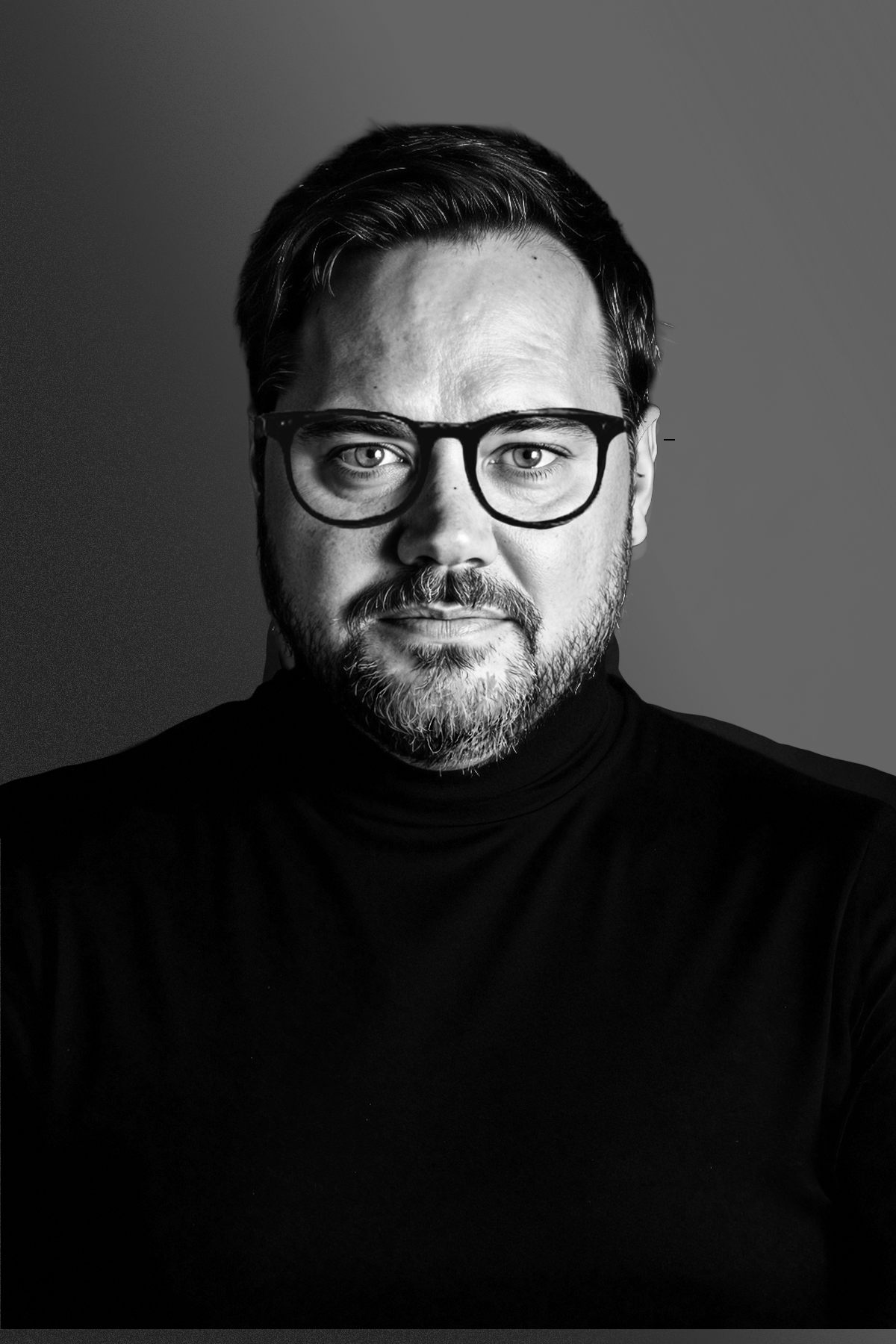
Nick Richtsmeier is the founder of CultureCraft®, a growth strategy consultancy, and creator of Trust-Made GrowthTM, a system for helping leaders break free from antiquated growth models that take more than they give and instead build ventures rooted in value and connection. He’s advised companies from startup to $100M+ to eschew marketing fads, and focus on humanistic essentials to build networks of partners, customers, and prospects they love. His 84-Point Trust Inspection surfaces the invisible incentives that erode culture, clarity, and opportunity. From his quiet Iowa acreage, Nick helps leaders build what actually lasts— outside the noise, beyond the playbook, and in defiance of the rigged game.