Empowerment: Objectification Rebranded as Agency? | Digital Monetisation & the Attention Economy

 Apple Podcasts
 Spotify
 YouTube
 iHeartRadio
 Amazon Music
 Audible
 When it comes to empowering ourselves, we were told the internet would give us back control. But instead, has it simply delivered a more efficient way for us to become products, and successfully rebranded objectification as agency?
Welcome to Ruined By The Internet? - the show where we examine how technology is shaping modern life - whether we want it to or not.
Follow or subscribe to never miss the next investigation. https://www.ruinedbytheinternet.com/
We’re joined by Courtney Kocak - writer, comedian, and author of the memoir ‘Girl Gone Wild’ - to investigate one of the most uncomfortable questions about what technology has done to identity, autonomy, power, and the people caught in between.
In this episode we trace the journey from early 2000s media to today's self-monetisation platforms, examine how the attention economy and algorithms have reshaped desire and self-perception, investigate the rise of online male communities and their generational impact, and ask whether AI is accelerating the problem - or simply making it harder to see.
(00:00) The Internet's impact on empowerment and objectification
(03:10) From early 2000s media to today's self-monetization platforms
(07:50) The evolution of pop culture and its increasingly explicit direction
(09:12) Tracing the cultural roots of today's online extremity
(13:28) The influence of the attention economy
(14:37) The rise of the manosphere and its impact
(16:29) The generational difference: navigating online life and authenticity
(20:13) Shifting attitudes toward sex work and societal acceptance
(23:29) The influence of explicit online content
(25:34) How online validation shapes our self-perception
(27:13) Authenticity and the rejection of algorithm-driven content
(30:18) The potential and pitfalls of AI in digital content and society
(34:47) The impact of AI-generated actors and content on creative industries
(36:57) The slow political response to AI and digital regulation
(38:15) The importance of nuanced conversations
(39:41) Concerns about technology's societal effects
Key takeaways:
• The Evolution of Digital Empowerment: While early-2000s entities like Girls Gone Wild commodified young women to enrich a few male executives, modern platforms like OnlyFans represent a genuine shift in financial and creative control.
• The Rise of "Honest" Pop Culture: While turn-of-the-century media used humour to mask toxic behaviours and normalise sexual assault, modern internet culture and art are arguably more explicit but far more honest, allowing women to remain in control of their own sexuality.
• Algorithmic ‘Brain Rot’: Modern digital platforms rely on attention-economy algorithms that trap creators and audiences in loops of outrage, hot takes, and hyper-fixation—transforming real human lives into content mills designed to feed the product.
• The Looming Threat of AI Scale: As AI-generated bot content and virtual figures surpass 50% of online material, individual human creators face an unsustainable battle for attention against automated systems.
If this episode got you thinking, check out:
Self Improvement: Progress Replaced With Performance?
https://pod.link/1825601333/episode/NTI5M2Y0OWItNWMzNy00OGMxLTljZTgtOTk5MjI2MGM1YzRj
Dating & Relationships: A Dehumanising Paradox of Infinite Choice?
https://pod.link/1825601333/episode/NDAyYjM4YjItNjgxYi00NWEyLTlkZTQtZWY1NTk0N2E3YjFi
The Human Identity: Authenticity or Algorithmic Performance?
https://pod.link/1825601333/episode/YzU1NjhlYzYtMDVjNC00ODJkLTgzYjQtMzBhNDcwN2RkZTJi
Guest links — Courtney Kocak
Website: https://www.courtneykocak.com/
Podcast: https://www.privatepartsunknown.com/
Instagram: https://www.instagram.com/courtneykocak/
TikTok: https://www.tiktok.com/@courtneykocak
Join the investigation
Visit us: https://www.ruinedbytheinternet.com/
Share your thoughts: https://www.ruinedbytheinternet.com/survey/
Support the show: https://buymeacoffee.com/rbtishow
Gareth King (00:33)
Courtney, thank you so much for joining us and welcome to Ruined by the Internet?
Courtney Kocak (00:39)
Thank you for having me. I'm excited to be here.
Gareth King (00:41)
Before we get into it though, can you tell us a little bit about yourself and the journey that's led you to this point?
Courtney Kocak (00:47)
Oh my, okay, so I started as an actor. I pivoted to writing in my later 20s, about 27. I was a frustrated actor, and I pivoted into writing, and that led me to podcasting as a vehicle for comedy. I am also a stand-up comedian. I cannot pick a lane, so I do a of different things. And my debut memoir, Girl Gone Wild, is out with Trio House Press.
Gareth King (01:17)
We'll definitely get into that one a little bit further, but the promise of empowerment has evolved since the arrival of the internet over the last few decades. What are your thoughts on how the idea of empowerment in quotation marks exists right now?
Courtney Kocak (01:32)
It's a really interesting time because we went through Me Too, but now we're right back. It's like there was a backlash to Me Too, like a very strong backlash. And now I cannot look at Threads or any social media without seeing news about the Epstein files, which just, I feel like, illustrates that all of this has been going on this whole time.
And so, what I do think is, and I don't have the context of being like a 60s or 70s feminist. So, I don't know how it felt for them. But how I feel for me is like, I have gotten to a point of personal empowerment where it's like, it's hard to put that back in a box.
It's not going to go anywhere. And so, I feel like that is common among a lot of millennial women. And I just feel like that's going to be a reckoning for any sort of backlash, is like there's a lot of women now who are used to having rights and feeling pretty empowered, however flawed that is. And so that's going to be something society has to contend with if the patriarchy wants to survive.
Gareth King (02:40)
Yeah, look, it is a great point. Feeling empowered in yourself is something that you really grow into. And obviously the more comfortable you are with yourself, the more you unlock that. But your new book, Girl Gone Wild. Now, for those of us old enough to remember, which is probably almost everybody that was online at the time, Girls Gone Wild was very well known for a range of reasons.
Looking back to that time and then fast forwarding to where we are now in 2026, how do you think the progression from the bus as the vehicle, the literal vehicle of that time, through to the rise of social media, to now with these self-monetization platforms, whether they're things like Twitch all the way through to things like OnlyFans, has changed what we actually mean by empowerment? And are we kind of being hoodwinked under this concept of empowerment?
Courtney Kocak (03:35)
That's a very good question. First, I'm really curious. Did you get the infomercials and everything in Australia growing up?
Gareth King (03:42)
Probably not infomercials, but it was very... Yeah, everyone that was online kind of knew about it, you know, and it wasn't something you actually had to look too hard to find. I think that may have allowed Girls Gone Wild as an entity to spread maybe further than it might in 2026, perhaps.
Courtney Kocak (04:04)
That is really interesting, though of course social media is way more pervasive than it was then, so we probably still wouldn't be able to avoid it today. Growing up in the United States, the infomercials for Girls Gone Wild were everywhere, and you could not watch late night TV without coming across a commercial for Girls Gone Wild, and it was basically girls partying on spring break, young girls like 21 maybe, there were definitely cases where they were underage. There were lawsuits about that.
But the infomercials were pretty innocuous, and it seemed there was something kind of tame about the censors and the party vibe, and yes, they were promoting porn, but that was sort of like obscured in a way.
And so, when I took the job on the Girls Gone Wild Tour, that's what I had in mind. I was not thinking about oh they're going to coerce these girls, these drunk girls into signing contracts and into doing sexual acts that they had not previously planned on this night that they went out to have a good time.
And so that's what I really struggled with with Girls Gone Wild. Brand represented something I think a little more playful, and a lot more empowered than what the actual product was. The actual product was really about making a very few amount of men, one man in particular, rich, at the expense of all these young women who were not in the right mindset to make those decisions.
And I was a young woman at the time. And so, I very much related to, I, you know, at this period in my life, I was an actor. I was, and I...Listen, I'm an exhibitionist, but it was expected that I would do nudity in every independent film that I did. Sexual assault was part of my life. You know, there were all these other things that were going on, and I knew what it felt like to be victimized in this way.
So that was my experience with Girls Gone Wild. I took the job as just like a way to make money while I was struggling in LA, and I lasted like six or seven weeks on the tour and then I've never been so depressed in my life as I was when I got off that tour.
But it was really a transformative experience for me. Like I'm not sure if I wouldn't have had those early 20s experiences where society was showing me what it thought of women, especially young women. I don't know if I would be a writer today. Like, maybe I would still be acting or doing something else, but it really flipped a switch in my brain.
And so, no, was that an empowered time? No. I do, like, now I do OnlyFans, and I don't do porn on OnlyFans, but I do, like, Playboy-style, topless stuff. And that is actually an empowered experience for me, for the most part. And the difference is I make 80% of the money, and so do other creat... I'm sure there are exceptions where studios have gotten involved and people are working under them. But most OnlyFans creators are making most of the money. They're making most of the decisions about what kind of content they're creating. They're in charge of what the marketing is portraying them as.
And so, do I think something like that is more empowered than Girls Gone Wild? For sure. Is it perfect? Probably not. But like I'm not anti-sex work. I'm not, like I'm very sex positive. And this version is so much better than Girls Gone Wild or the old porn studio system, I would say for sure.
Gareth King (07:50)
Yeah, it is a good point that you'd raised there and that level of control, and even that 80% revenue that people, creators can take from that, which is from my understanding so flipped on its head from where it might've been once upon a time.
But you did, you did say something in that passage there around the presentation of Girls Gone Wild as being a little bit more party, a little bit more, maybe safer than what the reality was. And that makes me think back to around that late nineties, early 2000s stuff. American Pie, like that genre of film, not just that series, like that was peak pop culture. And I look at it now and I'm like, this is so quaint. Do you know what I mean? It feels like it should be rated PG or something now compared to what, what's going on out there.
And I guess the empowerment that has, has come along has also led to a massive dialling up of maybe not the exploitation or the expectation, but just the, the level of, for lack of a better word, extremity of this, way that this kind of culture presents itself. Like I remember a little while ago, I was in a shop and I heard the song that they were playing, and I think it was like Cardi B or something like that. And I was like, oh my God, you know, like this is, this is what the kids are listening to now?
It was like my first real old man moment. And maybe that's just because I'm from that time, which felt a little bit more American Pie-like and not so hyper-sexualized. Do you think that that turn of the century pop culture, American Pie stuff was kind of laying the groundwork for something more sinister that's been turbocharged by the internet?
Courtney Kocak (09:34)
That, your perspective is so interesting to me because I feel like the thing about Girls Gone Wild was everyone was in on this cultural joke, right? But maybe not even in on it. Because it was a cultural joke, it allowed it to seem more innocent than it actually was.
There was a politician around that time in America, John Kerry, he made a Girls Gone Wild joke because people like that were joking about it, it made it seem more acceptable than it probably should have been, right? And when I watch back movies, like I haven't seen American Pie in the last at least a decade, so I can't speak to that one. But when I watch a lot of other old shows, I'll be like, my God, they’re like making rape seem innocent, or like acceptable, or they're couching it in a joke and it's not funny.
You know, it's like, it's hard to watch when you rewatch it with your, you know, 2026 filter on, you're like, what the fuck were we doing? And so, in some ways, what I think you're talking about of like how the internet has made things more extreme or yeah, I feel like maybe it's just more… honest, maybe it's also a volume issue? But I do think it's harder to hide behind a joke in the same way that it used to be.
And I think that is actually a positive move. Now, is it super easy to get all kinds of like hardcore raunchy porn at the click of a button, even if you're 13? Yes. Is that a problem? Yes. But like as far as, I think if Cardi, I would rather have Cardi B rapping about something about her pussy that seems extreme. Sorry, you can beep this out.
Gareth King (11:37)
No, I think that might've been the song actually. I remember I Googled the lyrics afterwards. was with my fiancée and I was like, what the fuck was that?
Courtney Kocak (11:48)
But I’d rather have that, and a woman, you know, in control of her own sexuality, than dudes making a joke about rape. Do you know what I mean? So, like, even though on the surface it does maybe seem more explicit, I think it's actually a move in the right direction as strange as that might sound.
Gareth King (12:07)
No, that makes sense as well. I watch Friends still sometimes and I'm just like, how are we doing this? These jokes, like everything's got like a laugh track. It's like you say like jokes that insinuate rape or something. I was like, you could never make this stuff now, even though it feels so innocent.
But your point that you said there about having to make things more explicit or whether it's extreme. When I think about things like that, I feel that that is not so much a byproduct of people's tastes, as much as a by-product of the way that these algorithms reward creators. You know what mean?
Like we're in this attention economy and we all know that. And no matter what you're creating, they're all fighting for a finite amount of human attention in a world where that's just getting squashed through synthetic-created stuff.
And obviously once we bring money into it as well, as a lot of these platforms do, the way to make the money is to be more extreme in whatever you're doing. So constantly pushing further and further and further with everything, may just be a symptom of the way that technology and the internet now rewards us for being able to attract users, rather than perhaps the desires of the creators themselves. I mean, is this something that you've noticed or seen at all?
Courtney Kocak (13:28)
Yeah, I think you're spot on on that. And when you're talking about American Pie seeming quaint, what does seem quaint about that old media is they're not in that same brain rot spiral. And we weren't. And so that is kind of quaint that we used to live like that.
And we weren't at the whims of this algorithm that makes everyone more divided, and that everybody's trying to have a hot take, and everybody is trying to get attention for all, whether they're being extreme, or being fake in that they're trying to rage bait or whatever the case is. That is the brain rot of today.
So, while we've made some strides that are actually really positive, we are going to have to do something about the way that we are influenced by these algorithms, because if I look at what is causing issues in this society today, there are so many upsides to the internet, but that is such a big downside. It's going to rip us apart if we don't get some sort of handle on it.
Gareth King (14:37)
Yeah, you know, on the point that you mentioned there, like what we're being influenced by. Now, I'm not sure if you've watched it or not, but the latest Louis Theroux Netflix thing, the Manosphere one.
Courtney Kocak (14:47)
I haven't seen that yet. I do want to watch it. Yeah.
Gareth King (14:50)
I thought it was really interesting because it's all these digital creators that, and this like really extreme version of like, hey, this is what a man is or whatever. And I'm watching it. I, you know, I’ve just turned 45 years old, and I'm watching it, and I'm like, this is shit made for 14-year-olds. You know what I mean? Like, like, who thinks these guys are not playing a character, unless somebody that's not, you know, grown up into an adult, because all the little fans and stuff that they get in this documentary, are just like little kids. And I'm like, this is almost a little bit sad.
And I thought these guys that, yeah, they are playing a character, but it is that extreme monetization version of everything. And I think that, yes, that is how the ecosystem works. It empowers everybody to kind of become a character and create something that they want to be and monetize, but that lower cognition brain rot is almost allowing this junk food to spread so much more, which is going to be sad for people that actually doing interesting stuff.
Courtney Kocak (15:59)
Yeah, I completely agree with you. And I feel like we are very lucky to be raised in the generation that we were. We kind of came in at the perfect time where we got a sense of what it was like in the before times. And now, that teaches you how to regulate, right? We have a baseline that we can go back to. We know when it feels gross. And we can search for that equilibrium again.
And I was just, it's so interesting you mentioned that documentary. I was just listening to a podcast about Clavicular. Am I saying that right? The young guy?
Gareth King (16:33)
Yeah. And he's got like, I only know about him because I've seen people making fun of this dude. Like his jawline looks like it's carved out of granite. Yeah, that’s it looksmaxxing. I'm just like, this is so stupid.
Courtney Kocak (16:48)
It is stupid. And the thing about him is I think he started doing it because he wanted to impress women. But now it's gotten to this point where the means to an end has become an end in itself. And like he doesn't even have time to date or want to date because all of his status is built upon this weird lifestyle of trying to become as handsome as possible for, for his career, I guess?
He's the perfect encapsulation of this brain rot embodied in a person. You don't even know what you want anymore. Your wants have been taken over by this strange algorithmic, your destiny is different than it would have been if you wouldn't have got all wrapped up in this.
Gareth King (17:41)
No, no, and that's, that's such a great example. This is something I've thought about a bunch of times. It's like where we end and where this product representation of ourselves begins.
And that's such a perfect example, because he was like so deep into that content mill that it's not supporting his real life. His real life is supporting the content mill. And it's just such a scary thing to think about for me anyway.
You know, I remember I was speaking to someone that was about in their early twenties once. And we were talking about how Facebook was like the older person's social media now. And it's interesting because that discussion then flowed on to the fact that say, people like our age, right?
Like we, were young enough to grow up alongside it, not knowing where it was going to go, what was going to happen, that permanent record of everything. It was all, we were like the case studies of, of social media, but those case studies have now become what the younger generations look at and go, I don't want to be like that at all. And there's almost this reversion of I'm going to lock my stuff down. I don't want all my information going online because I've seen what it might've done to my parents' generation.
I think it's an interesting thing where we went from being wary of the internet as we all wised up to was going on, to voluntarily becoming like the biggest selling products on the internet. And, and let's be real powering so much of the internet.
Courtney Kocak (19:09)
I think they're going one way or another, the younger generation. They're either going extremely, like they want to go back to, you know, Love Story is like a huge show about JFK right now. They're idealizing this life before the internet. And I totally get that.
So, some people are doing exactly what you're talking about. And then, yeah, the other people are going in the Clavicular direction where they're like, I have to document everything, I am a person who exists almost solely on the internet, and neither of those are probably the direction you want to go in. Maybe somewhere kind of in the middle.
Gareth King (19:43)
And it definitely seems some kind of balance in there, which seems to be hard to find in this world of ever more extreme stuff. But we are talking about empowerment and whether that's turning yourself into a looksmaxxing product or any kind of product. One of the very quick associations with the word empowerment is sex work.
Once upon a time, obviously people in that world of work, like it was very, very dangerous, but now there's the safety angle of it being so detached from the audience, and the other thing is with so many people doing it, does it just normalize all of this stuff and make it so much more mainstream as we move forward do you think?
Courtney Kocak (20:24)
There's a lot in there. Is normalization dangerous? I think it depends on how old you are. I also do believe that sex workers do deserve a place in our society that isn't completely stigmatized. I interview sex workers all the time on my podcast and they are some of the most delightful, smart people and they deserve to be treated as such. And so, some of the normalization, I think, is really a positive move for us as a society. And so, in that way, I think it's great.
But we're all on the same internet right now. And we don't have laws that are effective in age gating a lot of content that probably should be age gated. That's a big thing that we need to figure out how to do. And I think some places are trying in more successful ways than others. Is there more rules? Like in Australia, do you guys have a phone rule? Like kids can’t take…
Gareth King (21:30)
Oh look, this is something that's been playing out here. They brought in an under 16s social media ban towards the end of last year. And you know, immediately... Is it changing anything? I don't know, but all the stuff that I can see from people online, maybe claiming they're like, it's super easy to get around it.
Obviously like these kids are so much more tech savvy than the kind of people making the rules and things. Look, the social media thing is...yes, on the surface, sounds obviously very well intentioned because it is just turbocharged bullying at one end of the spectrum, but it's also turbocharged connection at the other. So, there's lots of arguments either way around that one.
But to your point around content being age gated. Now it's very recently, they started blocking porn websites. I think the first one I read about that was blocked may have been PornHub or something. And they were making it so everyone had to have an account.
I don't know how the age verification stuff actually works, but it feels like needing to share your like ID or you know, this is the problem with all these entities. It's very, and I don't know whether there's talks to centralize it into a government database, but look, governments leak stuff all the time, you know. So, I don't know what the real solution for this is. And obviously some people will argue like someone stumbling across a porn video at the age of like 16 or whatever. It's not going to kill them.
Courtney Kocak (22:58)
A little gangbang now and then, that's not so bad.
Gareth King (23:01)
But I think it's like, I don't know, if you're, if you're just staring at your little black mirror all day, watching that stuff, that's going to cook your mind. And we know that that's real. The effects of what that's done to people, and especially like younger generations in terms of expectation, and what they think is actually normal is, because obviously when you're like that young, you haven't lived life enough to actually know the reality.
So, I don't know. It's, the age gating of stuff like that, I think makes sense. I just don't know how they are going to implement it. I just don't know how they're going to do it.
Courtney Kocak (23:38)
Yeah, I agree. It's so complicated.
Gareth King (23:43)
Yeah. Do they do anything in the States with it? Or is it just kind of like, nah, everyone go for it?
Courtney Kocak (23:46)
Well, they're trying to, so I'm in Texas right now, and so I can't go on Pornhub in Texas. I think it's like completely blocked, or maybe I could sign in with an account but like as you were saying, it's strange to feel like you're being tracked in that way. Like I don't want to submit my ID to go on a porn site and so it's complicated both ways.
I do think that we need obstacles in between kids being exposed to all this. It's kind of the same with online gambling. I feel like there's not enough barriers. You used to have to go to casino to be irresponsible in that way. Now you can bet your whole house in your pocket. I feel like kind of the same way about kids and porn today. Or like you could have access to anything crazy on the internet, and you're not mature enough to know how to handle that.
Gareth King (24:42)
No, totally. Great example there, the gambling thing. Like Australia is just, I mean, per capita we lose the most money gambling out of like any nation on earth. And it's like, we've got like a real problem here with people under 18. You know, like 18 is the gambling age. But when you're a teenager, you're getting like pocket money, maybe you've got a little part-time job, just gambling it all. And it's like, oh, this is awful.
So, look, there's so many downsides to these kind of 18-plus activities online, being accessible to, to people whose brains haven't developed navigating this stuff.
But we can maybe look at now this notion of empowering ourselves to become the best version of ourselves. What makes me think about this is because when you're like young, you're figuring out who you are, right? You're being validated so much by likes, and that attention that you're getting. And so, the best version of ourselves is potentially just a curated version that resonates the most with like a bunch of strangers.
How do you think that this affects not only the concept of empowerment in this digital age, but our development as people? Like, do we just become products of the algorithm?
Courtney Kocak (25:56)
That's such a good question. Well, the first thing that came to mind when you said that is like, you know, the people in the happiest relationships are not usually posting about their relationship. And then you will see people that are in these kinds of toxic things that are acting out this perfect version of a relationship. And it's kind of the biggest red flag, right? When someone is putting on a curated version of what their relationship is, it's almost never authentic.
And I think it's like that in the self-development way too. And so, yeah, I think there is a potential trap in there for some people if they feel like they have to curate a version of themselves.
It's so interesting in this book promo phase, it's like I do have to be on the internet kind of as much as possible, but I have also learned to really divorce myself from likes, and I'm going to show up a certain amount of time, and I don't give a shit. I don't give a shit if it gets 10 likes. I'm doing my job of showing up a certain amount, and however that shakes out in the algorithm, it's going to shake out and I'm not going to take it too personally. But I know that a lot of people aren't at that place where they can, yeah.
Gareth King (27:13)
There's something super interesting in what you've just said there. And everything that we've been speaking about, like nobody's being real because everybody's trying to game that algorithm and cut through that way. But you know, lately there's almost this push against all of that stuff, and this reversion to this is my authentic self.
If we look at it that way, maybe that's the new kind of empowerment in a digital sense, of everyone just going, fuck it, this is who I am, you like it or you don't, you know, rather than trying to turn yourself into something that you think is going to resonate with the max amount of people.
Now, obviously people are still doing that, but maybe enough people do that, the new empowerment in a digital sense is everyone reverting to where we were once upon a time, which is just endlessly unique people using the internet rather than chasing an algorithm.
Courtney Kocak (28:01)
Yeah, and you know, it's so funny. If you write a certain amount of articles, or you put yourself out there enough, you are definitely going to hear from faceless trolls who are not their actual names on the internet.
Sometimes they're not worth responding to, but sometimes I'll be like, I wrote this article for The Cut about quitting weed. I knew I was going to get hate for it and I did not care. There was nothing prescriptive in it, but everyone sort of took it really personally that was a hater.
And someone sent me, I got a number of mean replies. And I would just be like, so sorry, like it's really hard to take a faceless person on the internet seriously, whatever. So yeah, think you're right. I hope people move in that direction of like, fuck it. I don't wanna be influenced by a herd. I don't wanna be influenced by a tech company. I don't wanna, like, that's not real life.
Gareth King (28:56)
No, no, it absolutely isn't. What's that saying? You always find your people. And I think that point that you raised, like once you're getting haters, you know, you've kind of broken containment of the people that are just close and feel obligated to support you in a way.
I always find it quite funny, some of the haters I get even just about this podcast, I'm just like, you have just completely missed the point of everything, but whatever, you know, thanks for listening.
But no, it's something great to think about, especially while we do still live right in this attention economy, where attention is the primary product and currency. And, you know, as we said, those rules of the game are just to extract as much value from the audiences, but also the players as possible for those platforms.
But as we look at how technology has spent the last 25 years reworking the idea of empowerment, all the way back from say 2000 and American Pie stuff, Girls Gone Wild, all the way through to now through endless social media, OnlyFans, Twitch, all these ways that people can monetize their output. Do you think we'll ever get back to the original intention of the word empowerment, while still being so heavily involved in that attention economy, just driven by attention from what are essentially strangers?
Courtney Kocak (30:18)
I no idea where it's gonna go next. And as we were talking about in the beginning, like I do feel like I'm kind of my best version of myself. I'm my most empowered self, but like as a whole universe, are we headed in that direction? I don't know.
And I'm really curious to know how you think AI is gonna either throw a wrench in this or allow us to be further empowered or what?
Gareth King (30:49)
That is something I battle inside my own head basically every day. All sorts of people that create stuff, no matter what it is, in any way connected digitally at the moment, it's being completely upended.
Even beyond that, the amount of fake or bot content online is now, what is it? It’s tipped over 50%. Do we get to a point where those people who, like, as you said, said, fuck it, I'm just going to do whatever I want, just can't cut through that noise anymore? I don't know, it doesn't sound like it's going to be easy to do, especially when you can just build endless bots that constantly update their output as the algorithms change.
That feels like a really bad scenario coming up, especially for so many of these content creating influencers, as we said, whose entire life is in service of the algorithm, which will quickly throw them in the bin for something else that's going to make more money for the tech platforms.
A lot of people are talking about it. A lot of people are thinking about it, but I think it's something that is not getting as much widespread attention as it could be at the moment. I feel like there's two camps. It's either you're very extreme as in like AI is going to solve every problem. It's going to put every single person out of a job, or like the other extreme is the cynical side.
Maybe they're right to be cynical. Maybe they're in denial. I don't know. I really don't know where it's going to go, but I just think that in the context that we're talking about, this kind of digital world empowerment to be who you are, do what you want, and set your own rules, my concern is that humans are not going to have that scale to be able to continue competing and delivering.
Courtney Kocak (32:28)
Yeah, I think that's the major wild card that is going to impact how the question that you asked resolves. Like, are we going to be able to achieve some sort of empowerment in this new landscape? Can we even get back to something that we even recognize? Is it going to be totally negative as we move into this new space?
I mean, how I'm approaching it personally is like, I do feel the AI fatigue. Am I mad when people use AI as a tool? No. Do I want them to write their books with AI? No. Do I understand why you would use it for other things? I experiment with it. If I write course promo and some captions one time, I don't want to keep rewriting those. That's not the best use of my one wild and precious life. I want more efficiency with that.
And so, I understand when people use it in that direction, but I feel like we're at this place of where we're deciding what we want to use it for. And then you raised the scale question. And I do think solving that requires some sort of government intervention and kind of on an international level.
Do we want to be in a landscape where we have some verifiable means to know that we're interacting with other humans, or at least the humans are behind whatever bot content is being generated? I do.
Like I don't want to live in an internet or a world with like endless bots and it's impossible to know where the humans are. But we would need some sort of regulation to figure out, you know, to get, to wade through that mess is going to require a concerted effort.
Gareth King (34:06)
Absolutely. And I mean, the immediate go-to for that for people making content, whatever form you're doing it is just like show your physical self. Do you know what I mean?
But like every day I might open up LinkedIn or something and I've got someone new saying, hey, look at this video I made with this tool that cost me like $25. I've just put a Hollywood studio out of business with this. Ha ha ha. And I'm like, okay, so we can't even show ourselves as humans because people can make fake humans. And we're seeing, what was that? There was like an AI actor recently. What was her name?
Courtney Kocak (34:54)
Tilly Norwood or something.
Gareth King (34:56)
Yeah, that's the one. And I was like, is this for real? I remember there was one on Instagram a little while ago that we were laughing about. I was like, who's following this? Do you know what I mean?
But the fact that it's now into Tilly Norwood status and level, where does it go once the ability and the power of these cheap processing tools can create feature length films in Hollywood for, I don't know, like a one one hundredth of the cost?
Do we get endless amount more scale, endless amount more movies? Does it just come back to the idea and the storytelling? Who knows? But then I just think, where does that entire acting ecosystem go when the human cost is just not viable anymore?
And it's like, well, they were already really rich. They don't need to worry. Well, yes, that's true to an extent, but they're like, what, one, two hundredth of a crew working on a film.
Like what about the other 199, 299 people working on it? Where are they going? But maybe look on that, the backlash that we've seen to overly photoshopped, airbrushed representations of models and things. We don't want to see these fake people. We want us to see real people.
Courtney Kocak (36:08)
We'll take some dimples in the ass or whatever just so we know it's real. I'm down for that.
Gareth King (36:15)
Yeah, but it's so, so interesting to see where that plays out to, because I feel pretty powerless to do anything about hundreds of billions of dollars being invested into things that are full steam ahead.
Courtney Kocak (36:28)
I mean, my concerns are very similar to yours, and you're right. I see thought leader conversations happening, but what bums me out is I don't see political leaders really taking those ideas that I'm hearing on podcasts and stuff and like doing anything with them.
Some of my favourite podcasters, Ezra Klein, Derek Thompson, they're talking about AI every second or third episode. I mean, they are really thinking about it. And I tune in for all of those conversations. I also, you know, in the writing community, there was just a cancellation of this Hachette book called Shy Girl.
Gareth King (37:06)
Yes, yes, I was reading about that.
Courtney Kocak (37:08)
Yeah, and it's really interesting the discourse around it. I've actually shifted my focus for my MFA critical paper, and now I'm writing about AI because what I think is there are these two camps, there more than that, but like to be reductive, there are these two camps, like the completely anti-AI, but yet somehow these people can spot AI so they must be using it to some extent.
And then this other group who are seem more to at least want to know how to work with it or whatever. And I think the problem with the completely anti-AI camp is that if you just stick your head in the sand on this topic, you're not going to be part of the real conversation.
Like, I don't think we can put this, the genie back in the bottle with AI, but we do need to figure out in an empowered way to bring it back to our conversation, like what we actually want this to look like. And that requires us all participating in these conversations.
But if you just say, no, no, no, no, no, I mean, that can be your perspective, but I think we need to have a little bit more nuance. Where is the line exactly? And what are we going to accept? And what are we going to do about it that nobody is really on the scale that we need having these conversations?
So, I guess from my perspective, I'm trying to do my part to think about it, and to talk about it, and I'm writing my paper on it. And I want to be really thoughtful about how I use it in my own life. Do I want to pick up AI ticks that go down into my writing? No. But yet I want to use it as a tool.
So, I have to figure out where, you know, the nuances for my own self. I think conversations like this, even if we don't get anywhere, are good because we need to keep talking about it. If we value human actors, we need to say that. We need to go support their movies. We need to take the actions it requires to keep the things alive that we want to see in this world.
Gareth King (39:14)
No, absolutely. What a brilliant point. We need to prove that the human-made stuff that we all claim to want so far is still viable when faced with this fire hose of slop, as they say.
Yeah, like I think it's something for us all to keep in mind that being able to have those nuanced, thoughtful opinions and thoughts, and just discussions on it is where we're going to get the most traction from, as opposed to just two extremes shouting at each other.
Courtney, thank you so much for joining us today. Before you tell us what you've got going on, what's a belief or concern that you have about technology right now that you wish was getting more attention?
Courtney Kocak (39:53)
I mean I was just listening to something today that was like, you gotta prepare for the job loss that is gonna happen. And it's like, what is, you know, we are not doing anything about this open-ended question that I think is gonna be knocking at our doors in a year, two years, maybe three if we're lucky.
And so really what haunts me, and even though I want to be engaged in the question, is this AI question right now. And yeah, we got to figure it out.
Gareth King (40:25)
It's easy to see these headlines that the people that are pumping their AI companies say, look, this will replace like 70% of white-collar workers or whatever. And it's easy to look at that and go, yeah, that's hyperbole. It's not going to do that, but do we have a contingency plan? What if it does?
Courtney Kocak (40:41)
Even if it does 20%, that's huge. That'll go... The way that that trickles down in our economy is devastating. It's like Great Depression shit. Like we have to think about that.
Gareth King (40:54)
I think I read a stat that it was 25 to 30% unemployment and basically like social systems just completely collapse. So, look, if they're pumping 70%, I can't imagine the vision of the world that they're thinking, but yeah, pretty awful to think about.
But on a more positive note, you have got your brand-new book, Girl Gone Wild. So, tell us a little bit about that one, what else you've got coming up, and where people can follow what you're up to.
Courtney Kocak (41:21)
Yeah, even though there are some heavier topics, it does seem quaint in the way that we were talking about earlier to go back and revisit some of this turn of the century nostalgia that, I mean, it really was a simpler time. And I was coming of age, and so that's really the journey of the book, of the memoir is me turning from girl to woman, turning from dreamer to professional artist.
It's about ambition. It's about trying to make it in Hollywood. It's about figuring out who you are. And I really think some wholesome values undergird the whole book. It's like, even though there's some wild things happening in the book, I really am so happy about who I am today. And I think the message is about self-acceptance and about liberation. And so, I'm really proud of it. And I'm a little nervous to share it with the world, but I'm really excited.
Gareth King (42:20)
No, everything that I've read about, it sounds super interesting, especially for that age group audience that we spoke about earlier, that millennial, who are probably familiar with a lot of the things and experiences. And we'll obviously drop in the show notes where people can find the book and everything that you're doing. Thanks again, that was brilliant to talk to you.
Courtney Kocak (42:37)
Thank you so much for having me.
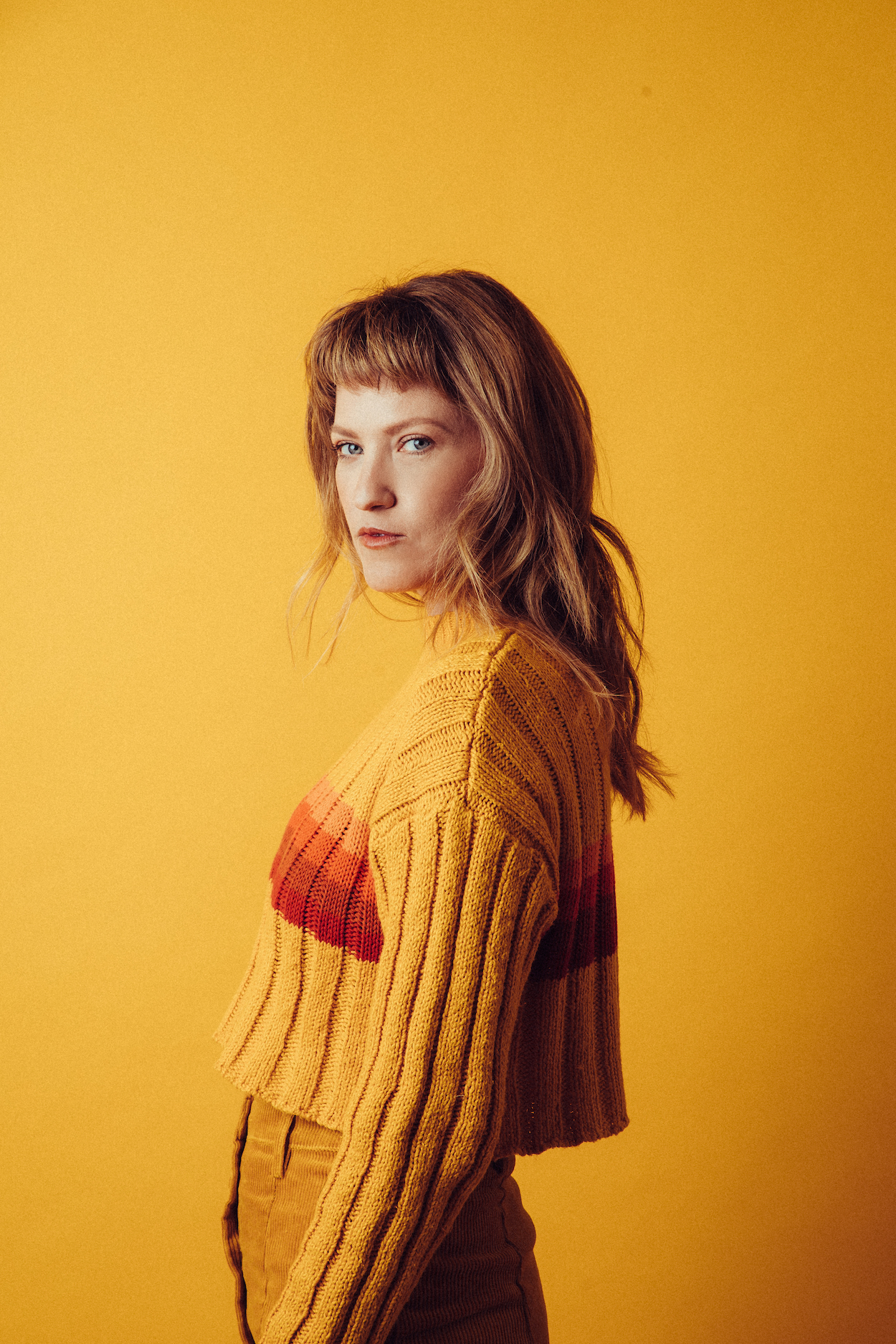
Author of Girl Gone Wild
Courtney Kocak is a writer, podcaster, and comedian who splits time between Austin and Los Angeles. She wrote for Amazon’s Emmy-winning animated series Danger & Eggs and Netflix’s Know It All. She’s produced a slew of highly-ranked podcasts and currently hosts three of her own with over two million downloads to date: Private Parts Unknown, about love and sexuality around the world, The Bleeders, about book writing and publishing, and Podcast Bestie, a best friend to podcasters trying to grow and monetize their shows (and a popular Substack). As a stand-up, Courtney has performed at The Ice House, Flappers Comedy Club, The Hideout Theatre, and various shows and festivals around Los Angeles and Austin, including the Burbank Comedy Festival. As a writer, her bylines include The New York Times, The Washington Post, The Los Angeles Times, Cosmopolitan, Slate, HuffPost, Business Insider, and more. Her debut memoir, Girl Gone Wild, with Trio House Press, is out April 1, 2026!