Music: The Algorithmic Burial of the Human Artist?





It promised to empower artists and give listeners infinite choice. But has the internet turned music into a disposable commodity, replaced human curation with algorithms, and made it impossible for most artists to earn a sustainable living?
To help us explore the new world of music, we’re joined by Charlie Hooper-Williams, a critically-acclaimed composer, pianist & creative coder, and one of the developers behindmusic-identification app Shazam.
His new album ‘The Book of Fixed Stars’ is out now on The Way Beyond Music.
http://charliehooperwilliams.com
https://www.instagram.com/charliehooperwilliams
https://www.youtube.com/@CharlieHooperWilliams
Welcome to Ruined By The Internet? - the show where we examine how technology is shaping modern life - whether we want it to or not.
Follow the show, let us know what else to look into at https://www.ruinedbytheinternet.com/, or support us at https://buymeacoffee.com/rbtishow
In this episode, Charlie joins us to discuss his journey as a composer and pianist, the impact of digital technology on the music industry, and the challenges and opportunities presented by streaming platforms.
We also look at the changing landscape of music consumption, the role of algorithms in discoverability, the influence of AI on music creation, as well as advice for aspiring musicians and the future of music in a technology-driven world.
00:00 Introduction to Charlie's Musical Journey
01:31 The Impact of Digital Transformation on Music
02:33 The TikTokification of Music
04:17 The Devaluation of Music as an Art Form
05:32 Streaming Platforms: Exposure vs. Earnings
08:06 The Role of Spotify in the Music Industry
08:51 The Challenges of Discoverability in the Digital Age
12:17 The Evolution of Artist-Fan Relationships
17:52 Technology's Role in Music Creation and Distribution
20:04 Navigating the Modern Music Landscape
22:56 The Art of Live Performance and Technology
25:46 The Role of Algorithms and AI in Music
34:50 The Future of Music in a Digital Age
40:46 Advice for Aspiring Musicians and Creators
Gareth King (00:39)
Charlie, thank you so much for joining us and welcome to the show.
Charlie Hooper-Williams (00:42)
Thank you for having me.
Gareth King (00:44)
Before we get into it, can you tell us a little bit about what you do and the journey that's led you to this point?
Charlie Hooper-Williams (00:48)
Sure, yeah. So I'm a composer, pianist, and creative coder. I perform alongside a live visual system that I've made that listens to what I play and creates visuals in response. So everything's happening live. I can play spontaneously and the system will adapt. And because of that, I have a lot of control over how the music is visualised. So it's not just one kind of screensavery thing. Each piece has a very precise vision for it that's then created as I perform.
Gareth King (01:16)
And I know that you've done some other projects in the past as well, which I'm sure we'll get into as we go through this episode. But looking at how the digital world has revolutionised the whole music industry over the last, let's say 20 years, what's been the most surprising thing that's changed in your opinion?
Charlie Hooper-Williams (01:35)
Yeah I mean, there's a lot of really unsurprising changes like, you know, if you make music kind of a rental model that obviously has a lot of knock-on effects and this flattening of the global, it's great that you can get music from anywhere. You're not kind of limited to what would be in stock in a specific store. I think probably the most surprising thing for me was this Tiktokification of like such a big thing of, you know, getting your song to go massive, not through a video, not through a music streaming service or music, radio or anything, and having record companies really being focused in that direction.
Gareth King (02:11)
It does definitely open up a lot of avenues for people who may not be as technically gifted to kind of get amongst that world and take part in it. And I think that while it does take away some of that gatekeeping, it's obviously, you know, upended such a huge part of what was the traditional music industry. But you mentioned there the TikTokification. What do you mean by that? Just to clarify for anybody that might not know.
Charlie Hooper-Williams (02:36)
There's a few aspects. There's one is like nobody has an attention span anymore. So it's all can we get here faster? You listen to songs from the 70s or 80s and the intro is just got, you know, you're like a minute into the song and you just can't do that anymore. And you know, and I'm not, I'm not a pop artist, right? I'm like a post-classical, whatever we call that. It is a bit more, I think, forgiving for some of that stuff, but I feel that too, where it's like you can't, not that you can't, but just for a specific song I have to choose, is this an eight minute long arc for people when they do have time for it, or is this like a two and a half minute kind of playlist type track? You know, get in and out quickly.
I think one of the things from that and from this TikTok it needing to grab you in five seconds is everybody's trying to make every song a hit. And so every song does tend to sound a little bit more similar because there is a way to structure songs that it is, you know, it's got all the bits and a lot of those are great songs. It's not that we shouldn't do that, but you know, traditionally you wouldn't have every song on an album trying to be that number one hit. You'd have other songs that do other things so that in the context of an album, it all makes sense. And I think because everything's really sliced and diced and kind of served in these, will you listen to this five seconds so that you listen to the next five seconds? There's a sameness that comes from that.
Gareth King (03:54)
I remember learning about this stuff when I was in music class in high school. You know, certain types of beats were more, I don't know if palatable is the right word for the ears, but your point there around every song trying to be a hit now. One of the things that comes up a lot around the discussion of music and how it's changed through the internet is the fact that a lot of people see that it's been devalued as an art form.
Now, if you were to say to somebody, every song is trying to be a hit now, that sounds like it's being valued, you know what I mean? Like if you used to buy an album that had one or two hits and now you're getting an album of 10 hits, it sounds like it's going to be way better quality. But if everything's a hit, then nothing is a hit.
Charlie Hooper-Williams (04:32)
It's like everything's at this level of kind of trying to be the peak and you can't have all the peaks. I don't want to be too like old man yells at cloud. Music doesn't all sound the same, but I do think that within a specific genre or within, you know, I think that there are things that people are trying to do that are more the same than they used to be.
Gareth King (04:57)
I can put it down to being a symptom of the way that the internet treats everything. It's a battle for that quick bit of attention. And if you have got to create a five second hook to get someone to go, maybe I'll listen to 30 seconds. How are you going to get someone to listen to eight minutes if the way people are enjoying music is being completely changed because it doesn't need a huge journey through a piece of music. It just needs that, that earworm that you can get one, 10, a million people kind of using and sharing.
That brings kind of the next logical big argument within the internet space is obviously streaming platforms. Now we've all seen the miniscule payouts from, from say bands that you might think are quite large and they'd be like, Oh, I made $7.60 for, I don't know, 2 million plays or whatever it is. But when I do think about things like that, they're obviously predatory in one sense, but then I try and flip it around and think about it as they're just another exposure platform for people who would not have been able to get that exposure otherwise.
Charlie Hooper-Williams (05:59)
You make very little off of streaming, but potential for discovery. And I think with all of these things, there's the two sides. I mean, one thought going back to the thing of trying to make everything a hit or saying it another way, trying to make sure you grab people's attention with something every five seconds. I think, for example, that's a way of listening that we probably had before. That isn't necessarily a new thing. It's just that you didn't have to, you know, if the record player's across the room, if you're not grabbing someone, you do have a little bit longer, but I still, think there is a good thing for that level of polish.
And even if I'm doing an eight minute track, I try to have something tonal, something textural, something rhythmic, all of these different things at the beginning as a way of letting people know what the whole thing's gonna be. And I think, yeah, there's a similar thing with streaming of, yeah, you can get listened to. I I've had things where they'll get on a playlist and they get hundreds of thousands of streams and you don't really make any money off of that.
You are in front of people. I do think there's a thing of that doesn't necessarily translate to fans. It can. People will find, you if enough people are streaming it, some of those people will then find you and listen to other things and maybe come see you. But there's one artist I know who does massive numbers on streaming. And I've been to his shows where there's, 12 people and it is completely not translating to live. And so for him, there's two options. Either you just build up the live separately and treat it as a separate thing. Or you just say, well, I'm a streaming artist. But I think it's because of that, you know, even getting a million monthly listeners is not going to pay for you to do music full time.
At that level, you do start to get some money from it. Like Spotify, you know, I'm not pro Spotify. I think that they are, like on the one sense, I think that they are squeezing everything as much as they possibly can. On the other sense, like they're a business, like you can't expect them to just voluntarily give up money. That's not how the world is structured. So, it's gonna have to come from somewhere else. It has to come from either collective action for musicians, which is very hard to do, or legislation.
There’s a Penny Per Stream campaign to raise the royalty rate to one penny per stream. I don't know if they've said what currency that's in, but I would take any of them. That is so much more than what we're getting now. If that was legally mandated, obviously it would change loads of things about the business model and when you get into things like regulation you will sometimes have these unintended consequences. But that would radically change how it is to make money as a small artist.
Gareth King (08:29)
I do want, look, I don't know the full backstory of Spotify. And I wonder whether the, you know, the initial idea had that gigantic monetisation in it, or it was just something that happened as it scaled, whether it's Spotify, whether it's any, any other platform, it's like, they've got all the leverage, you know? And so it's kind of naturally all the cards have fallen their way, as you said.
Charlie Hooper-Williams (08:52)
They’ve got the company town, you have to be on Spotify and the other streaming platforms. There was this thing of everybody was just downloading, they were pirating their MP3s and that was just the Wild West for a while, and they tried suing the heck out of a few people to try to scare people from doing that. But obviously that's not a good look and that's not an okay thing to do.
Gareth King (09:12)
Yeah, I was just going to say that was a crazy story because I remember the whole Metallica suing Napster thing. And it's like, it wasn't a very sympathetic case. Do you know what I mean? If it was a lot of struggling, poorer artists, I think the message would have been so much more resonant with people.
Charlie Hooper-Williams (09:30)
Yeah, think it being this massive... Well, and you see this with other lawsuit things where, you know, the more savvy thing would have been for Metallica to find some small band and have them be the face of the lawsuit, even if Metallica is putting their money into it. You know, because legally, yeah, it's like it is you're getting this thing for free that is for sale, that's stealing. But I think we did. I mean, everybody recognised that nobody's making money off music if everybody's pirating it.
So then we went to this streaming model. But one of the things with the major labels being allied with Spotify is that Spotify guarantees major labels payouts that are higher than this per stream. So major artists will get their money first and then there's this very low per stream that gets put out to independent artists. And they've now done this thing of demonetising songs below a thousand streams, which again, a lot of people were up in arms about.
As someone who's, you know, a smaller artist, it sucks. But because it's free to put stuff on Spotify, they're just inundated with tracks that nobody's listening to, and if you can put up... you get with... One of the big things with the internet is the scale is so huge that there are these new ways to game the system. So, if you can just set up a script on a computer to make songs, whether they have any content at all, and you're just uploading millions of tracks to Spotify saying, well, somebody's going to listen to it at some point and then I'll make some money back. They do need to defend against that.
So as an artist who people actually do listen to, even if it's not, you know, these millions and millions kind of numbers, I think the thousand cap does make sense. You know, you could have 750 people listen to your track and you get nothing for it. But when you do crack a thousand, you get paid for all thousand. So, it's not that you only get paid for the first stream beyond that. It's just that there's a floor to the monetisation. So again, it doesn't sound good when it's like, we're not, anytime we say we're not paying you, right? But when you think about why they're doing it to sort of combat this like slop that basically nobody, somebody might listen to by accident, it does, I am more sympathetic.
Gareth King (11:39)
It does actually make sense. I like, my brain just went off in a few different directions there. I was thinking of a case that I read about a little while ago where some dude used AI to just make a shitload of songs and then built a ton of bots to stream all these songs and ended up like getting a payout of, well, he earned, we'll say, I think it was something like $20 million. Obviously they don't want to pay it, but as you said, he's just gaming the system as it stands. And so I'm not sure where it ended up. I'm sure he didn't, you know, the tiny little guy didn't get to keep the $20 million.
But another thing you mentioned a few minutes ago was around that kind of discover ability. I can think back to when I was younger and discovering music before the internet was as much as like you pull out the album art, the liner notes, and you read what bands are being thanked in here, who, who are they saying, check out these, if you find a magazine article or something, and then that's how you would find new stuff. So it was a very slow, very labour-intensive process. So if you were a tiny band, it's completely hype driven how you're getting discovered.
But now, as you said, you can just be served up hundreds of different things on any given day and be able to kind of just try everything out very quickly, very fast, see if it's for you, if it's not, and then find more and more. So there's obviously so many benefits to having that quick exposure, but as you said, it's very easy to get buried in amongst just the amount of it.
Charlie Hooper-Williams (13:06)
Yeah, well yeah, we have this idea of, know, you can listen to anything. But most of the time, and I have this with discovering new music because there's gotta be loads of amazing music out there that I haven't heard. And it's almost, it becomes this like eat your vegetables thing of like, what I want to do is sit down, spend an hour and listen, you know, really try to discover. But usually it's like, well I want to listen to something that I know I'm gonna like.
And so then the algorithm, right, will serve you basically just stuff you've listened to before. Someone was like, the Spotify algorithm seems completely incapable of recommending anything that I haven't already listened to. Because their goal, it's not for you to discover new music, their goal is for you to keep listening. Right? And their real goal is for you to keep spending the money every month. They actually don't care if you listen or not. They just want you to be a subscriber.
Gareth King (13:57)
That is one of the things I actually find so beneficial around algorithms. Like if it builds a playlist, say you listen to one thing, right? And then it will build you a playlist of things adjacent to that thing. And so if you're in the mood for a certain type of music, you can essentially discover so much new stuff in exactly what you're trying to listen to. And that's been an absolute godsend to me.
But while we are talking discoverability, something you've done in the past was you've worked on Shazam. And, and for me, you know, a little anecdote time, that thing has been a lifesaver. Once, you know, long time ago when I was living in London, I was in a little club, it was early hours of the morning. I just got Shazam on the phone. I didn't really know how it worked. All I knew is you could just kind of open it up if there was a song that you liked and it would find it.
And so it was a little club, very bad reception, whatever, and I was holding it up and it wasn't working because there's not enough signal. But then it finally got there and got me this song, you know, the result. And I think this must've been around 2014. And to this day, you know, we're now at nearly the end of 2025. It's one of my favourite songs of all time. So that's just a very happy memory of technology and discoverability that has, I guess, impacted my life in very positive ways.
In terms of other ways of using technology, whether it's to produce music or, you know, whether you're creating music or whether you're even performing it. Tell us a little bit more about how you do it and how it all works.
Charlie Hooper-Williams (15:34)
Yeah, yeah. Well, just to build off that before I go into this, one other thing, I think, yeah, technology is great at automating and solving problems. And so one of the things is like content ID on YouTube. Like it can be annoying as an artist where you want to post something and it's like, oh, you can't. But the main use case of someone else can put my music in a video and then I get paid for it and nobody has to, they don't have to contact me. And that streamlines things a lot.
And the funny thing is you can't actually see where it is. So my wife is also a musician and she got some money from YouTube and she was like, somebody has used my song and it's gotten a ton of views and I have no idea where it is. Like what is this? So sometimes it can be mysterious when you get if something's used on a bigger video, like big enough that you notice in the payout. It's mysterious, it's smoothes that journey, right? It's just the computers have automated it so people don't have to talk to each other. I mean, that is a downside. But for something like that where it would just be transactional anyway, hey, can I use this song? That can all just be automatic.
And so that, again, any change like that, it brings its own problems. Like, know, when it works, when you go down the happy path of this is working the way it was designed to, it can really facilitate a lot of things quickly.
Gareth King (16:42)
Is there a reason do you think why it doesn't tell you who's used it?
Charlie Hooper-Williams (16:53)
I don't know. It would be great if there was just a link to the video because it might be cool. Like I don't think anybody's putting our music on like ISIS videos or anything. I think it's probably something nice.
Gareth King (17:04)
I mean, if you were like, you'd put a tune and I don't know, it was, was a widely appealing tune and there's potential for someone that you do to be using it in a way that you don't want to kind of be associated with. I'm quite surprised that there's no way.
Charlie Hooper-Williams (17:19)
Yeah. Well, and I think it's so much of this is like who benefits like that doesn't really benefit YouTube to do that. You can do you can do a content claim. But it's in terms of as an artist, your music is either available or not available. There's not you can't go in and say, I don't want it on this. I do want it on that. If you're actually getting licensed for film or TV or something, then yeah, you can say, I have a friend who does that. And he got a brief from I think a cigar company and he was like, no thanks.
Gareth King (17:45)
Yeah, interesting. And before we jump into the different ways that technology can be used across the whole music industry now, one of the things that we've seen through the rise of the internet is in my, what I would describe it as is the kind of breakdown of a lot of that star power. You know, once upon a time, like, I dunno, you think about The Beatles, right? Like if the Beatles were available 24/7 to fans on social media, like, do we think Beatlemania would have happened like it did?
Charlie Hooper-Williams (18:12)
Yeah, there's this loss of mystique, isn't there? Because these parasocial relationships can be really powerful, where people feel like they know you, and so you're posting, like, here's my breakfast or whatever. And yeah, that can work, but then, yeah, there's no mystery. It would be nice to be able to be mysterious and have people coming to you, but then when they're not, you sort of go the other way and say, yeah, here's my content, here's more content for you.
Gareth King (18:36)
You know, when I've thought about this in the context of, say, actors, I think back to before social media was everywhere, like actors were someone you saw on a movie poster in the cinema, or maybe a cutout if it was like Arnie. And they were these larger than life people that just seemed to be in a completely different planet. Now I could go online and find out what the biggest stars in the world are basically doing every minute of the day. And it's like this push for all of these big names to try and present themselves as the regular person, just like you, kind of defeats the entire purpose of being this big star and this draw.
Charlie Hooper-Williams (19:09)
Yeah, well you want to offer this like peek behind the curtain for people who are like really or whatever you do, and then there's no, it's the internet. So then it's there for everybody and just everybody gets to peek behind the curtain, and there's no curtain anymore.
Gareth King (19:23)
And I think that, as you said, you can try and attract people through putting out different pieces of content, et cetera, trying to get them to, to listen to what you're, you're doing. So you could be someone that's, that's just putting out Reels like that aren't even music and someone will discover the Reel and then discover that you're a musician and that's how the music can take off. So well, there's obviously, many different pros to that.
Charlie Hooper-Williams (19:43)
Although I think we're discovering that people don't do that very much. So there's a big thing on TikTok right now, and labels are turning away from discovering artists on TikTok because you can't get people off TikTok then, right? It's like if people discovered them on TikTok, they might have millions and millions of streams, but like nobody is going to go then do the other thing.
Like I said, even streaming doesn't translate to people coming out to see you. And I think social media doesn't translate even to people listening, streaming your music. So I'm trying to not spend too much time because you can become just a social media person. And some people, they find that that's what they like. They do really well on social media. That's their thing. And like with because there's a tech element to what I do, I've thought about doing tutorials because people do really well off of that. But it's like then you become a tutorial person and I don't that's not my thing. I would like to share what I do. But like putting in the effort to really have a following there then means that I'm not actually making the music.
And that's it's like you focus on like what is what why am I here? What is my actual thing? And you have to do some other work. So yeah, this goes with like the breakdown of the record industry, right? Everybody can just make their stuff at home, which in a sense democratises. And it's great that I can I record all my stuff just here in my house. And I'm with a label now, but my initial albums I just put out myself. But it doesn't, I think in addition to realizing that people won't switch platforms necessarily, there's this re-interest in gatekeepers because nobody can do everything and the algorithm is a really unsatisfying way to discover stuff. And I think we're missing the fact that some people actually do have really good taste and having that be essentially a profession I think is really valuable. Obviously when the gatekeepers are gatekeeping you, that's frustrating.
Gareth King (21:32)
Like that's so interesting to hear.
Charlie Hooper-Williams (21:34)
I think you can use it to get you to ask, how can I make what I'm doing better so that it interests who these people are? I think if you make music just for the gatekeepers, that's a mistake. Just like I think making a song that is just aiming to hook people for five seconds so they don't scroll away is a mistake. But I think saying, right, here's this piece that I've written that I'm happy with artistically. How can I make every five second chunk exciting through production or whatever, in a way that doesn't take away from what I'm trying to do artistically. How can I make that as good as it can possibly be and get through to that, I think can actually be helpful. I think sometimes that little bit of adversity can actually make you a better artist.
Gareth King (22:13)
No, absolutely. And there's a couple of things that you said through that bit there. That all kind of connect things to me. It's like one, you don't want to be known as a tutorial person. That's just one part of the wider Charlie world and the way that technology is allowing you to create a much more complex, I guess, piece of art. That's not just that recorded music.
Now, obviously everyone can make music, but now also with technology, there's so many more avenues for different people and different skill sets to kind of find their way into being part of the music industry in different forms. Now you personally do a bunch of different things. Tell us about how you go from the music all the way through to the entire live performance. How does that process come about?
Charlie Hooper-Williams (22:56)
Yeah, so my live show has this tech element and people will often say, yeah, what comes first? Does the music come first or do the visuals come first? And generally the music comes first and I write in a very traditional way. If i'm writing music, I'm just sitting at the piano, playing the piano and then when something works, I write it down. And then sometimes I'll record it as a voice memo and then like transcribe it later. And then, you know, I'll put it into the computer, work through that way.
And then at some point I start thinking what does this, what should this look like? And people will ask sometimes if I have synaesthesia, which is the thing where you will see sound, or you'll sometimes, you know, taste a shape or whatever, you know, you have this kind of mixing three modes and I very much don't have that. So for me, it's more what should this, what should the journey of this piece, how should it be represented? And for me, a lot of it is about what I call like the architecture of the piece, like the structure of the piece, more so than just individual notes. And I'll start building that.
Sometimes you write a piece really quickly and it's done in an hour and it's amazing. And sometimes you write a piece and it's done in an hour and you're like, that one can just stay in a file. And similarly, there's pieces that I've ages on and then they finally get there and they're great. And then sometimes you spend ages and you get to the end and you're like eh, and the same with visuals.
I'll have one of my most successful pieces of visuals, I think is for this track, Emma, where there's just, you see this massive building and there's lights coming on from the different notes, and it took very little time to do because it's the concept that's carrying the weight there rather than the, I'm not doing something fancy algorithmically.
And then there's other ones. There's a piece I play called Conversant that has this motion graphics kind of retro thing and that just took so long to get right. And I'm really happy with it, but it was just ages and ages of tweaking. And then, yeah, so there's essentially an algorithm for each piece. And then I just have a computer with me that listens to what I'm playing and that to a projector. And then I have these light towers as well that are, it's six towers that have these colour LEDs on them. And I can treat that like, almost like a sliced up screen. So, you have this, these things in the room with me that are these kind of sculptures that also do the light and the visuals and then me performing.
And that's another thing that I kind of realised toward the beginning is how much of the show, how much of a visual element of the show is me playing. I would kind of make these visuals, but almost leaving space for the fact that people want to see me playing. You know, because there's, you've got like Max Cooper, who's great. He's got really cool visuals, but like he's in the show. He's not, you don't want to look at him. He's just, you know, he's DJing and you can do stuff as a DJ to be a bit more visually interesting, but let's like, you just watch the thing and he does the, you know he DJs to it. And playing the piano is different. It's a lot more kinetic than that, so kind of leaving space and almost composing the visuals in a way that I'm a thing that's happening in the performance.
Gareth King (25:57)
Yeah, that's kind of exactly what I was thinking. Now it's not so much there's a performer on stage. It's like the entire immersive experience with all the technology that we have. It's things to be considered. I think having all of those big screens does add an entire new dimension to it. And as you're saying too, like the screens for you is one component, the lights are one component, and then you're another component. So it is a whole cohesive world.
And, and one thing that I find quite interesting in the way that performers operate now is how they use the incorporation of technology in different ways to enhance the music in ways that you might've just had, you know, a banner unfurl once upon a time, or maybe some lights, or maybe some pyro if you were like super successful. But one thing I did see recently was, was Massive Attack, with the facial recognition stuff.
And i'm sure there was some deeper meaning behind it. I'm sure there's some statement knowing them, but when I saw it, I was like, this is just another level of fan artist connection and making the fans feel like they're part of the show. And then I think it does still feel a little bit dystopian.
Charlie Hooper-Williams (27:07)
It's super cool. I love that because yeah, it makes you a bit uncomfortable. And so it is showing that this face tracking software exists and is easy to set up. And you can just point a camera at a crowd and track individual people. And if you move around, it's still your face up there. And that's the thing that ties in with one of the things that I'm trying to do of taking things that exist in our lives.
So we're surrounded by algorithms, right? Life is just this sea of algorithms we're moving through. But most of the time it's trying to sell us something or surveil us or influence an election. And I think algorithms get a bad name because of that, but the algorithm itself is neutral. It's a tool. And there's a person or people who are using the algorithm to sell you stuff or influence an election or surveil you or whatever. And algorithms, so I'm using algorithms to make art. And that's another thing they can do.
And so kind of separating that out of, I'm a bit of a technophile. I kind of want to defend the kind of digital realm, not everything that's being done with it, of course, but like you don't solve these problems by going back, you know, by sort of banning computers or whatever, or saying, I think AI, there's a, I don't know what's going to happen with AI, but it's finding ways to control and monitor and band together to say what's acceptable and what's not and how do we build a society that works for everybody together.
Gareth King (28:40)
Yeah, look, I mean, as we've discussed throughout this, there's obviously been a whole bunch of negatives that have come through technology, but so many positives as well, whether it's democratisation, creation, performance, you know, all sorts of things, but you just touched on something I'd love for us to move into now, which was around algorithms everywhere and now AI and how this can potentially be changing music.
Now I know a little while ago, we briefly mentioned someone gaming the system by using AI to create all these songs and earn $20 million or whatever it was as a payout. Being, being a technophile as you are, like I'm also, I think aware enough to be able to comment on this stuff, but it's like, as these tools get better and better, you know, I've played around with stuff before and I've written a prompt and I'll say, I dunno, make me a black metal song about cooking a meat pie or something like that. And, and it just makes stuff.
And it's so bizarre that, you know, you, what would usually have been a gigantic project, get your friends, or maybe if you're super talented, you can do it all yourself. Now you can just do it with a, with a prompt super quick. How do you think that as AI gets more sophisticated, how do you reckon it's going to play out in, in not only music creation, but then also distribution and performance? Where, where do your hypotheticals go with this?
Charlie Hooper-Williams (30:02)
Yeah, I mean, there's the good potential things and the bad potential things. And I think the, like it's completely screwed illustrators, for example. And I think when it started, was, oh, I think with anything you end up with this pipeline problem where all the low level stuff gets taken over by AI.
And so, anybody who is doing illustrations on Fiverr or like, you're trying to get started in the industry, nobody's, there's no work for them. If you're a big name illustrator and people are going to you because they want the thing you do, they'll still go to you. Maybe that changes in the future, but there's now this who are going to be the next up and coming illustrators if nobody's able to start as a junior.
There's a similar thing happening in coding, so I still do some coding work. And you can go twice as fast with AI helping you code. But basically you need to be kind of more at the senior level where you know how to architect the thing, you know how to keep the AI on track and you need to know what's happening. And when the AI goes off the rails, which they do, you need to just be like, okay, no, clear all of that. We're starting over. So, there's like these limits to vibe coding, but it's like how, you're a junior developer trying to get your first job, everybody's like, no, we're not hiring juniors anymore, we have AI. So I think there's a lot of that kind of thing.
And probably the same with mastering, know, AI mastering is not going to replace any mastering engineer that you would know by name and go to because you like their style. But if you're like, oh I don't have budget for this, I might just hire this guy locally and pay him 50 pounds. You know, somebody's just going to put it through the AI mastering plugin because it's going to sound fine.
Gareth King (31:44)
Yeah, no totally.
Charlie Hooper-Williams (31:47)
What's going to happen in 20 years when the current names have all retired and nobody had a chance to do this stuff?
Gareth King (31:55)
It's very funny that this exact discussion, we've just kind of touched on it in the creative kind of industries. Like my background is in, you know, creative industry as well. But what I am seeing a lot more of is there is a lot of pushback now, you know, like I've seen certain big brands that should know way better, have way more money than to be just getting someone to write a prompt to make big marketing campaigns, are putting out just obvious AI stuff with those errors that you need the skilled engineer or the skilled coder to actually be able to recognise.
And then that's happening across everything. You know, you're seeing in corporate world as well. It's like, there's no, no junior jobs. There's going to be just this entire talent vacuum. Once those seniors retire. So that's maybe there's something in there. That's going to be the new thing is figuring out how to do that. But back to music. He said like AI engineers. I've not really heard of that before. How are people doing that?
Charlie Hooper-Williams (32:49)
Yeah, well, just like there is if you're doing the kind of the mastering step, you know, you can have your track and there's one built into Logic where it'll analyse and then it just makes a mastering chain based on what your track sounds like. And it's all right. It's good. It's you know, and that sort of thing, like I would you'd never master your draft mixes normally. Right. Like having that on your work in progress. That's great. But then I will definitely still go to an actual mastering engineer for the final. It needs to be somebody who has taste and all of that.
But there's this constant moving of goalposts with AI. Right now, we're like, the AI could never have taste. can it in five years? It's all moving so fast. I think we might get to a point where it can do everything better than us. And then the question is, which things do you really want a human for? And I think you consume art because you want to interact with another human mind. Like even if an AI could write a better one, like I want music and visual art and novels that comes from a person, even if AI gets to the point where it's not doing this sort of idiotic AI.
Gareth King (34:01)
It's just, you just want that soul behind it, you know? I think that's part of the human condition that you want to empathise and relate to people through different means. You see all these, I can show you how to shut down an entire Hollywood studio for like $50 and this new video creation software. It’s like, can you, will you? You know, I don't think that's going to fly for too much longer.
But we've been talking around the uneven playing field as well within music that's been created through technology and this kind of TikTokification, whether that's a kind of a race to the bottom or not, depending on who you are and how you look at it. What would you say like from here on out, a fair digital music market would look like for everybody involved? And do you think that there's a way that we can potentially reverse any of the damage that's happened over the last say 20 years?
Charlie Hooper-Williams (34:50)
Yeah, I mean, it's a lot to try to change anytime you like change society or change a massive system like that. I think one of the things is, well, I think like the Penny Per Stream campaign, I'm super in favour of that. It is where almost everybody listens. I think this as people are still in the process of returning to live shows post COVID, there's still a difference in ticket sales. But as people come back more, I will have people buy a CD or a vinyl at shows and say I'm not really going listen to this, but I will not feel guilty when I stream your music now. And that's great. So, the awareness, I think, really helps because people will say, I want to support you. Streaming you isn't really supporting you. So if I support you in some way, then great. I've done my bit. That's amazing. Stream me forever if you bought. I mean, stream me anyway. It's fine. I'm not anti-people streaming my music. But that's great when people care enough to say, I am going to put my money toward this smaller artist. It really helps just make everything work.
I think the other thing though is people, because the internet shows you whoever's on top in the entire world it makes everything kind of need to be at that level. So, if you put out a track and it gets 5,000 streams, there are people who are like, oh, that's nothing, you know, cause you're comparing it to Taylor Swift. And it's like, well, if 5,000 people listen to something that I've made, that's great.
There's this thing of you need to keep the attitude of you do spend some time being your local musician that is like doing really well locally. You're not immediately going to get up to this like you might never get to the stratospheric layer that there are these different levels of success. And I think people see that even, you know, inside music, you have that as a musician where it's like you want everything to have millions of streams and sell millions of copies. And it's like, well, you know, you can be successful and not have that.
And I think it's, I don't know if this happens more with musicians or if I just see it more as a musician. People will kind of not think that you're a professional because they haven't seen you on a TV show or that you're not playing stadiums or something like that. They will assume that you're like waiting for your big break. So no, I'm doing the thing. I am making money, I'm playing music. I'm a professional musician. You know, yeah, obviously you want to have career progression, but if you're a scientist, nobody's like, oh, you're not a real scientist until you you know, have a Nobel Prize for something. It's like, no, you are a real scientist as soon as someone is paying you to do science. And there's a similar thing here of enjoying that, not seeing that as this substitute for the real thing. Like, I get to play music, people connect with it, people say when they like it, that's amazing.
That's what, you know, I think you need to be able to enjoy all the steps and not be, kind of only see this like global fame level as being the real thing. Because you always see the algorithm is always going to show you those people. it's like you people get this body image issue with TikTok. You're seeing like hundredth of a percent hotness people. You can be really funny looking on TikTok or extremely attractive. But if you're just kind of a normal looking person, there's not as many of those.
And I think people have that too where they go on there and they're just like, I don't look like any of those people. I was like, well, no, of course you don't. You're a normal person. And that doesn't even necessarily mean like 50th percent. You could be a very talented musician. You could be a very attractive person, whatever. you, you know, you.
Gareth King (38:22)
You're still in that, the middle of the bell curve there.
Charlie Hooper-Williams (38:24)
It's not yeah, it's not healthy to compare yourself to the top, you know hundredth of a percent globally.
Gareth King (38:30)
Yeah, look, that's, that, that makes me think of another point there that we've seen through the rise of especially social media. You know, it's like, fame is the goal. Not creating, not doing something, not testing yourself in all these different things. You know, you hear so many like younger people that now like, I want to be an influencer. I want to be famous. I don't care how. Like that's, that, doesn't matter. Like the end goal of the fame is what you're actually trying to do.
Charlie Hooper-Williams (38:58)
Yeah, well, and I mean, we're social creatures. We like status. And you can convert that into other things, right? If you're super famous and you decide, I'd like to write a book or be in a movie or launch a perfume line. Like, all of that becomes easy if everybody knows who you are. It makes sense that people would want that. But you do, yeah, you need to decide what is the thing you do. And if what the thing that you do is, is be famous, then cool, focus on that.
But i'm a big Rick Rubin fan and I think his, lot of what he says is very centering and grounding about like, you really have to make honest art. If you aim for fame, you might get that, but it's going to be flash in the pan. Like if you really focus everything that you're creating on just catching a bunch of eyeballs or ears or streams or whatever, you might get that. But if it's not a really honest reflection of you, one, if you get that, it'll feel fake and hollow because it's not you, you've put on this mask. But also there is, people do respond to honesty in whatever they're encountering.
Gareth King (40:05)
Yeah. I mean, Rick Rubin is such a great example, that he doesn't claim to know what he's doing across all of this stuff, but he's just got this innate ability to identify what is going to be great within his, his kind of perception and realm. And then that makes me think back to what we were saying a couple of minutes ago. It's like, if you're a great engineer, like you've just got the ear, you know, if you're a great performer, you've just got the ability to do that.
But you were talking there around people kind of doing things in their own way. What would you say then is one piece of advice you'd offer anyone interested in getting into say music or technology or even combining both, whether it's a hobby or whether it's something that they want to do as a career. Now you've obviously built a lot of different things interconnecting with each other, so you've seen the entire gamut. Like what advice would you give to steer somebody down a positive path?
Charlie Hooper-Williams (40:58)
Yeah, one of the things that someone said to me early on that I really think about all the time is that you can't create anything without a community. Like even if it's a solo project, like you need to be in dialogue with other people. If you don't, if none of your friends are writers, like how are you going to even know how to write a book? Like you might, you will be able to write a book. And I think like I celebrate like amateur creation. If you're just somebody and you just want to do a thing, just do that thing, that's great.
But if you want it to be really good, like you need to listen to your own taste, that's very important, but you also need to be in, like in a mix of other people who also doing these creative things. It'll be inspiring, but it will also then keep you, like there's an aspect of creative honesty where things are moving in this group with other people.
And then I think the other thing is, it kind of goes with like you just have to make stuff. One of the things I really love about both tech and music is nobody cares if you have a degree in it. Nobody cares what credentials you have. It's like, can you do the thing? So in tech, if you want to get started, you can teach yourself stuff. You can learn a lot. You can go study it at a university or whatever. But if you've built a thing, then people will respond to that. So, when I've been in hiring, it's like if you have an applicant and they're like, I've made this app, it has a thousand users. Amazing. That puts you way ahead of somebody who has, I've gone to some fancy school, but like I just kind of have my coursework.
And it's the same with music. If you record an album and your first one is probably not going to be the best work you ever do and you share it, you don't have to put it out for the whole world. So there's a friend's daughter who's a teen and she's like starting to write and she's really good. So, we did a little bit of work together and I was, my task for her was you need to write 10 terrible songs. Don't worry about making it good. They just, they need to be done. And then when you've done ten, maybe some of them you will fail at making a terrible song, it'll be a good song. That's fine too. But like you just, you need to get over the thing of having, I've written these two songs and I'm really kind of feeling precious about them.
And so I think, yeah, this thing of you, just, you do it with whatever. You don't have to wait until you have, you know, X like this piece of kit or whatever. You can only, know, if you make a thing and you're like, wow, this microphone I used is terrible. The sound is not good. Okay, maybe then you go get a microphone. Maybe you re-record some of that. Maybe it's just for the next thing, but you have to keep going and not get hung up on things.
Gareth King (43:25)
No, that's great advice. And I think that, as you said, doing stuff is so much better evidence than what you could hypothetically do because you've got that piece of paper and that formal education. I hear that across lots of different things. Just to finish up then, what's making you hopeful about the future of how the internet and technology and music collides?
Charlie Hooper-Williams (43:46)
I think one of the things is the discourse around it, the fact that people are, I think generally people have really terrible hot takes sometimes, but as we work through what is this, what's going on, it might be on a 10 year time scale, but people are having these conversations about streaming, not supporting artists, people are having conversations about how are we gonna handle AI and all the things that's happening there.
And we're not necessarily gonna, we're almost definitely not going to figure it out in time to not have problems with it. But I think we do eventually figure stuff out and move forward. And I think the thing that we need to do for any of those things is to limit the power of these kind of entrenched powers so that there isn't this asymmetric thing. So that when people do a kind of group cultural decision like this thing should be better in this way that we can do that. Because I think we are actually pretty good at coming to the right decision eventually.
Gareth King (44:46)
Fingers crossed. Thanks, Charlie. What's coming up for you and where can people follow what you're up to?
Charlie Hooper-Williams (44:53)
Yeah, so I have this album coming out in November, which is called The Book of Fixed Stars. I just got the vinyls yesterday and they look so beautiful. It's so good to see that. So it's like they've done clear vinyl and the artwork is great and I'm really happy with how it sounds. So there's CDs, you can get it on Bandcamp. So, the main first place, if you just want all the links, is my website is charliehooperwilliams.com. And then that's @charliehooperwilliams on Instagram and Bandcamp and all those things you can just look me up and have a go. I will ship to Australia for your Australian listeners.
Gareth King (45:29)
Awesome. Charlie, thank you so much.
Charlie Hooper-Williams (45:34)
Thanks for having me.
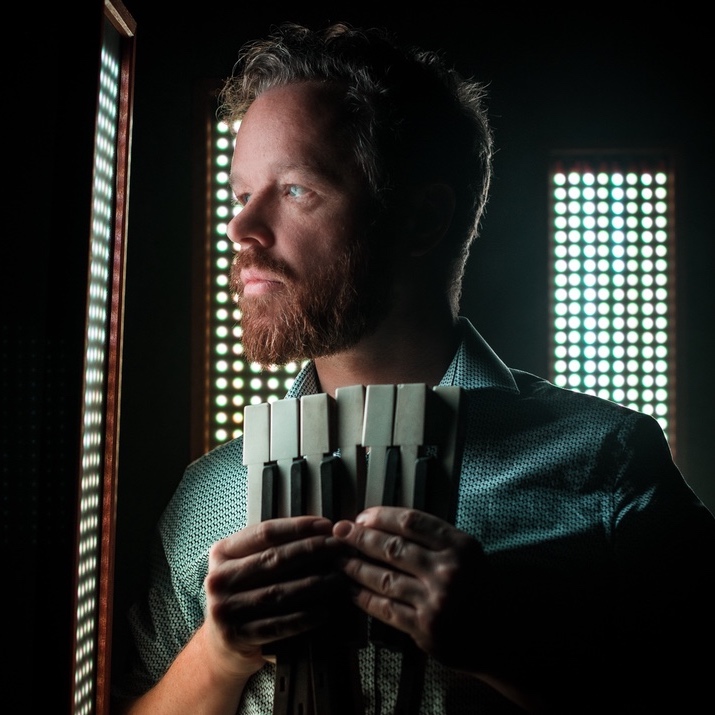
Composer/Pianist/Creative Coder
American-British composer and pianist Charlie Hooper-Williams is one of the developers of the app Shazam and a prizewinner at the International Shostakovich Piano Competition. He performs alongside a bespoke live projections system he has coded, creating real time visuals in response to each performance. He has attracted critical and popular acclaim; described as "inverse film scoring", this “lovely, special, immersive show” (Elizabeth Alker, BBC Radio 3) combines intricate, virtuosic textures with moving and accessible melodies. Originally from the pine woods of Minnesota’s Iron Range, he grew up near Chicago, studied at the University of Cambridge Centre for Music and Science, and now makes his home in Bath.