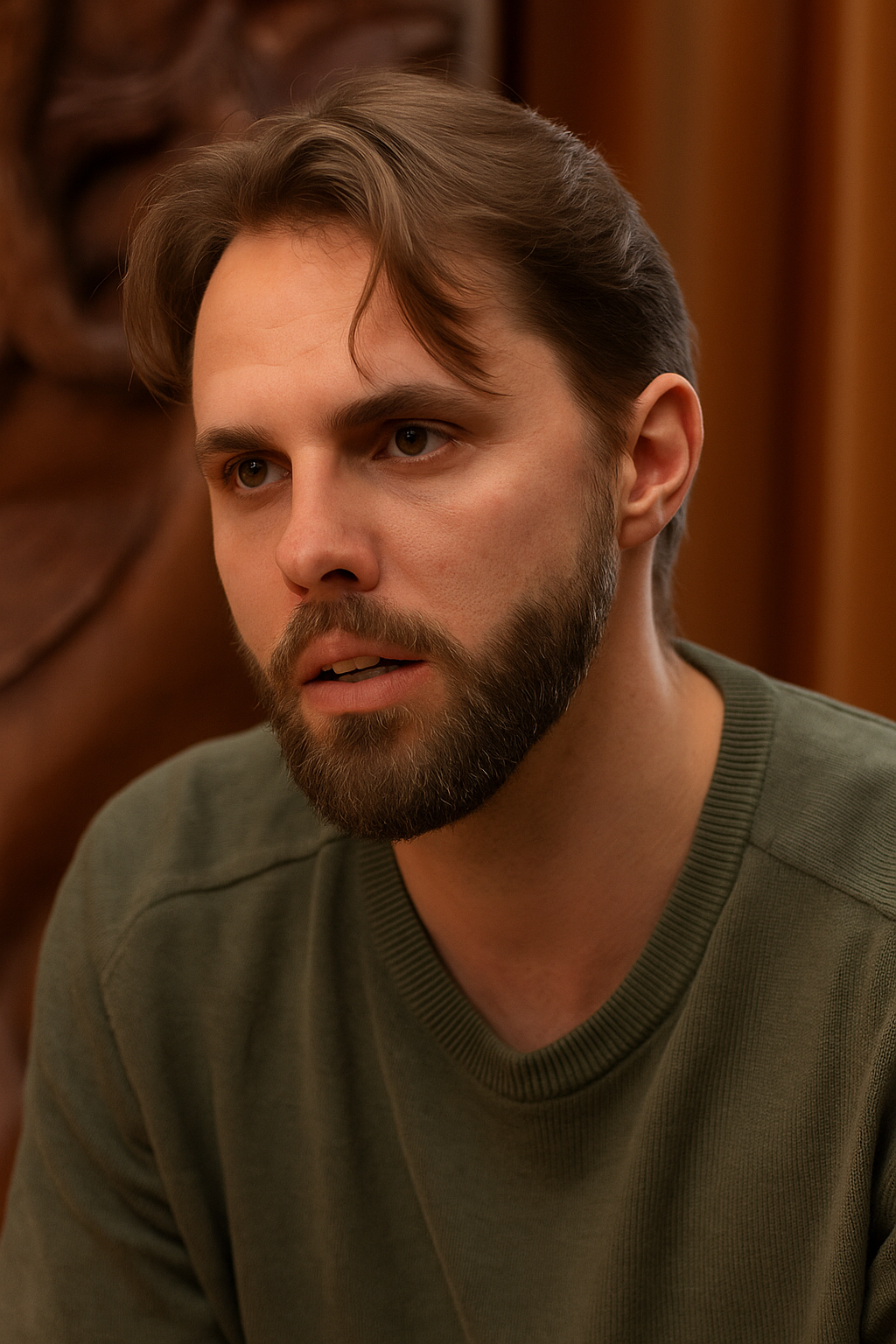
The Internet: has the internet been hijacked by corporate and government control? – Wouter Constant





The internet was supposed to be where the free exchange of knowledge and ideas happened. Instead, it’s become a place increasingly controlled by a few companies, leading to the regular suppression of inconvenient or unpopular ideas.
Joining us is Wouter Constant, co-founder and researcher at Nostr, an open protocol for decentralised, censorship-resistant communication. With Wouter’s deep knowledge of how we got here, we’ll be asking has the internet ruined The Internet?
https://weboftrustfoundation.com/
In this episode, Wouter joins us to explore the evolution of the internet from its original promise of free expression to its current state dominated by centralised platforms. We discuss the implications of corporate control, government involvement, and the potential for a decentralised future that prioritises freedom of association and censorship resistance.
We also look at the evolution of decentralised social media, and its implications for digital responsibility, identity, and content authenticity, as well as the importance of user responsibility in shaping the future of online interactions.
00:00 The Promise of the Internet and Its Decline
02:54 The Rise of Centralised Platforms
05:54 Investment, Network Effects, and the Corporate Sphere
09:00 Government Involvement and Censorship Dynamics
12:02 The Future of the Internet: Decentralisation and Freedom of Association
15:07 Challenges of a Decentralised Internet
18:08 The Responsibility of Platforms and User Experience
27:09 Understanding Responsibility in Digital Spaces
29:44 The Evolution of Decentralised Social Media
32:30 Nostr vs. Bluesky: A Comparative Analysis
35:30 The Role of Identity and Reputation in Nostr
39:16 Decentralisation and Content Authenticity
44:25 Navigating AI-Generated Content in Nostr
50:51 Building a Safer Internet for Future Generations
If you like what you hear, please follow the show, leave a review, or let us know what else you’d like us to look into at https://www.ruinedbytheinternet.com/
Gareth King (00:33)
Wouter, thanks so much for joining us and welcome to the show.
Wouter Constant (00:36)
Thank you, Gareth. Pleasure to be here.
Gareth King (00:38)
Before we get started, can you just tell us a little bit about your background and what you do?
Wouter Constant (00:43)
Sure. So on the formal side of things, I studied economic history at the Erasmus University in Rotterdam. And my first and only proper job was as an IoT consultant for a large IT firm. I did that for a couple of years, designing large sensor networks, doing radio stuff, stuff like that. But for the most part, my interest has been in what's called distributed compute.
And this is the technical term for decentralised computer networks. Think of things that may be familiar to your audience is stuff like torrents, but also RSS or a lot of other protocols that are out there and mainly Bitcoin, which is the largest decentralised computing network out there. So, I've been involved in the Bitcoin world for a couple of years and now slowly I've been transitioning my attention towards Nostr, which is the subject matter of today.
Gareth King (01:34)
Fantastic. And I'd love to get more into that journey and how that's all played out as we go through this. But as you said, we are to talk about potentially how the fundamentals of the internet itself have changed over time. In your opinion, as someone so knowledgeable in the space, would you say there was a point where the original promise of the internet got broken? And what happened when it did?
Wouter Constant (01:58)
That's an interesting question, and I think a good point would be MySpace because the internet itself is an old piece of technology first developed by DARPA as a means of having a communication system that is resilient. This is why it's decentralised in order to make sure that when one particular node or element in the system breaks down, it can still route around other ways.
And on top of this decentralised infrastructure that was later brought about by universities, et cetera, came the web, what is known as the web. The web is websites, essentially. And the idea behind the web was that people could create their own websites and would be able to have a censorship-resistant as we call it, means of expressing themselves and communicating with others. So, you got blogs and you got forums and all this type of stuff. People had their own personal pages. But apparently, a website was a bit of a threshold for a lot of people.
So what we eventually got was that we got websites where people could get an account where they could generate their own page on that particular website. So instead of people making their own website with their own personal page, they went to a particular website, in this case MySpace, in order to create a page over there.
And I guess that's where the problem started, because that meant that now you were not the owner of the page. You were basically renting land, virtual land, let's say, from this, well, you could if you stretch it further, it's also like what people call it digital feudalism or technofeudalism, where basically MySpace was the feudal lord and you were a peasant because you got the land for free, but you were tied to the land and you were supposed to produce on your own land.
And that was MySpace and later MySpace faded away, but later that became Facebook. But it was essentially the same and the same idea. And now Facebook, or Meta, the company behind Facebook, is essentially the largest internet company, or one of the largest internet companies in the world.
And by extension, just simply one of the largest corporations in the world. They have a portfolio of platforms, so it be Instagram, or WhatsApp, or Facebook itself. Instead of people having their own pages or their own means of communicating, they're all renting space basically on these central platforms. And I guess that's things started to go in a particular path.
Gareth King (04:21)
That's a great analogy there. You know, the peasant renting the land off the Lord. I had MySpace when it was around, you know, and to be honest, I never thought much of it. I was just like, hey, here's a cool thing where you can have friends and, you know, everyone used to love kind of customising their page. And even hearing you say it now, I'd not really thought of it as, yes, you are kind of building a website within the rules and the parameters of the Lord.
But yeah, MySpace was so everywhere at that time that maybe it kind of conditioned everybody to playing within that much smaller sandbox where you have to live by the landowners rules in order to continue living on the land.
But then that's interesting that you've, said it started there because I would say even thinking about MySpace now in the context of 2025, that feels so free and less onerous than what we're dealing with now. How do you think that we've gone from what feels like a very innocent thing that MySpace was, like you can style the page in a certain way, put a song on there, have your top eight friends, whatever it was. You know, I can't really remember anyone complaining about the rules or anything, bar, not being able to put a certain type of text or something on their page. That was about as far as it went.
But now as I'm sure, you've alluded to and we'll get into. Now it feels like the terms and conditions with everything are just getting more narrower and narrower and narrower. And obviously if you don't like it, you can't really just build your own multi-billion dollar platform to compete. How have we gone from MySpace to where we find ourselves now?
Wouter Constant (06:10)
Yeah, I think this is the crux of the matter, Gareth. So there are two things here. So one is what were the incentives that drove us to the position that we're in right now? And the second part would be what is actually that position and why is it, why does it feel so uneasy? And how we got there was pretty straightforward because these, and let's take for example, Facebook.
Facebook got a lot of investment and a bunch of these other platforms, they got a lot of investment and because getting an account on Facebook was free, it's still free, where you don't have to pay upfront to use it. So, there are costs involved, right? You have to run all these servers. So where did this money came from in order for them to bootstrap into the position that they got in?
And that was via investment, and behind every investment is an investment thesis. So the investment thesis quite explicitly was that by subsidising the network or the platform and the growth of the platform, they undermine, first of all, you undermine your competition because you are able to offer things for free for a longer period than your competition is.
And the second part is that this notion revolves around this notion of network effect, which is the central theme, I think, behind this conversation. And the notion of network effect is that the value of a network grows exponentially in relation to the amount of nodes or people that are within the network. And this is very easy to imagine if you think about something like phones, for example. If there is only one phone, the phone is completely useless. You cannot call anyone with only one phone. If there are two phones, then now the phone starts to become useful because you can call this other person.
That's nice, but the value of phones increases exponentially when almost everybody has a phone, because now you can integrate it into society to the point where every business has a phone number, the government has a phone number, it's completely normal to ask a phone number from somebody else because it's completely normalised within society everybody has a phone number. And this is exponentially a larger value than just having two people with a phone on the planet.
So the people behind these investments, they understood that the actual value is in this so-called network effect, which boils down to everybody's there because everybody's there. So, in this game of platforms, the game is actually who can become the that captures this network effect first, in order to make all competition unviable because everybody's already at Facebook, right?
And the second part is because you have captured the network effect, everybody's on your platform, there is no viable alternative anymore. So all of your users don't have a viable alternative anymore to go away. And that's the exact moment when you can start to leverage your position, and start to get return on investment. And that's basically what we've been seeing for the past couple of years, that these platforms, they got their position where they have captured the network effect. Facebook practically cannot grow anymore in terms of users because they already got practically everybody on the planet already. So, they start to leverage their position in order to get the return on their investment.
And this is what to this phenomenon that in 2019 I think was described in a paper called enshittifcation where apparently things that we use start to enshitify, they become crappier over time. What happens using this platform and it's integrated into society where, like I said, same with phone numbers, there are places on this earth where restaurants have a Facebook page instead of their own website, for example. So if you want to order your food, you go to their Facebook page. So that's a high level of societal integration that they've achieved.
What starts to occur is, and the same goes for Twitter and other platforms, is that we pretend, we act as if this is the public sphere, right? We act as if this is the public space, the town square, where it starts to perform a political function or a societal function, and it has to serve public interest because we are having public discussions with each other.
The problem is it's not the public sphere, it's a corporate sphere because it's a privately owned server where you're acting on. And I think this is the crucial friction point where it starts to become unviable in the long term, because the moment we act as if it's public, governments start to step in because they're like, well, the moment public interests are rolled, this is our domain, right?
So governments are observing this and they say, we have to take care of these public interests. The problem is it's not a local phenomena, it's a global phenomena. So now it becomes a geopolitical issue where the United States has its perspective, Turkey has its perspective, Russia has its perspective, China, the EU, et cetera. So we have all these various political perspectives on how this single platform that globally operates should be governed.
And that’s basically the impossible position that these platforms got themselves into by becoming the global dominant player is that they now have to not just contend with the varied interests of their users, also the various interests of the advertisers that which are their actual customers, the interest that they have themselves as a business, but also the interest of all these various political actors. And it's basically five way tug of war going on as to what the policy for everyone should be on this particular platform.
There’s no solution, there's no answer to this. There's no satisfying answer. I mean, there's also always a conclusion to such a tug of war. But whether it's a satisfying conclusion or a preferable one, that's the second matter altogether.
Gareth King (12:02)
Look, that is a fantastic breakdown of how came to be because it seems to me, and again, I'm just a regular person, I find it hard to believe that a lot of these gigantic platforms started out with the intention of eventually becoming, as you said, this global public square that's concentrated in fewer and fewer hands. So, there's part of me that thinks that let's say the tightening of the noose or the closing of the walls, has happened over time in a reactionary way rather than such a malevolent way as we'll capture everybody and then we'll turn the screws, and I guess align with, as you said, the governmental interests wherever that is in the world, et cetera, et cetera.
But I think how that manifests to so many regular people and users is censorship. And I think that, for somebody say where I am in Australia, you know, we've got this social media ban for kids under 16. And I know they've tried, in the UK, similar, and there's talk of it in different places around the world. And it feels to me that, while not censorship per se, it is these platforms dealing with a localised imposition from the government.
But just going back to that as to how governments get involved, what is the point where they, A, realise, hey, we're going to get involved and try and control this private enterprise, and B, what is the real impact and effect of government involvement, maybe less seen ways that governments manipulate these platforms?
Wouter Constant (13:41)
This has been a growing dynamic over time and essentially a long-standing public discussion, where you see things going in all directions. So, one good example would have been the Arab Spring. Regardless of what the the Arab Spring was and how it actually panned out, etc. Doesn't matter. was in terms of public perception or public reasoning about this is that it's a clear point where you could see where the power of social media and the internet started to interface with governments. So, it's from the direction of the internet influencing governments.
And much later, you also see the opposite in terms of, what came out with the Twitter files after the COVID situation, where it became apparent that governments talk to these large platforms and start to pressure them in order to enact certain policies in terms of managing or moderating the public debate in terms of the pandemic going on.
So have this complex field of it influencing in both directions. I think an interesting point was the moment when Zuckerberg was asked to come in front of Congress for the first time. Relaying back to the story that I told earlier, is that I think Zuckerberg was intent of capturing everybody, using that position in order to leverage it and getting return on investment from a business perspective. But I don't think he was aware of or accounting for the fact that that will also mean that he would have to appear in front of Congress because he also represents all these public interest that go along.
So it’s a complex field where the things are going both ways. It's both governments being pressured by the dynamics that go on on the internet, as well as those governments themselves trying to find ways in order to get a grip on the internet using these large platforms.
The reasons why they do that vary, right? And I think that what is happening right now in the social media ban that happens in Australia and also a lot of the legislation going on in other places in the world, is that angle is to do with children, for the most part. So and we do, there is an observable effect on the youth. And the exact relationship may be from a scientific point of view, not as straightforward or necessarily clear, but what we do see is that, for example, the effect of young girls is pretty large.
So the rates of auto mutilation or other mental stresses that especially young girls suffer from the social dynamics that go on on these on these platforms. There is a real and authentic reason to start to look as, how do we manage this thing? But given the situation where we're in the structure or the architecture of the internet right now, that it is that we are using these large platforms, governments are only looking at the status quo and looking at the situation as it is and they see, well, this is the problem. The nature of that problem is architected in this handful of platforms. So that's going to be our angle in order to get a handle on this. So we're just going to ban this, this, this, this application or platform.
And I think that's just completely opportunistic. It appears they don't really seem to reason it through as to what they're demanding also in terms of age verification. That's a more broad demand. It starts to become very totalitarian in the sense that in order to protect a certain share of the population, you demand that the entire population starts to go and interface with closed internet, whereas the internet before has always been open. And because the internet is open, that leaves people that have a harder time to deal with responsibility inherently because they're children, leaves them vulnerable, but that basically demands of society, let's say, to find a way as to how can we create an environment for these children in order to experience some of the internet, without destroying the open Internet for the rest of us. Because it has brought us a lot of things.
Gareth King (17:40)
Yeah, look, I mean, you’ve summed it up there as well. You know, a lot of the discourse around the social media ban here, at a very surface level, if you take it as the most top line promise of, hey, we're doing this because so many children are in danger. You know what I mean? Like if you just had that as the entire argument, it's very hard to argue against that as premise. What, what regular well-functioning person would be like, hey, no, don't care. want kids to get harmed.
But I think, as you said, when they're not thinking it through and from what I've seen, the list of sites or platforms that are included in something like this here, it's just the big ones. They specifically said that they were not going to include things like 4chan, which for anybody that's familiar with those platforms knows what you can potentially encounter on them. So, it seems that there's a real target, which is these larger ones. And they're talking about it a lot in the context of, hey, we can just fine them. You know, for each breach, we'll find them this huge amount of money.
But that said, you touched on something there, which was, the wider society is needing to now conform and change to, to fit the much smaller part of society. Which kind of leads me onto two things there. And first point is, do you think the pursuit of this kind of internet where nobody needs to encounter anything that's potentially risky or damaging to them on an individual level, will eventually lead us to this kind of sterilised one where everybody's just kind of held within this much smaller pen? Or will it force people to kind of splinter into much smaller groups, each with their own acceptable terms of participation in the current format of the internet?
Or alternatively, as we can get into now, a more decentralised place anyone can build something on this landscape without having to go through an app store, which is governed by regional protocols and regulations on the wider internet itself. So yeah, will the pursuit of safety eventually drive people to a much more unregulated place?
Wouter Constant (19:52)
We’re in this twilight right now, let's say, where the internet foundationally is permissionless, so you don't have to ask permission. And this goes all the way back to this internet invention by DARPA, where the whole point of the system is that you don't have to ask permission to become a node from this resilience military we don't want to lose our connection perspective, right? And that's still the case. You can just still start up a computer, plug it into the network, let's say, start to get an IP address and start to interface with other computers on the internet without asking permission.
The ultimate conclusion of the reasoning and the practice that these governments are into right now, the track that they're into, is basically closing down this open, permissionless internet and making everything permissioned. So, you cannot longer just connect a computer to the internet and interface with the broader network. You'll have to log into the internet, let's say, and get permission in order to access the wider web.
Right now, and why I say we're in a twilight situation is because we in principle, we have this open permissionless internet system that runs on these protocols of TCP, IP, etc. And we're not at the place where it's completely locked down. We're at this twilight position where they're going after these platforms, right? So, in practice, for most users, they will be locked down. Behind the scenes there's actually still an open and free internet going on, that if you are tech savvy enough you can still access. But we clearly see the direction that we're going into.
And it's very difficult to determine what the outcome is going to be while we're in this twilight because we can't go, we're still in a position where we can't go basically all directions. And I guess that's a good moment to introduce because I'm an active player in this game, let's say, and I'm actively building and advocating because this is me here advocating for a particular direction that we can go towards.
And that would be to find a way in order to facilitate what you can call freedom of association. And doing that via decentralised protocol. So not relying on these centralised platforms anymore where we have this five-way tug of war going on, but finding a way where people have censorship resistance or freedom of association. It's basically the same thing. It's just how you frame it. And the network effect, because that was the crux, right? This is the golden egg that we're all chasing. So, it's now captured by these platforms. But because it's on these platforms, you don't have censorship resistance, you don't have freedom of association. They dictate how and in what capacity you can associate. And the whole idea is that can we find a means where we have both? And that way people can enact the policy that they want for themselves and they can organise based on the policies that they want to associate with and the people that they want to associate with, without a third party stepping in and being able to block that process.
And I think that's the most healthy, that's basically untying this knot in the centre of this five way talk of war going on. And basically let everybody go their own ways, removing the need for this tug of war, and frankly just saving Zuckerberg from going to have to go to Congress. We want to liberate Zuckerberg, we want to liberate Elon Musk. Elon Musk runs now under this assumption that he, or at least he says so, that he acquired Twitter in order to provide the people of the world a platform for free speech. We can liberate him. He no longer has to do that. We already solved that problem and he could go back to digging tunnels and launching spaceships or whatever it is that he wants to do.
That's the direction that I'm advocating in. And the reason I'm very motivated is because I don't want us to go further into this point where the internet actually closes down and you have to ask permission. But I’m also looking for a solution to a lot of these problems that are legitimate, whether it be children or otherwise.
Because there are more things going on. I mean this dead internet theory that was a theory, but now with AI it becomes very obvious that the internet is flooded by bots, there's a lot of scams going on, et cetera. So, there's a myriad of problems that need to be tackled that these platforms are failing in addressing. And I can't blame them because I think that fundamentally they are incapable of addressing these problems.
They are incapable of bearing the responsibility that they currently have. And they got into that position out of greed. That's fine. You were greedy. You were successful. You have very large businesses, but this is an unhealthy situation. Let's liberate you from your position.
Gareth King (24:45)
Look, that's interesting. And I'd love for us to get into that too, as in what the liberation of these platforms from that responsibility actually looks like, and how it works once it's not their responsibility. But you said something there as well around the more decentralised web, you need to be tech savvy enough to kind of figure it out and how it all works. And to me, that feels like a huge barrier to entry right now.
If the amount of tech savvy that someone might need to thrive in this kind of next evolution of the internet, is broken down quite substantially where the average person can just start something up and get amongst it. Do you think most people want that or do they want to feel that someone is making the decisions for them and they would rather, I guess these rules imposed on everybody else rather than giving people that kind of self-governing responsibility?
Wouter Constant (25:43)
I think from a practical perspective because our story started with the technical hurdle of hosting your own website, right? And I think that for a large part is also that we went into the direction of these large centralised platforms, and that's where all the development went into in order to make it nice, right, and easy. And that now everybody and their grandmother knows how to use Facebook, but that's, that is something that evolved over time. And it's also the result of 20 years of development work by one of the largest corporations with thousands and thousands of very, well equipped, engineers.
So, from the practical perspective, I think it's how much development went into it in order to make the user experience easy and smooth enough for a very large set of the population. On a more fundamental level, to what extent people want to carry the responsibility? Yeah, that's a good question.
So one good example would be that hopefully this notion, this meme or this notion that if you don't pay for the product, you are the product. But that's already a good example, right? People semi-consciously went to a free service and they must have ultimately asked some question to themselves like, okay, I'm not paying for this. So how is this being paid for? And now we know how it's being paid for, not just in the first order effect of people selling your data and advertisement, et cetera, but also the second and third order effects that I laid out as to what on a larger grand scheme a longer term, these societal effects actually are.
I think most people, ultimately, most people are willing, both willing and capable to carry the amount of responsibility required in order to move in a different direction. And for those who, that is too much of an ask, there will be services that will facilitate the fact that they don't want to that responsibility.
And it's an interesting question because at the core of what Nostr is, this protocol, is essentially carrying this responsibility yourself. So it is a very good question and something we are struggling with, regardless of the development and just making the UX smoother and things easier, et cetera.
Gareth King (28:01)
No, look, totally understand why that could potentially be the case. Everybody's like, somebody should do something, as opposed to I should do something, and I think it's, it's very easy for people to just kind of fall in line with whatever the rules and regulations are rather than giving them their own value judgment over what is actually gonna work. So I just think it is worth pondering what level of responsibility we all want as individual users to, to ensuring that I guess the experience heads to what we might potentially like.
But let's, let's get on to, what you're, you're doing at Nostr and how this can all play out and the intention behind there. What was, the turning point that’s driving the need for things like Nostr?
Wouter Constant (28:50)
This has been a long process in terms of looking for the solution. So, there have been various amount of attempts to various levels of success. Things people may be familiar with is Mastodon or what's broader called the Fediverse. And that was an attempt to created a decentralised social media.
And later on, and this is probably, it's story time. So, I have a little story for you. And the story goes as follows, is that you had Jack Dorsey, which was at the time the CEO and also founder of Twitter, and Twitter was a relatively open system at the beginning, but short, long story short, it became public. There was a need to get a return on investment. And one of the ways they started doing that was closing the system down for third parties to interact with it in order to capture all the users for themselves, et cetera. And that stage, it being a public company and also a large organisation, it wasn't necessarily that Jack Dorsey had full control as to what the direction things were going into.
And he was dissatisfied with the direction that things were going into. So, he started a working group and the mission of this working group was to either identify a protocol or create a protocol that would be open and that would allow Twitter to use that protocol as well as other systems to use that protocol. And maybe I have to little sidetrack in order to explain what a protocol is. The short answer would be something like email. Email is a protocol and you have different email providers. There are various email providers and they all operate on the email protocol, which is just a set of rules that allows them to interoperate. So, I can send you with my, if I have Protonmail, can send you an email. Maybe if you have a Gmail, it doesn't matter what provider you have, it's still an interoperability of people allowing to send emails to each other. And that's basically the same principle what Jack Dorsey wanted to apply to social media platforms.
So he set up this working group and the mission behind this working group is either identify a protocol out there in the wild that somebody is already working on, or a protocol themselves such that Twitter can use it and other systems can use it. And the name of that working group was Bluesky. And not long after, Elon Musk started to take over Twitter. And this working group started to get nervous because they were like, if Elon Musk is the boss, the future of our mission is uncertain, so we want to become independent. So they sought funding, they became an independent organisation, and they started to develop the thing that is now known as Bluesky, which is a protocol attempt to decentralise social media.
But during that time, Dorsey asked on Twitter, if somebody was aware of other initiatives going on. He was pointed in the direction of Nostr, which was at the time not much more than a written description that was posted at the end of 2019 and a couple of hobby projects by a couple of software developers. And Jack Dorsey read what was written about Nostr and he apparently immediately got it. Something clicked in his head. And not long after he publicly removed his Bluesky account and started to fund Nostr development via donations to charitable organisations that then fund free and open source developers.
And that also brought a lot of, it not just brought money into the space, it also brought a lot of attention. So we had this nascent idea and this is basically the charging pulse that started to really kick off things. As to whether Bluesky is going to be successful is still to be seen because it's fairly young. It's in terms of growth, it grew a lot faster and it's a lot bigger than what Nostr is currently, but I agree with the observation that also Jack Dorsey had was that Bluesky a couple of wrong turns and is probably not the direction we should be going into. He sees more value in going in the direction of Nostr and so do I and so do a couple of other people.
One of the reasons is that with Bluesky, it's still closed development. this organisation is in charge of the development of Bluesky, whereas with Nostr, nobody's in charge. So, there is no organisation, there is no business. It's an idea, it's a fairly simple idea. And the rest is just utter chaos in terms of what the development is.
Gareth King (33:16)
Look the Bluesky example is probably one that a lot of people are familiar with. The moment I saw this kind of critical mass taking place and people migrating over to it was in the wake of the 2024 US election, where, you know, obviously a lot of people, rightly wrongly, whatever felt Elon Musk influenced the election. And so a lot of people went to Bluesky, which if I've understood it correctly, eventually turned it into something which is so far removed from what the original intention was. If that's, you know, as you said, Jack Dorsey's moved on from there, Nostr gets going. how does it play out over the next, say five years, 10 years or beyond?
Wouter Constant (34:00)
Well, we don't know. And I don't know to what level I'm comfortable in speculating because the speculations can go pretty far actually. So, it started out as building a Twitter alternative. And the creator was, I think, partly motivated by the ban of Trump from Twitter. Just simply because of the fact that it’s pretty weird that if Twitter is the public space, it's not the public space, it's the corporate space, right? So, from a principal perspective, Twitter can ban whoever they want. But if it performs this public function of public debate, from that perspective, it's now very troublesome if a sitting president gets banned from the conversation.
Gareth King (34:45)
Is that why they, there was attempts to kind of label it as a utility rather than, a platform. So it would be more in the public interest, which would alleviate any grey areas around banning this guy or that person or whoever from it? Sorry, I don't want to derail your story. I just, just got me thinking about, about something.
Wouter Constant (35:01)
No it's fine. It's an important aspect because ultimately you cannot have it both ways, right? So either you are a neutral carrier and then you're like the post office and you're just carrying around mail and you cannot be judged about what packages you're going to deliver where, right? That's fine. But if you're either that or you start to moderate, and have suggestion algorithms and all that other kind of stuff, which these platforms obviously have. They're not a neutral carrier from that sense. So that's where it becomes very murky.
So, from a principal perspective of it's a private business and therefore they can enact whatever policy that want. I think they should have the liberty of doing that. But from a practical perspective, it is the public sphere. They are like this de facto neutral carrier by lack of other neutral carriers existing. So these platforms they are providing services. They are some of the largest corporations in the world for a reason.
And you can divide their responsibilities up into three, where you have the identity and network, which is your account your following and the people you follow, et cetera. or the technical term would be social graph. The second responsibility would be hosting. So this is actually storing your post and making those posts available to other people that they click on it and they actually get it on their screen and they see your video and they see your tweet, et cetera. That's all stuff stored on drive somewhere on a computer.
And, the third one is, you could call indexing and this is search capacity and things like suggestion algorithms, et cetera. So, we have your account, and your social network, the stuff you actually post and share, and the algorithms that are used in order to find new things that you were not necessarily aware of earlier.
And what Nostr does is it splits those responsibilities up by giving the control over that account back to the user by leveraging what is called cryptographic keys or asymmetric cryptography, giving you a key pair that you can just generate by yourself, giving you a public key that you can show to the world, which is now your name, let's say, and a private key, which is a secret that using in order to prove that you are the owner of that name. And so creating a digital signature underneath all your publications, other people can locally verify what the source of that thing actually was. And that means that it doesn't matter what channel it comes from. You can always locally verify the authenticity of the message.
And this is fundamentally different as to how these platforms work because an Instagram post is only an Instagram post if it's from Instagram.com. So, if somebody shares a screenshot, just a picture, right? A capture of an Instagram post and gives it to you, the only way for you to verify that that screenshot is actually a screenshot of a an authentic Instagram post is for you to go to Instagram.com, go to that account, see that that account actually exists and it's a legitimate account and then find the particular post that it was actually posted by that particular account.
So the authority to declare the authenticity of that message, a hundred percent lies at Instagram. And that's different from it carrying its own cryptographic signature where you can locally verify that, okay, it from this publisher or this source or this author. And that means that it now can come from any direction. So, it doesn't matter what server you got it from.
So this was the first function, the identity layer that's no longer an account with a platform, it's just a cryptographic key pair that you're able to generate yourself. And this second responsibility in terms of hosting can now be decentralised because it doesn't matter where stuff is stored anymore. Because on the receiving side, they don't care where they're getting it from. Right now they do care where they're getting it from because it's only legitimate if it's from Instagram.com. Whereas in this Nostr context, as long as it has a signature that is valid, it can come from any place and any server. So the requirement for one particular server is now gone.
Then thirdly, the indexing, which is the search and the suggestion algorithms, et cetera. This now can just be open to a market. So perhaps you can run a bunch of analytics and algorithms yourself, or you can leverage any service that is out there that gives you suggestions as to what you may or may not find particularly interesting.
Gareth King (39:37)
Right, you spoke a couple of times around verification and authenticity that can be traced directly to the source rather than having to go through this kind of mediator. Now, tell me if I'm wrong in my understanding of everything that you've just said, but it feels like being able to verify the authenticity of something so directly, you can take the, I'll call it like the skin cancer approach. You know, like if someone has skin cancer, you get the little cancer cut out, you don't cut the arm off.
If there was someone in this decentralised world that was doing, very questionable things for, legal or, or moral reasons, they're super easy to identify and let's say get rid of rather than forcing the entire thing to adapt or shut down. Is that a correct understanding or have I got that wrong?
Wouter Constant (40:27)
Well, yes and no. These cryptographic key pairs, they're essentially pseudonyms, right? So you're not anonymous, it’s not that you have no name, you have a fake name. And you're able to generate an endless amount of fake names. But you are identifiable. The no part is that I'm not signing things with my personal name and my address, et cetera. But I am signing it with a particular name that is identifiable. That's the yes and the no.
What it does allow is because you have a very particular identifiable name, you can start to build a reputation around your name. And that's essentially the main way we're starting to leverage it within Nostr, is this thing called webs of trust, where via interactions that you have or existing relationships that you have already in the real world, you start to create these webs of association that allow you to identify the relevance of a particular key extended beyond your direct social network.
You were able to create these lenses, let's say, in order to judge relevancy just based on the reputation that you start to build within various social networks that are interconnected with each other overall. So, this allows us to filter stuff like bot spam or like you said, malicious behaviour because you have a means to identify whether something is actually relevant to you. And this is something where these platforms are really bad at because they have to run under the pretense that they have these nice suggestion algorithms that give exactly the thing that you're looking for.
But it's interesting because now recently Elon made the locations public of the users, right? And it turns out that a lot of stuff that goes on in political debates, so there are American political discussions that are had by people that are actually in India. So, what is the actual relevance of those posts? It's absolute zero, right? It's completely irrelevant for the American political discussion because these people are not even American. So, we have to find ways in order to gauge relevancy and relevancy actually is born out of this, is a social phenomena, right? Are these people actually relevant to me? How socially distant are they from me?
And by the sheer fact that using these keys, they are identifiable. So you are able to generate reputation around it in a way that's decentralised. So it's not the, the social credit score that you have in China, for example, where it's a central perspective on what your value is. This is your score in an absolute term. No, it’s a relative subjective score. From my vantage point, this is the reputation that I give all these other people. And I'm free to, if my reputation is tarnished, for example, I'm free to generate a new persona and try again and maybe better my ways and start over again.
Whereas within a social credit score situation and a government digital ID, for example, you're stuck with that ID, right? You lost a reputation game. Your record is tarnished and now you're at the bottom layer of polite society and never will you rise again. Because these social nets and social reputations always existed even in the olden days if you lived in a small village. But in the worst circumstance you could just pack your stuff and go to another village and start over again. And this is essentially the same dynamic.
Gareth King (44:07)
Right you said something a little while ago around, it's just the amount of AI-generated content kind of flooding regular platforms and internet at the moment, which obviously a lot of people are starting to get very tired of very quickly. Is this everything that you've just outlined, is that a potential solution to that as well?
Wouter Constant (44:25)
Yes, in the sense that, look, if you like that, if you want to see that, if you want to see the silly videos of a cat shooting a shotgun on some porch or something, then sure, right. The interesting thing about Nostr is that it's completely open, and as such, it's also open to bots, but bots can also be useful. Bots can perform functions can perform services that we might appreciate. And from a technical perspective, the bots are like on the same level type of citizen, a Nostr citizen, as a human is, because it's just a cryptographic key pair that you have to generate.
The whole point is that you, like I said, it becomes this subjective relative reputation going on. It's like, okay, but to what extent are you actually appreciated? And if I'm just a regular human and I have my friends and my family and my social connections that I have in real life, it's going to be fairly easy for me to establish some baseline reputation or a baseline web of trust, let's say, just by the sheer fact that I'm a human and I'm able to interface with other humans.
And whereas for these, these spammers, and generators of bullshit, that's already the first threshold, right, that they have to cross. And then if they somehow are able to do that, then they, have to convince the rest of the network over and over and over again in each interaction, that they are actually valuable. And if they, if they're not able to do that, then from all subjective perspectives, they’re just not going to get attention and they'll be marginalised out of that perspective.
Whereas the only reason that these bots can function now, or this AI spam can function now, is because they have only one game to play, and that one game is the one algorithm from the single platform. So, they're interfacing with just one rule set, which is the algorithm of the platform. And the moment that they're successful in doing that, they now have access to everyone. And that's continuously the game that they're playing. So they're looking at what works, what sets the algorithm off, what allows me to go viral in order to get immediate access to all these millions and billions of users in their feed. Whereas in this context, it works completely different. You don’t get that type of traction.
Gareth King (46:34)
Look, that sounds like a good enough reason in itself for anybody getting tired of that stuff. You know, like beyond all the other positive reasons and intentions behind Nostr, the fact that you can just avoid that torrent of shit that everybody's running into and it's just, it's only going to get worse, I presume from here. Sounds very good to me.
But you know, just to finish up then, can you give some suggestions just some, simple steps that might be able to start guiding them towards where they want to be?
Wouter Constant (47:11)
So the short answer is no, because what I'm going to give is two things. So, there is a website, it's nostr.com, it's pretty straightforward. Like I said, there's no organisation or there's nobody in charge. It just so happens that the guy that owns the domain nostr.com is very willing to, for the good cause, provide a platform of information. So people can go there and they can read up and, if they from there manage to find themselves on Nostr, they can post something with the hashtag introductions. And that's generally a good way to introduce yourself. So that's the hashtag introductions, because there are a lot of people that have a side eye on that hashtag. And that allows you to immediately get some traction and interaction with other people there.
And a third thing that I will say for those that manage do that is realise that you're not tied to a particular app anymore. So, we could be using completely different apps and we can still interface with each other just fine. And one of the aspects that you, that your censorship resistant. So if you follow someone, you're not going to lose sight of them, regardless of what app that you're, you're using. You log in in a different app and everything's still there. Your profile's still there, your followers are there, your feed's still there, your posts are there. So, I think that's a good experience for people to start to wrap their head around what an open protocol actually means terms of their freedom, not just the freedom for publishers to, or content creators to not to have to create a thousand different accounts and all these different platforms and then get a link tree where they list all these different accounts, etc. So, no, you just post your videos or your articles or your stuff and you sign it with your key and that's that, right?
And that's basically what I want tell people. There are two things. The first is that things are developing pretty quickly. So what I tell you now, I don't know when you're going to listen to this. If you're going to listen to this in a month, there might be better things that you could have done, or in a half year or whatever.
The other part is that we're filtering for two things. So, the first thing is that you're going to have to do the social media thing and you're going to have to bootstrap yourself. So, you're going to have to look for people and interact with people and build your network and do the social media stuff that you're going to do on other platforms as well.
The second thing is that also demanded of you is that you start to learn what this Nostr paradigm actually is, and what a client is and what these key pairs are, and what relays are, and all this other stuff. And it's simply because of that, that I'm not going to give the pointers because the people that are intrinsically motivated enough to do both at the same time, especially initially, they'll find their way, right? They only need Nostr.com. They'll go to Nostr.com, they'll read, they'll figure it out. And for the people that don't have that motivation or the technical savviness. That's fine. It's completely fine. We'll see you in a year or we'll see you in five years or whatever point in time that it is.
So I'm not here to do a call to action. I'm here to inform everybody that there's hope. That's basically it, the internet is ruined, right, by these platforms and my message is just in there. It's very unfortunate, especially if you're Australian, you're going to have to deal with these stupid social media bans and it's very, and I'm like, I'm in the Netherlands and there is a bunch of EU legislation coming and we're in a similar boat and other people in other places are in similar boats. But there are people working on this problem and yeah, there is hope. Because until recently, there was no viable alternative to these large platforms, right? There is no viable alternative to Facebook or Instagram or Twitter. And we're building one.
Gareth King (50:55)
Awesome. Look I think, you did have some good advice there for people was if you want the info, it's there. If you've got the drive to go and learn it and figure it out, which, you know, is, is great advice. And I like the way you said, if not, we'll see you in a year or whatever time it is. Everyone will get there eventually.
Thanks so much Wouter, you've given us so much to think about today. Very interesting stuff to ponder the next time we go back to the regular internet. On that note, what have you got coming up and where can people follow what you're up to?
Wouter Constant (51:31)
That's a good question. I just started a foundation, Gareth. So I'm just going to mention that one. It's the Web of Trust Foundation, weboftrustfoundation.com. And one of the main things that we're motivated right now is building an adequate and safe internet environment geared toward children, build on Nostr. Because it is a serious problem and we need a solution. So given that we're working on Nostr, we're going to build one that functions on Nostr. And it's a way to leverage your social network in order to define a viable and safe and adequate internet space that is basically defined by you as parents, and other parents that you know, and institutions and businesses that you trust, et cetera, et cetera.
And my name is Constant on Nostr as well. So if you eventually find me thengood, you can follow me there. But I'm not here to advertise myself. I'm here for the good cause of Nostr. So nostr.com it is, Gareth.
Gareth King (52:25)
Awesome! Wouter, thanks again so much!
Wouter Constant (52:28)
Thank you.