Trust in Information: The Death of the Eyewitness?









The internet promised a more informed society where anyone could share knowledge freely. However, many people feel it’s led to a crisis of trust where expertise is constantly challenged, and huge numbers of us struggle to discern fact from fiction.
Joining us is Terry Flew, a Professor of Digital Communication & Culture, and Co-Director of the Centre for AI, Trust & Governance at The University of Sydney.
https://www.sydney.edu.au/arts/about/our-people/academic-staff/terry-flew.html
https://mediated-trust-arts.sydney.edu.au/programs/time-for-trust-podcast-series/
https://www.linkedin.com/in/terryflew/
Welcome to Ruined By The Internet? - the show where we examine how technology is shaping modern life - whether we want it to or not.
Follow the show, let us know what else to look into at https://www.ruinedbytheinternet.com/, or support us at https://buymeacoffee.com/rbtishow
In this episode, Terry joins us to explore how the internet’s various forms impact on our trust in information. We discuss the concept of mediated trust, the role of media in shaping public perception, and the challenges posed by social media and AI in discerning credible information.
We also look at the crisis of trust in expertise, the dynamics of media consumption, and the importance of critical thinking in navigating misinformation.
00:00 The Crisis of Trust in the Digital Age
06:01 Understanding Mediated Trust
12:12 The Role of Media in Trust Dynamics
18:09 Social Media vs. Traditional Journalism
24:04 The Impact of AI on Information Trust
30:05 Navigating Misinformation and Building Trust
Gareth King (00:36)
Terry, thank you so much for joining us and welcome to the show.
Terry Flew (00:38)
Thank you, Gareth.
Gareth King (00:39)
Before we get into it today, can you tell us a bit about the work that you do and how you came to this area of expertise?
Terry Flew (00:45)
Well, I currently have an Australian Research Council Laureate Fellowship on the theme of mediated trust. And the Laureate Fellowship scheme the most prestigious of the Australian Research Council schemes. The theme of mediated trust started from the proposition that first of all, trust is important and many people are talking about it at present. Second, how we communicate with one another is typically mediated by a shifting range of technologies. And thirdly, does the nature of those technologies impact upon the ways in which we communicate and the institutions through which communication happens, in ways that transform the nature of trust for better or worse.
Gareth King (01:26)
Can you just explain the concept behind mediated trust in its current form as well as some of its key focus areas?
Terry Flew (01:33)
Okay, well it's a term that has been developed by a few authors. It's been discussed, for example, in terms of science communication. One of the things public acceptance of science, and this is not, you know, a unique observation, but it's one that's becoming increasingly important, is not simply a function of the science itself, but the ways in scientific findings, scientific discourse, circulates in the media domain and in the digital realm.
More broadly, questions of expertise have a series of challenges in the environment and questions of who is an expert. Credentialing is perhaps not as strong it once was. If you build a large-scale audience on social media, does that therefore render you an expert? Well, maybe not in a formal sense, but it gives you a platform from which to communicate.
And to what extent are our understandings of the world framed by the ways in which information is represented on digital platforms? To take an example, once upon a time, if we were considering going to a restaurant, we may have read a review in a newspaper. Now we'll look for how many stars it received on TripAdvisor or Google. Decisions that we make are being premised through algorithmic sorting, and through the sort of online chatter that a particular topic may or may not generate.
Gareth King (02:55)
Yeah that's a good point there around people can potentially just build a large following online, and then become kind of an expert on something. Now whether that's right or wrong, would you say that the way that that affects trust in information is a result of the internet and that reach, or has the internet simply exposed that pre-existing problem? Like those people would have always been there using different types of media, but it's now that they can do it through that reach, it's become a much larger problem?
Terry Flew (03:27)
Yeah, there's a long-standing debate in media and communication studies about the extent to which a technology itself matters. On the one hand, there would be those who would argue that social media has changed the ways in which people interact with one another in such a way that it's transformed society as a whole. On the other, there would be those who would say that a lot of the underlying factors that lie behind a crisis in trust, whether they be economic inequalities, political corruption, questions around the legitimacy of government decision making, corporate malfeasance, these sort of factors are in play and maybe social media is the outlet through which popular discontent is expressed. I think either way we do seem to be in a moment that I think a shorthand description of it is anti-elite populism, where there's discontent with elites of various kinds. The difficulty of course is that elites are other people.
Gareth King (04:22)
Yes, that's interesting. I'd love to explore that a little bit more because I think if we take the term elite just at face value, we can all understand what it could typically be referring to. But you positioning it there as other people, how is that manifesting?
Terry Flew (04:44)
The US is a very obvious example. Donald Trump has very successfully identified, at least to that portion of the country that votes for him and supports him, that elites are people like journalists, Hollywood celebrities, Ivy League professors, and so on. You’d know the list.
Going back a decade to the the Central Park protest, the 1% movement, Occuppy Wall Street, they successfully defined elites as the 1%. They were particularly focused on Wall Street bankers and financiers. So, you know, both could be right in terms of identifying these elites, but which elites you choose to focus or not focus upon will help to frame the ways in your own community of interest respond to the question.
Gareth King (05:33)
Yeah, absolutely. And I think that that can all boil down to, this othering, positioning a group. As you said, elite there could just be a vehicle to other someone else. We've heard it referred to as say, the establishment, et cetera, as well. But we all kind of know what the sentiment behind it is. But as you alluded to there, it's not just affecting one thing or another. It's affecting everything at the moment. What would you say are some of the most significant crises of trust right now within the world's social, political and even economic institutions?
Terry Flew (06:06)
Well, I think one is the crisis of trust in expertise that our experts are simply an unaccountable elite and the ways in which this manifesting itself in skepticism around a range of claims. Climate science is a very obvious one, trust in the media has definitely been one and we may want to talk about that further with regards to Australia, which has particularly low levels of trust in the media. Trust in government to be serving the public interest and not self-interest.
Certainly there are identified consequences of low levels of trust that can be a barrier to innovation. It can be an obstacle to policy change. It to lead to an entrenching of vested interests because there's a reluctance to talk across the divide because there's a difference between others who you disagree with and others who you hold to be unworthy proponents of an argument or morally defective or whatever, you can't really communicate across those divides.
Gareth King (07:14)
Yeah, I mean, that's a great point. And I'd love to just go into that one a little bit deeper before we go onto that Australian trust in media that you mentioned there. I guess, one of the features of the digital world itself is the way that we can curate our own little worlds of people that believe or say whatever it is that aligns with what we believe or say. And so we're naturally inclined to trust those people over say a position or a viewpoint that might be combative to our own. We know the algorithms drive you towards outrage. Are they reflecting human nature? Or is human nature, you think, being shaped by algorithms?
Terry Flew (07:54)
I think on the specific question of information, one of the things is there is always more information out there than we have the capacity to process. And whether there's a lot more information now, whether it's simply we have more access to information is a debate. But there is a sense in which we feel there's a lot of complex issues out there that we don't have the time to think through and address in detail.
So to some extent, there's a devolution of though perhaps, certainly a devolution of guides to action responding to such questions, and that can relate to trust in an indirect sense that people don't so much trust what a particular individual says, but trust them to act in a certain way because they articulate beliefs and feelings that resonate with their own.
Gareth King (08:50)
Yeah, I'd 100 % buy that. And I think that the interesting thing about of technology and the access to information paradoxically has made us more informed. We've got so much that we can seek out and learn at any given moment about any given thing we can imagine. But as you've alluded to, the amount of say, false or incorrect stuff that you may need to wade through or fight your way through to get to that true stuff is also drastically increased.
But on the point of stuff that we can trust, you mentioned that Australia's trust in media is very, very low. Tell us what's going on there.
Terry Flew (09:28)
Okay, well Edelman has been doing trust studies of about 30 plus countries over about a 25 year period. So, there's the scope for some comparative data with these, although we could have some debates about methodology. One of the things that we find is that in general terms Australia tends to sit in the middle of these countries in terms of overall levels of trust in institutions. They measure trust in business, trust in government, trust in NGOs, and trust in the media. Australia tends to around about the middle, except with regards to trust in media where it sits very low.
A couple of things come through with this. One is that there are brands, media brands, if you like, that are more or less trusted that to some extent the concentration of media ownership in Australia minimises the degree to which some sections of the community feel that there's a media that articulates their interests.
There's more general point to be made about news that we seek out news for information, but we also seek it out some degree for validation, that typically people will seek media outlets that they feel most resonate with their own understanding of a topic, and some sort of a community that sits around that.
Because the concentration of ownership in Australia hasn't been that strong in accommodating that, and I think there's also been a sense that some of our elite media, if you like, have been more openly partisan than is seen in some other parts of the world.
Gareth King (11:01)
Just trying to unpack that one a little bit. Could this be caused potentially by Australians being less engaged with that news or is it as you said, it's more overly partisan? Or is it the fact that there's just not as many choices?
Terry Flew (11:18)
News avoidance has been growing in Australia and the digital news report that comes out the University of Canberra, from an international project led out of the Reuters Institute at Oxford University, finds a growth in news avoidance. So, people feeling that they simply don't want to engage with a lot of this content.
I think there's this distinction to be made, I think between, between trust or distrust in particular media in contrast to other media. So, you may meet someone, for instance, who doesn't trust the News Corporation papers, but trusts the ABC or someone who doesn't trust the ABC, but trusts Sky News or, you know, so on and so forth. As distinct from a more generalised distrust of the whole media system and the ways in which journalists operate and the ways in which information is processed and packaged.
And as academics, we have a funny relationship to that because, a decent number of us have been teaching for a number of years about how to deconstruct the news and find what are the hidden messages that may lie behind apparently anodyne opinion pieces. Well, there's been a democratisation of that on the internet, and a proliferation of media scepticism. So if you think about a term like fake news, all sorts of people are quite prepared to use the phrase fake news to describe all sorts of things. Fake news can be that which just doesn't cognitively resonate with you.
Gareth King (12:58)
Yeah, no, absolutely. And I think that if people are looking to align their own views or maybe get them validated potentially, one of the things I've been reading recently is that there's an increase of people turning to say, social media to get their news as a distribution method.
Now that immediately rings alarm bells to me knowing how social media can generally work. And obviously these larger, more reputable news organisations do all have social media, you know, as a way, as a vehicle to be getting different pieces of content out. But as you said earlier, social does allow anybody to build an audience and distribute information through there.
When it is on social media, what would you say the difference between a journalist on social media conveying a news story, and perhaps a social media influencer conveying that same information? What's the difference there between who we should choose to receive that information? And what effects does that have? And if a journalist, say, becomes an information influencer first over a journalist, how does that affect their credibility?
Terry Flew (14:10)
Well, first of all, journalists have been working in the social space for at least 20 years. So the idea that you track stories online for hits, likes, comments, shares has been very much a part of the news landscape quite some time. How that shapes the telling of stories, well, we can talk about that. We know that certain types of headlines and certain types of content are more likely to attract readerships than others. Although whether this is a new thing is debatable.
Historically, the tabloid press has differentiated itself from the broadsheet press, as they say, by its use of headlines, sensationalism, stories that they know their public is going to respond to, I mean, to take an example from the world of podcasting. I think quite recently, four of Australia's five most listened to podcasts were about the Erin Patterson mushroom murders. Yeah, there are many elements to it which we could reflect upon that really, really drew in audience. They'd had all the great murder mystery elements to it, you could unpack the evidence, you could talk with your peers about it. It had many things and it will continue to resonate. So that's not new.
I think what is also significant is that news organisations have long had what's referred to as a frenemy relationship with the digital platforms, which is that the digital platforms can amplify their reach. Content can reach audiences and constituencies that don't subscribe to news. At the same time, they are eating very significantly into their advertising space. And I think there's also been a turn away over the last five years in particular, from the idea that you could monetise audiences through social, and we've seen a towards subscription models.
Now the challenge with subscription models is that they tend to lend themselves far more readily to some media than others. So the most successful subscription-based models tend to be the financial press. They have a membership that can afford the subscription or which is getting the company to buy the subscription and the financial press conveys information that is potentially directly of value to them.
It's proved to be a lot harder to monetise a lot of startups and it has been a significant barrier to the emergence of new platforms. And certainly, there's a quite telling history over the last decade of the rise and fall of a range of media news sites that sought to build on social.
Gareth King (17:06)
Yeah, okay. What do you think has been causing that?
Terry Flew (17:09)
Preparedness to pay. Yeah, preparedness to pay, advertising, some direct use of the law. So you might recall financing of Peter Thiel, the wrestler Hulk Hogan successfully bankrupted Gawker in the courts. I think just generally to be able to do these things over a period of time, you need a resource base that provides the foundation for sustainability. And the main ones historically have been advertising and subscriptions.
Gareth King (17:42)
And I think just on that point around financial weaponisation, you mentioned the Gawker case. I remember reading about that when it happened, but one of the things that I'm trying to wrap my head around on this issue is, are they caused in the first place by say, news organisations or tabloids or gossip or whatever they are, just really just skirting the line as far as they can to see what they can get away with in the drive for reach and eyeballs and clicks in that financial model?
Terry Flew (18:13)
Well, historically in Australia, the criticism has been more the other way that powerful people can use defamation law to silence journalism that builds upon the public's right to know. And it would be said that in the US, by contrast, First Amendment protections of speech are stronger and claims around something being in the public interest are more resonant. So both apply. The legal balance in Australia, historically has been perceived to be the opposite. That defamation is used as a weapon by those who can afford to take matters to the courts.
Gareth King (18:50)
We were speaking a few minutes ago around, journalist information influencers versus social media influencers delivering, the same information. As we know, there's, there's more of a shift as time goes, of people choosing social as their source for news.
For say, younger generations coming up now who have grown up getting their news from social media, rather than say putting on the TV or a newspaper or anything, what to them, what does trust in information even mean? Like if their most trusted thing is social media is it simply a shifting of where the label trustworthy lies?
Terry Flew (19:27)
To some extent it is a shifting of the label. In the limited channel media environment one chose to trust or distrust in particular media brands. So in the second half of the 2010s, there was a growth in subscriptions in the US to publications like the New York Times, Washington Post, what was known as the Trump bump. There's also been, there are also a variety of other within mainstream media. So we've been talking recently the status of late night tonight show hosts, and alternative ways of getting news across.
So, you know, to take a figure from some time ago. We know that at the time of the 2013 federal election, twice as many people were watching the Gruen Nation show covering the election as watched the leaders debate.
Perhaps in terms of trust, one way to think about it is resonance. Do I, as a viewer or a listener, find this person's perspective credible? Do I find them reliable? Do I find them relatable? Do I find them interesting? And very often, they're not claiming to actually have all the facts. I mean, if you take one of the most successful podcasts in the world, the Joe Rogan Experience, Joe Rogan claims very little expertise in subjects that he has on. The key to it is the extent to which the guests that are on the show resonate with the listeners.
There can be different models of that. So to take another successful podcast The Rest Is Politics, the UK version with Alistair Campbell and Rory Stewart. Now, Alistair Campbell in particular is a very well-known political figure in the UK, and whether people like Alastair Campbell or agree with Alastair Campbell, they certainly know who he is. And there’s a sense that that conveys a degree credibility. So that's to suggest there might be resonance going on.
Gareth King (21:20)
And that's such a good point around resonance. One was the Gruen, coverage versus the leadership debates. Now, obviously people are looking where they can, like for news and information, but to be entertained at the same. So it's easy to see how, how these professional entertaining deliverers of information are more engaging than say a couple of politicians.
But then you also mentioned those late shows and, the Trump bump. And look, one of the things that I, I just can't work out personally is how much of media content has been devoted to Donald Trump for well over 10 years now, and it is an insane amount. And one of the things that often think about is what happens once he's gone. Do you know what I mean? There's gonna be this gigantic information vacuum. What is gonna fill that space? And obviously that Donald Trump stuff is so resonant. Otherwise, so many people wouldn't be able to do it for so many years now. And I guess it is entertaining too.
But all of that said, with so much polarisation around even non-contentious issues, are we losing our ability to agree on a shared set of basic facts and we've got rather interpretations? And if we are, what will be the long-term impact if we don't fix this and get on top of it?
Terry Flew (22:45)
Yeah, I think the answer to that would be it could. It could. And I think there's different dynamics playing out in different parts of the world. In the US, I think it's very important to always keep in mind the extent to which celebrity culture drives the US including politics.
Donald Trump was a figure most Americans knew about from the 1980s onwards. So, if you were to go back and read Brad Easton Ellis's American Psycho, it's full of references to Donald Trump. He hosted a reality show for 15 years before running for president, which is actually quite unique instance of, what in business terms would be called a hostile takeover, of a political party. And, you know, if you looked from the mid 2010s, the idea that the entire Republican Party would bow to Donald Trump didn't look that plausible.
If I recall, there were about for the Republican candidates. In many respects, the Republicans had a more open process than the Democrats, where within the Democrats there was a view that the Democrat National Committee was hobbling Bernie Sanders' campaign. Ten years on, Donald Trump owns the Republican Party.
Gareth King (24:04)
I think just on that, obviously he's such insanely polarising figure, and I think this can help segue into the next things I want to speak about. So obviously, at this point in time, some of the blame for what has been created psychologically, it does come down to insanely parallel narratives, different narratives that people are consuming.
One of the things that concerns me on that is how quickly AI, and I know this is one of your areas of expertise that I'd love to speak about, like how quickly AI is increasing, quality and sophistication and I'd love if we can just get into now how that is changing not only the digital space, but how we can communicate each other and with, as we know, more and more people are now communicating with large language models themselves. What are your thoughts on where this is going?
Terry Flew (24:54)
Yeah, sure. Well I wanted to just start on that by going back to the term information, which we're considering now. Information is a term that exists alongside a number of related but different terms. So, it sits alongside knowledge, it sits alongside communication, it sits alongside creativity, it sits alongside opinion and so on. So information is not a self-evident concept.
That said, what AI deals with is data that it processes as information, if I was to put it that way. Google has had unquestioned dominance over search for two decades now, but search has been displaced by AI-generated outcomes. There's some work on whether people trust AI-generated outcomes more or less than they trust links to news sources. It's certainly affecting the traffic in online media.
In some instances, it's more because it appears to come from nowhere. So whereas, you if you link to a story on the New York Times or the Guardian or something, people come with the preconceived, the New York Times, the Guardian, you know, the Fox News, the Australian, whatever. People come with assumptions bedded into that. AI, by contrast, AI-generated content seems to be coming from nowhere in particular. And for some, that can be perceived as making it more trustworthy.
Gareth King (26:21)
Yeah, that's an interesting point. But beyond text format, we've all heard of deep fakes and, and, know, Gen AI videos and things like that. Like, I mean, it's, it's pretty good now. And it feels like every single day, there's a new announcement of a new model or a new version of something that's just so much better, faster, you know, and quality wise.
Terry Flew (26:44)
But Gareth, we've been wrestling with fake images for quite a while. I was looking at some of the best scenes from the 2015 blockbuster, San Andreas, where Dwayne Johnson has to get the speedboat over the tsunami before it destroys the Golden Gate Bridge and therefore eliminates the city of San Francisco.
Now, we come to the cinema, you know, if you're watching that film in San Francisco, the days of, running screaming from the theatre because you're about to have your village flooded have passed. So, we're familiar with the idea that we create images that have the perception of realism, so have verisimilitude, but may be computer generated.
Gareth King (27:30)
Yeah, totally. And I think on that point of CGI, the example that I always think about is, I was a kid when the first Jurassic Park movie came out right. That to me seemed so real. And I can even look at that in comparison to the new Jurassic Parks that are coming out in like the last year or two. And it still looks more real to me. But that's in the cinema where as you, as you've alluded to, you kind of go to the cinema for that escapism.
You know, you do suspend reality for a bit, you do suspend disbelief and you just go I'm being entertained here. Like you said, Dwayne Johnson in the speedboat or you know, one another example for me is like the Fast and the Furious movies. Over time they've just got so ridiculous and I'm like, I know this isn't real. This is just a movie. But I think I think on this this generated content whether it's around say, I don't know, here's a picture of this politician doing X thing that somebody could have just potentially generated and that spreads like wildfire. How much worse can this potentially get and then how can we stay on top of that?
Terry Flew (28:18)
Yeah, it could get a lot worse. Yeah, it could absolutely get a lot worse. And I think you'll find in the public debate in Australia, because twice in the previous term of Parliament, the government sought to introduce misinformation legislation in Australia and twice backed away from it because it wouldn't get the support in both Houses of Parliament.
For some, such legislation went too far, it went to a ministry of truth as it was referred to. For some, it didn't go far enough. I don't think we'll see a misinformation bill come up a third time. What I think we will see, however, is a conversation around acting on specific issues, and political deepfakes if you poll Australians and say should political deepfakes be banned, you'll get pretty much a 90 % yes, which is a lot more than you would get for should the government pass misinformation legislation.
Gareth King (29:26)
Right. Why do you think it's so specific to political deepfakes?
Terry Flew (29:37)
Because I think umbrella concepts like trust, truth, information, misinformation can look like overreach. By contrast, I think if you say we're going to act on a particular issue, I think that that's more likely to get support. That said, the difficulty, of course, is that these things keep shifting. As soon as you act on one thing, there may be something different emerge.
Gareth King (30:05)
But does, I mean, as internet-based communication does continue to evolve and get more sophisticated in input, output, whatever, how crucial is a skill moving forward to be able to discern what is human to human versus machine to human communication?
Terry Flew (30:23)
Machines don't necessarily generate false information. That would be my first point. And this is the positive side of things. Think about enrolled at a university in a pre-internet era. You're entirely reliant upon what paper-based content that institution did or didn't have in its walls.
There is now global access. Admittedly, there are publisher pay walls and all of that, But in general terms, there is access to content from a far greater variety of sources than there was previously. And this has been democratising in that it was the case that, you know, the richest universities would have the biggest university libraries. If you can access all of that information online, you're in a quite different situation.
There's a saying I've heard with regards to AI that it allows for a very quick movement from zero to 90 in terms of knowledge of a topic. The risk is that you assume that because you know 90 % because of AI, you therefore know 100 % and you are an expert. Well, you're not. But that's the point at which being able to have a degree of discretion and nuance and critical thinking, capacity to filter, all of those things become very, very important, and in an odd sort of way they make a case for a quite traditional sort of humanities education.
Gareth King (31:55)
Yeah, no, no, totally. And I think that's something that comes up a lot, whether I read it, I hear it, I speak to people about it, is that need for that filtering and just even critical thinking about what you're actually seeing and engaging with, which potentially, as you said, we do need to kind of revert to that. But one of those things you mentioned there around AI can't generate fake or false information. What if it's drawing from, say, the collective information pool, which is being more diluted by people making false information?
Terry Flew (32:31)
Yeah, I didn't say it wouldn't generate it wouldn't generate fully false. It will definitely generate informational biases. Yeah, yeah, yeah. So think I think I'd distinguish there between biases and outright falsehoods.
Gareth King (32:38)
Okay, so I must have misunderstood.
Okay, all right, that makes more sense I was a bit surprised, I was like, hang on. But you said there, you seemed hopeful that we keep moving forward and figure it out, which is great to end on kind of a positive note. So now you are hopeful, what would you say the methods are that we can use to regain that lost or any lost trust in information? How can we make sure that it stays that way?
Terry Flew (33:10)
Well, I don't think you ever fully resolve these questions. From an individual point of view, interrogating source credibility is important, and that is important in the AI space. So, if AI generates an answer for you, check on those links. See if there are identifiable patterns in what source has been drawn upon to give you this information.
More generally, think information is not the same as knowledge. Information is a prerequisite for building a knowledge base, but it's not the knowledge base in itself. I would say that identifying your information sources on a basis other than partisan agreement with your already held views is important. You need to vary that. You need to vary that diet, that information.
Gareth King (34:02)
Absolutely and I think not just even being aware of other viewpoints, but understanding where they're coming from, the theory of mind of other people as well, makes everybody more informed. We just need to choose to actually engage with that stuff and I guess once we're time-pressed It is so easy, it is just so easy to take stuff that you already believe in. But thank you so much for your time today, Terry. Where can people follow what you're up to?
Terry Flew (34:28)
I have a website, just enter mediated trust arts at the University of Sydney and you'll find resources related to the work that I'm doing in that space.
Gareth King (34:39)
Awesome. Terry, thank you so much.
Terry Flew (34:41)
Thank you, Gareth.
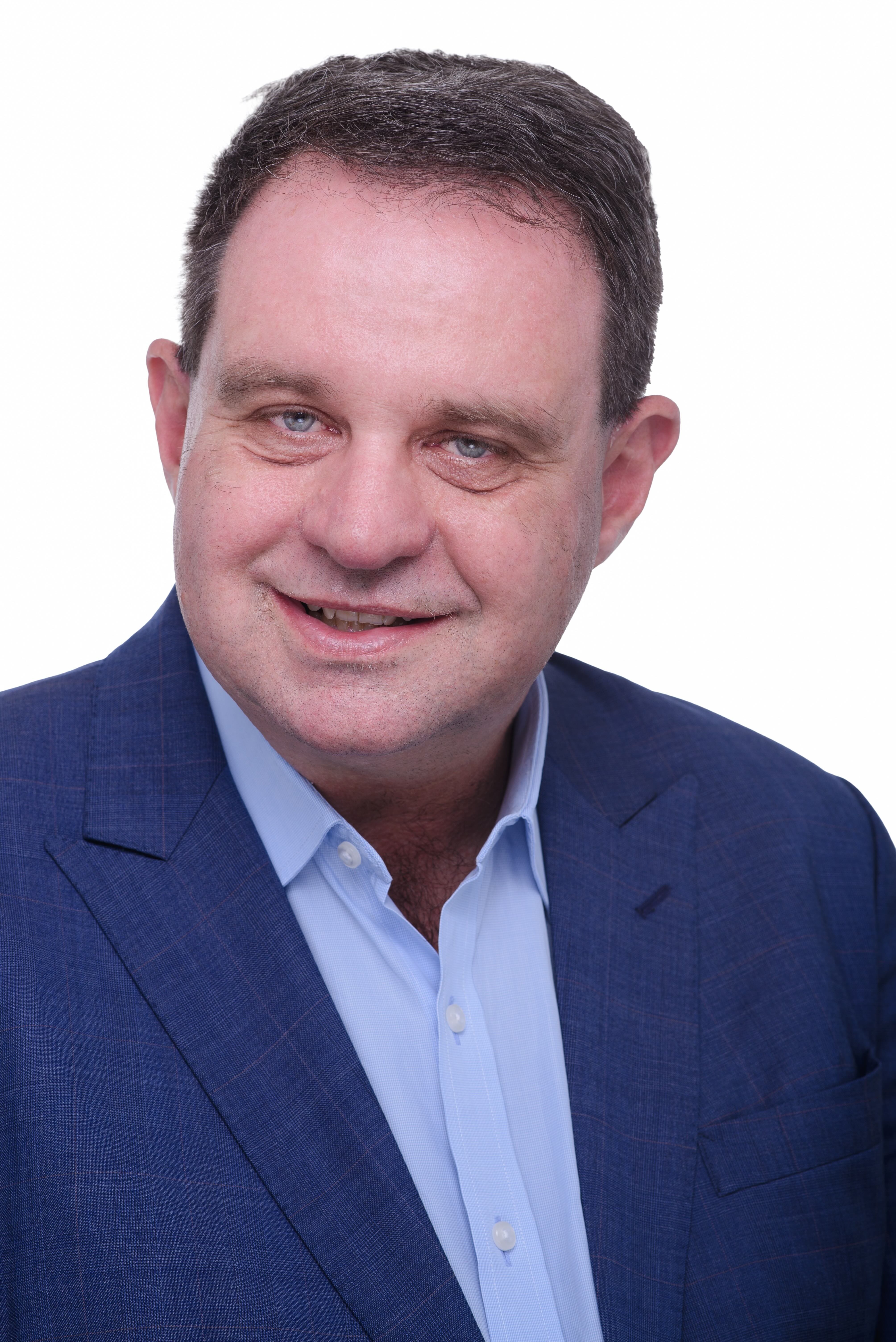
Professor
Terry Flew is Professor of Digital Communication and Culture, Australian Research Council (ARC) Laureate Fellow, and Co-Director of the Centre for AI, Trust and Governance at the University of Sydney. His books include Global Creative Industries (Polity, 2013), Media Economics (Palgrave, 2015), Understanding Global Media (Palgrave, 2018), Regulating Platforms (Polity, 2021), and Digital Platform Regulation: Global Perspectives on Internet Governance (Springer, 2022). He was President of the International Communications Association (ICA) from 2019 to 2020, and is an ICA Fellow, elected in 2019. He is a Fellow of the Australian Academy of the Humanities (FAHA). His Australian Research Council Laureate Fellowship is a five-year study (2024-2028) of Mediated Trust: Ideas, Interests, Institutions, Futures. His most recent book, Valuing News: Digital Platforms and Journalism Futures, is published by Springer and will be available in early 2026.